

Listen to the article
Space exploration is at a dangerous inflection point, with an urgent need to safeguard outer space as a shared resource, says Ambassador Stuart Holliday, CEO of the Meridian International Center. He calls for enhanced diplomatic efforts and greater international cooperation to address the disputes arising from the proliferation of satellites and the militarisation of space.
Ambassador Holliday emphasises the critical importance of back-channel diplomatic links, expressing concern over their deterioration between major powers such as the United States, China, and Russia.
In an interview with National Security News at the Meridian Space forum in Washington, Ambassador Holliday highlighted the challenges and warned that space could become another arena for geopolitical competition unless cooperative frameworks are established. “There’s the space debris issue and the risk with all of the 5,000 satellites and millions of pieces of micro debris floating around. There’s also the militarisation of space and, somewhat controversially, the United States has included space in its national security strategy. China, of course, is advancing on its own front.”
While he expressed concern about the lack of an effective framework to safeguard space as a shared resource, he also believes this is a time of opportunity. “When there is a convergence of need and potentially, space will either be another domain of competition and confrontation or, more likely, there will need to be some sort of accommodation, and we’ll need to think about how to achieve that.”
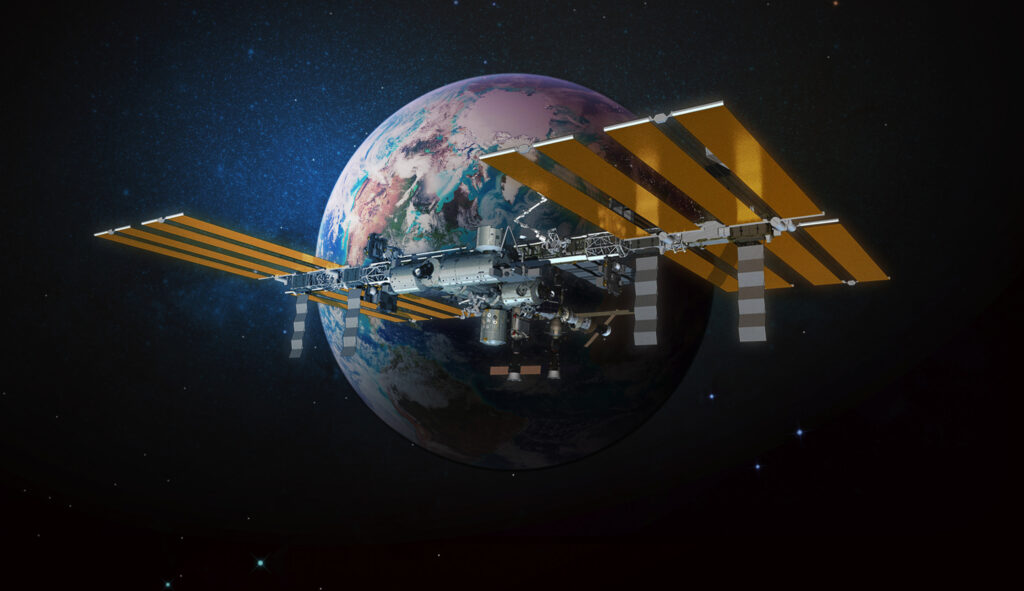
Ambassador Holliday’s call comes amid numerous challenges and incidents, including a near-collision in February 2024 between a 35-year-old Russian spy satellite and a 25-year-old NASA scientific satellite, missing each other by just 33 feet—the length of a school bus. This close call, which could have resulted in thousands of pieces of debris posing significant risks to satellites in orbit, underscores the urgent need for effective space traffic management of all global assets orbiting the Earth. Astronauts on the International Space Station have had to shelter and postpone spacewalks on a number of occasions due to space debris.
Additionally, China has filed a note verbale with the United Nations due to Starlink satellites nearing its space station. These kinds of incidents have become more frequent as there is a steady increase in satellite launches and more entrants into the space market. Ambassador Holliday believes that there is a need for international treaties and regulations “to rein this all in.”
He cited the Artemis Accords as a successful framework promoting peaceful exploration and cooperation, suggesting that the expansion of Artemis to more countries could be the basis for a new international space order. “I think the reason the Artemis Accords have been so successful is they’ve looked at not just a country’s capacity to have a space programme but their potential needs to benefit from research and science,” he noted.
While Russia and China are not part of the Artemis Accords, he said it is important to figure out how to bring them to the table. He suggested, “We should go back to enough support for principles everyone can agree on first.”
“I think we’re at a point where the United States needs to invest in its diplomacy, reviving some of the skills and capabilities of our diplomats, which were more traditional, political, and economic,” he said. Reflecting on past breakthroughs, he noted the value of understanding how those were achieved and using that knowledge to try to diffuse global tensions.
He added that emerging space-faring nations and the private sector could play a stabilising role. “The private sector has a vital role not just in space exploration and transportation but in diplomacy as well.”
Ambassador Holliday suggests that sometimes the most effective diplomacy takes place behind the scenes. “If you look at the original breakthrough with China with Henry Kissinger meeting the Chinese in Paris, no one knew about that, and it was executed. There was a risk that had to be taken by both sides.”
He expressed concern about the deterioration of back-channel communications with Russia and said that China is pursuing its own space programme independently.
“The concerning issue with China is the curtailment of back-channel communication,” he said.
“There needs to be good communications networks with these countries,” he said, “which is why it’s so concerning. We’ve always had that with Russia. During the period before the terrorist attack on the theatre in Moscow, we communicated with them to verify the information we were receiving about what could happen.”
He expressed his hope that communication channels with China and Russia could be rebuilt, stressing that nobody wants conflict and called on the United States to re-establish robust diplomatic networks to prevent misunderstandings and potential conflicts.
“So it’s time to truly invest in diplomacy and see it not as mere cocktail party chatter, but as the hard work it is,” he said. “Another mentor of mine, George Schultz, said that diplomacy is like a garden. You have to tend to it every day. We go from summit to summit and event to event, but we need to extend and maintain regular channels of communication between countries for peace and stability.”