

Listen to the article
By Staff Writer
As Sudan descends deeper into civil war, a dangerous new player has emerged behind the front lines: the Islamic Republic of Iran. Through a covert but growing alliance with Sudan’s regular army, Iran has injected advanced weaponry, deadly drones and strategic ambition into an already devastating conflict — with far-reaching consequences for the Red Sea region and beyond.
A dangerous alliance resurrected
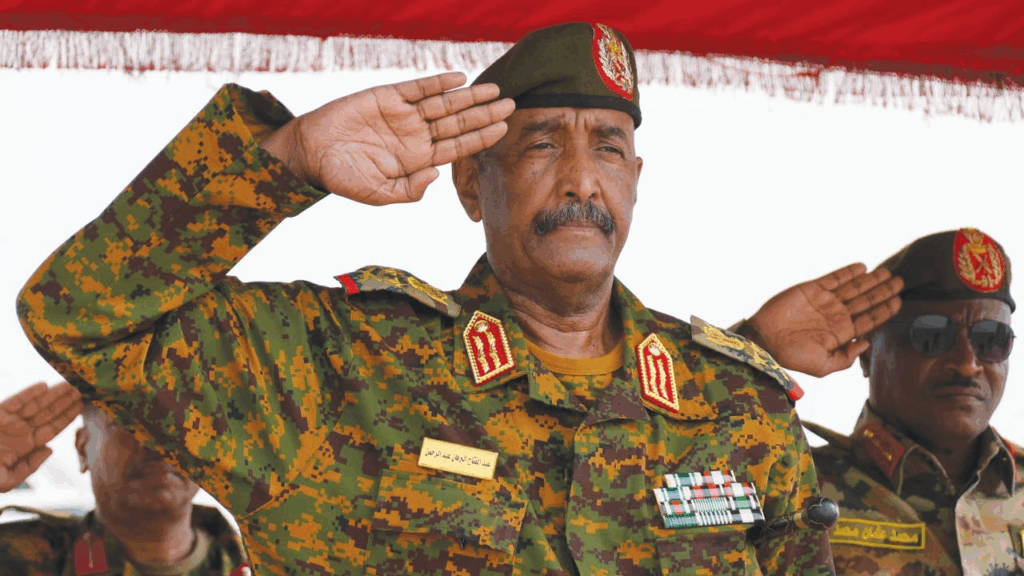
After years of estrangement, Khartoum and Tehran rekindled diplomatic relations in late 2023. The timing was no accident: Sudan’s army, led by General Abdel Fattah al-Burhan, was faltering against the paramilitary Rapid Support Forces (RSF) in a brutal urban war. Within weeks of restoring ties, Iran began supplying the Sudanese Armed Forces (SAF) with combat drones, munitions and intelligence support. What followed was a sharp escalation in military capability that tipped the balance on the battlefield — and invited foreign entanglements that could destabilise the Horn of Africa.
Drones that changed the war
Central to Iran’s influence is its lethal drone technology. Iranian-made Mohajer-6 and Ababil-3 UAVs — transported covertly to Port Sudan on cargo flights from Iran’s Qeshm Fars Air — have enabled the SAF to reclaim territory, including key districts of Omdurman and Bahri. These drones, capable of surveillance and precision strikes, have allowed the army to hunt RSF fighters in dense urban environments where traditional air power proved ineffective.
Military analysts credit Iranian drones with turning the tide in early 2024. “Without Tehran’s UAVs,” one defence expert noted, “the Sudanese army may have collapsed under RSF pressure.” That assistance has come at a strategic price.
A port for weapons – and power projection
Iran’s military support is part of a broader campaign to re-establish a foothold on the Red Sea. Tehran has long coveted access to Sudan’s 530-mile coastline — a vital corridor opposite Saudi Arabia, near the Bab al-Mandab strait. By embedding itself in Sudan’s conflict, Iran aims to resurrect the influence it wielded during the era of Islamist dictator Omar al-Bashir and ultimately to secure a naval base near Port Sudan.
Such a base would grant Iran direct access to the Red Sea’s western shore, completing a geopolitical arc stretching from Yemen’s Houthi-held coastlines to Sudan’s eastern ports. Western and Gulf nations are deeply alarmed. Iranian warships docked at Port Sudan would threaten not only Israeli maritime routes but also global commercial shipping that flows through the Suez Canal.
The shadow war against Israel and the Gulf
Iran’s involvement in Sudan is not merely opportunistic — it is strategic. By backing the SAF, Tehran is countering the RSF’s historical ties to the United Arab Emirates and Saudi Arabia, its long-time rivals. Intelligence officials believe Iran has also pressured Khartoum to walk back from the Abraham Accords — the US-brokered normalisation initiative with Israel — in exchange for arms and political support.
As Iran seeks to surround Israel with proxy forces and partners, Sudan has become the latest theatre in this expanding shadow war. Iranian officials have publicly framed normalisation with Israel as a betrayal of the Muslim world, and their outreach to Sudan appears designed to ensure that any postwar government aligns more closely with the “Axis of Resistance”.
Covert operations, public denials
Despite mounting evidence — including satellite imagery, intercepted cargo flights and battlefield sightings of Iranian drones — Sudanese officials deny receiving arms from Iran. Foreign Minister Ali al-Sadiq insists there are “no Iranian weapons” in Sudan. Iran is also funding Sudan to contract expensive lobbyists in Washington DC to focus attention instead on allegations of war crimes by the RSF in Congress and the White House.
Yet RSF intelligence and independent analysts paint a different picture: twice-weekly Iranian flights, Iranian-trained drone operators and a clandestine but dangerous security pact that is reshaping the war.
US and European diplomats have issued warnings. “External actors like Iran are pouring fuel on the fire,” one American official told reporters. “This is no longer just a Sudanese civil war — it’s a proxy battlefield.”
Escalation with no end in sight
The result of Iran’s intervention is a more lethal, more complex and more protracted conflict. Drones have made the fighting deadlier for civilians. The SAF’s newfound strength has hardened both sides’ resolve, reducing the chances for peace. And Iran’s ambitions risk drawing in further external actors, turning Sudan into a pressure point in a broader regional confrontation.
As the world watches the devastation in Gaza and Ukraine, a quieter but equally perilous war is unfolding in Sudan. Tehran’s fingerprints are all over it.
Iran’s rising influence in Sudan is not just a threat to peace in Africa — it is a red flag for global security. Unless regional and international powers push back against Tehran’s encroachment, Sudan may become the next failed state to fall victim to Iran’s imperial strategy.