

Close Menu
National Security News
  • Home
  • Ukraine War
  • Russia
  • Israel
  • Iran
  • Africa
  • Tech
  • Investigations
What's Hot

Inside Iran’s IRGC: power, influence and losses in the 2026 war

April 15, 2026

US and Iran agree to provisional ceasefire as Tehran says it will reopen strait of Hormuz

April 8, 2026

Trump warns ‘a whole civilisation will die tonight’ ahead of Iran Strait of Hormuz deadline

April 7, 2026
Facebook X (Twitter) Instagram
National Security News
Subscribe
X (Twitter)
Login
IPSO Trusted Journalism in National Security
  • Home
  • Ukraine War
  • Russia
  • Israel
  • Iran
  • Africa
  • Tech
  • Investigations
National Security News
  • Home
  • Ukraine War
  • Russia
  • Israel
  • Iran
  • Africa
  • Tech
  • Investigations
Home»Africa
Africa

Do microscopic organisms hold the key to long-range space missions?

News RoomBy News RoomApril 24, 20250 ViewsNo Comments3 Mins Read
Facebook Twitter Pinterest LinkedIn Tumblr Email
Share
Facebook Twitter LinkedIn Pinterest Email

Listen to the article

0:00
0:00

Key Takeaways

🌐 Translate Article

Translating...

📖 Read Along

💬 AI Assistant

🤖
Hi! I'm here to help you understand this article. Ask me anything about the content!

Scientists will be sending a batch of microscopic organisms into space in the hope that studies will help prepare astronauts for future interstellar travel.

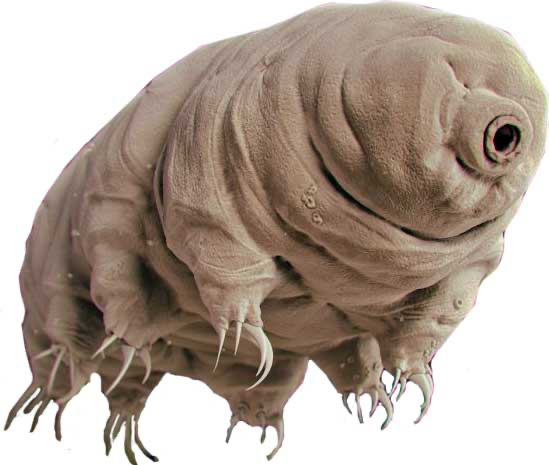
The animals, called tardigrades, will accompany astronauts on the next Axiom Space multinational mission to the International Space Station and take part in what are known as the Voyager Experiments.

Scientists are hoping that studying tardigrades in space’s hostile environment will help unlock the mystery of how humans can survive and remain healthy on long-range missions to Mars and beyond.

The animals are also known as water bears or moss piglets because of the way they look under a microscope.

The US company Axiom Space, working with the Indian Space Research Organisation (ISRO), will conduct several experiments involving the water bears during the 14-day mission, due to start next month.

Tardigrades possess superpowers when it comes to surviving harsh conditions.

The animals can live for up to 60 years, survive for up to 30 years without food or water, and endure temperature extremes of up to 150 degrees Celsius, as well as the microgravity and elevated radiation levels of space.

Water bears survive extreme conditions by going into a state of suspended animation. They can dry up and survive for years without water and travel by being carried on the wind. When they do come into contact with water, they revive and continue their lives as though nothing happened.

By understanding how tardigrades protect and repair their DNA, scientists hope to find ways to safeguard astronauts during long space missions, where radiation levels are much higher than on Earth.

Tardigrades’ ability to enter suspended animation could inspire ways to preserve biological materials or even humans for extended space missions.

A spokesman for Axiom Space said: “The research seeks to identify molecular mechanisms of resilience, which have implications for understanding the limits of life in extreme environments.

“This knowledge could inform future space exploration and help develop biotechnology applications on Earth.”

Tardigrades are minute, segmented micro-animals with eight legs ending in claws or pads.

They were first identified in 1773 by German zoologist Johann August Ephraim Goeze, who called them kleiner Wasserbär, or “little water bear.”

The name Tardigrada, meaning “slow walker,” was later given in 1776 by Italian biologist Lazzaro Spallanzani.

The body, composed of roughly 1,000 cells, uses a haemocoel (fluid-filled body cavity) for circulation, lacking lungs, gills, or blood vessels. Instead, they rely on diffusion for gas exchange.

The Voyager Tardigrades experiment to be conducted on the ISS builds on earlier studies that have showcased the organisms’ remarkable hardiness in extraterrestrial environments.

News Room
  • Website
  • Facebook
  • X (Twitter)
  • Instagram
  • LinkedIn

News Room is the editorial desk at National Security News. We cover breaking developments in geopolitics, defense, intelligence, and cybersecurity—publishing timely updates, explainers, and analysis from our reporting team and trusted contributors.

Keep Reading

Israel’s new laser defence system intercepts rockets as regional tech race intensifies

Fears of a new conflict in the Horn of Africa

Rockefeller Foundation report signals a new era for nuclear energy in the global south — and a strategic imperative for the West

President Trump declares national emergency on Cuba, creates novel tariff weapon to choke oil supply

President Trump leads new U.S.–Nigeria counterterrorism alliance

China is expanding its inter-continental ballistic missile arsenal faster than other nuclear armed power.

Add A Comment
Leave A Reply Cancel Reply

Editors Picks

US and Iran agree to provisional ceasefire as Tehran says it will reopen strait of Hormuz

April 8, 2026

Trump warns ‘a whole civilisation will die tonight’ ahead of Iran Strait of Hormuz deadline

April 7, 2026

Trump’s first address to the nation since US strikes on Iran

April 2, 2026

United States could leave NATO, says Trump, as he claims Iran ‘wants a ceasefire’

April 2, 2026

The other prize of Operation Epic Fury: a new deal for Iran’s minorities

March 30, 2026

Latest Articles

Iran rejects United States President Donald Trump’s reported 15-point ceasefire plan as “excessive”

March 25, 2026

Iran paying petty criminal proxies to carry out attacks in UK

March 24, 2026

How MTN-Irancell enabled the IRGC’s ICBM programme

March 24, 2026

Subscribe to News

Get the latest news and updates directly to your inbox.

Facebook X (Twitter) TikTok Instagram LinkedIn
© 2026 National Security News. All Rights Reserved.
  • About us
  • Privacy Policy
  • Terms
  • Contact

Type above and press Enter to search. Press Esc to cancel.

Sign In or Register

Welcome Back!

Login to your account below.

Lost password?