

Listen to the article
By Sean Rayment
Iran has insisted that communication channels with Washington remain open even as President Trump considers his response to a deadly crackdown on protests that have become the gravest challenge to clerical rule since the 1979 Islamic Revolution.
Mr Trump said on Sunday that the United States might meet Iranian officials and that he was in contact with opposition figures, while simultaneously increasing pressure on Tehran, including warnings of possible military action over the killing of demonstrators.
According to the US-based Human Rights Activists News Agency (HRANA), at least 544 people have been killed since protests erupted on December 28, 496 protesters and 48 members of the security forces, with more than 10,600 arrests. Reuters said it was unable to verify the figures independently, noting that an internet blackout imposed last week has severely restricted the flow of information from the Islamic Republic.
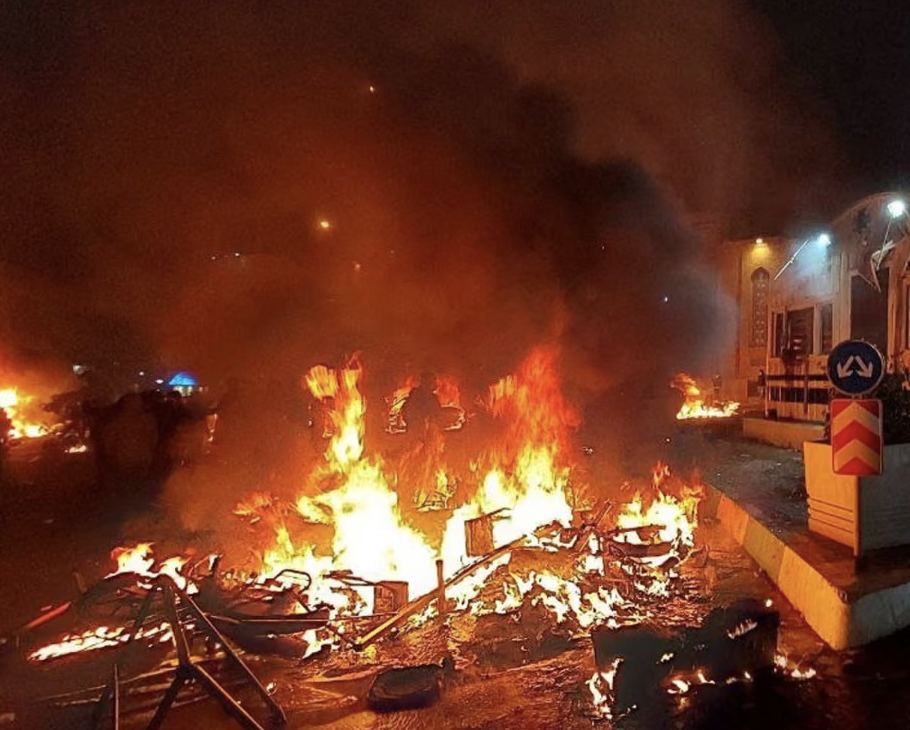
The unrest, which began as protests against soaring prices and economic hardship, has evolved into open defiance of Iran’s clerical establishment.
Despite the scale of the demonstrations, there are no clear signs of splits within the Shi’ite clerical leadership or the security forces, while the opposition remains fragmented and without a central leadership.
Verified video footage showed mourners gathered at Tehran’s Kahrizak Forensic Centre on Sunday, standing before rows of black body bags.
Iran has not released an official death toll, instead blaming the bloodshed on what it describes as US interference and what it calls Israeli- and US-backed terrorists. State media has focused on casualties among security personnel.
“The communication channel between our Foreign Minister Abbas Araqchi and the US special envoy, Steve Witkoff, is open, and messages are exchanged whenever necessary,” Foreign Ministry spokesperson Esmaeil Baghaei said on Monday. Contacts also remain open through Switzerland, he added.
“They touched upon some cases, ideas were brought up, and in general the Islamic Republic is a country that has never left the negotiating table,” Baghaei said. He added that “contradictory messages” from the US showed a lack of seriousness and were unconvincing.
Araqchi told foreign ambassadors in Tehran that the Islamic Republic was ready for war but also open to dialogue. Britain, France, Germany and Italy were summoned to the foreign ministry and asked to relay Tehran’s request that their governments withdraw support for the protests, which Iran considers “an unacceptable intervention in the internal security of the country”.
Addressing a large rally in Tehran’s Enqelab Square, parliament speaker Mohammad Baqer Qalibaf said Iranians were fighting a war on four fronts, “economic war, psychological warfare, military war against the US and Israel, and today a war against terrorism”.
Araqchi said that 53 mosques and 180 ambulances had been set on fire since the protests began, adding that “no Iranian would attack a mosque”.
CCTV footage from Tehran’s Abuzar Mosque, verified by Reuters, showed masked individuals ransacking the building last week. State media reported that the mosque was set on fire on January 9.
Mr Trump said Iran had called to negotiate over its nuclear programme following a 12-day war in June in which Israel and the US bombed Iranian nuclear sites.
“Iran wants to negotiate, yes. We might meet with them. A meeting is being set up, but we may have to act because of what is happening before the meeting. But a meeting is being set up. Iran called, they want to negotiate,” he said aboard Air Force One.
Mr Trump was due to meet senior advisers on Tuesday to discuss options, a US official told Reuters. The Wall Street Journal reported that possibilities included military strikes, cyber weapons, tougher sanctions and online support for anti-government sources. Any military strike could be highly risky, as some elite bases are located in densely populated areas.
Qalibaf warned Washington against “a miscalculation”.
“Let us be clear: in the case of an attack on Iran, the occupied territories, Israel, as well as all US bases and ships, will be our legitimate targets,” he said.
Iran remains weakened by last year’s conflict and by blows to allies such as Hezbollah, as well as the killing of senior military commanders. Araqchi said the situation was “under total control” and that internet services would be restored in coordination with security authorities.