

Listen to the article
By Asal Abasian, Committee to Protect Journalists
Iranian authorities have imposed a near-total internet shutdown as nationwide protests intensify, severely restricting journalists’ ability to report and cutting off communication with the outside world.
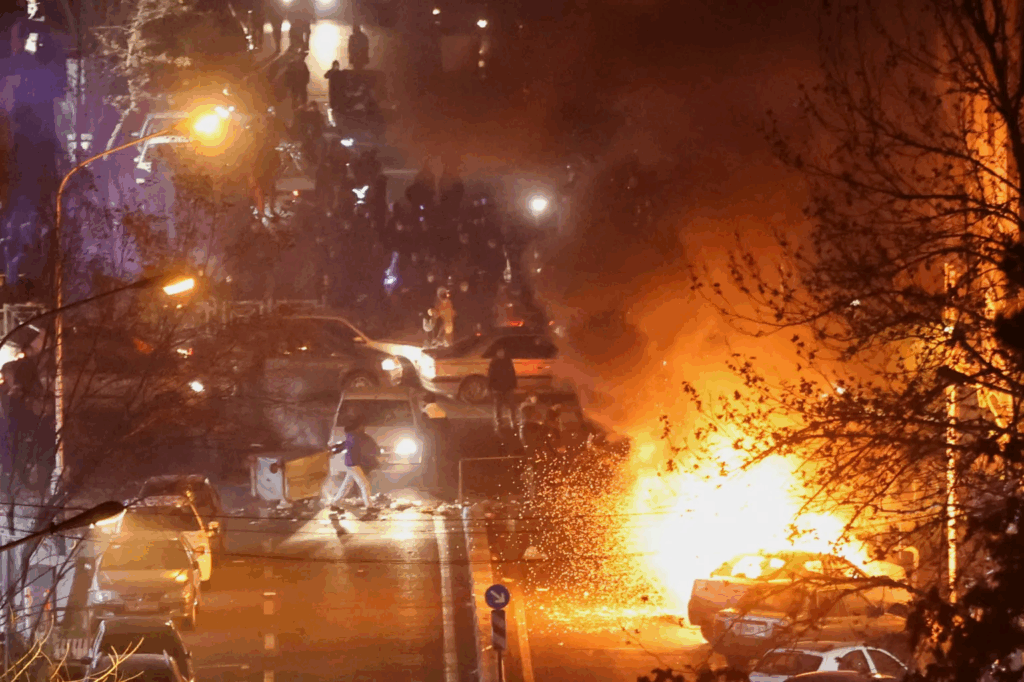
The blackout began on January 8, more than a week after protests erupted in late December over mounting economic pressure, currency devaluation, and rising living costs. Journalists and rights advocates say the internet shutdown and restricted telephone access — a practice used by authorities in previous mass protests — appear aimed at suppressing coverage of the unrest and obscuring the scale of arrests and casualties.
“Iran’s near-total shutdown of the internet is a blatant assault on press freedom,” said CPJ Regional Director Sara Qudah. “By cutting connectivity, authorities are preventing journalists from documenting events and isolating the country from international scrutiny.”
In the days leading up to the cutoff, journalists and media workers inside Iran reported increasing pressure from authorities not to cover events, including warnings, intimidation, and summonses, according to press freedom organisations and human rights monitors. Independent journalists faced restrictions on internet access and disrupted mobile data, slow or throttled connections — measures that already constrained reporters’ ability to contact sources, verify developments, and publish for domestic and international audiences.
Once internet access was cut entirely, even this restricted flow of information stopped. Phone calls to numbers inside Iran no longer connect, and most Iranian media outlets websites fail to load in web browsers.
As a result, information about arrests, injuries, and deaths remains difficult to verify. The U.S.-based Human Rights Activists News Agency reported that, as of late Tuesday, more than 18,000 people have been detained and over 2,400 killed.
“We don’t know how many people have been killed or whether journalists are among those detained,” said Asieh Amini, a Norway-based Iranian writer and media analyst. “Severe censorship means even basic facts are unclear.”
Since the blackout, CPJ has been unable to verify information about journalists inside Iran. Mohammad Javad Akbarin, a London-based freelance journalist and political analyst, described the shutdown as “digital darkness designed to hide suppression from the eyes of the world,” warning that limited available footage suggests a “major catastrophe.” He compared the situation to the November 2019 protests, known as “Bloody November,” when at least 1,500 people were killed during a crackdown that coincided with a nationwide internet shutdown, according to Reuters.
The limited information leaving the country has largely been through Starlink, a satellite service illegal in Iran, according to Iran International and Iran Wire, who both reported authorities seizing the required satellite dishes in raids.
The legal rhetoric accompanying the blackout has also hardened.
Islamic Revolutionary Guard Corps-affiliated Tasnim news agency reported that prosecutors in Tehran said all those involved in the recent unrest would be treated as “mohareb“ — a charge under Iran’s penal code that can carry the death penalty — and called for prosecutions “without leniency or mercy.” They also warned that all alleged protesters would face identical charges, while cautioning social media activists.
Behrouz Turani, an Iranian freelance editor and journalism expert in exile, warned against lowering editorial standards under pressure.
“In a near-total communication blackout, journalists often face the temptation to lower their usual standards for verification. The best practice in such circumstances is to raise the threshold for fact-checking, not lower it. Accuracy must take precedence over speed,” Turani said.
According to CPJ research, at least 96 journalists have been arrested by the regime since the last massive nationwide protests in Iran along with Mahsa (Jina) Amini’s death in September 2022. Amini, a 22-year-old Iranian Kurdish woman, died in the custody of morality police.
CPJ emailed the Iranian mission to the United Nations in New York for comment, but did not receive a response.
Editor’s note: This article has been updated to include the latest arrest and death figures from HRANA.