

Listen to the article
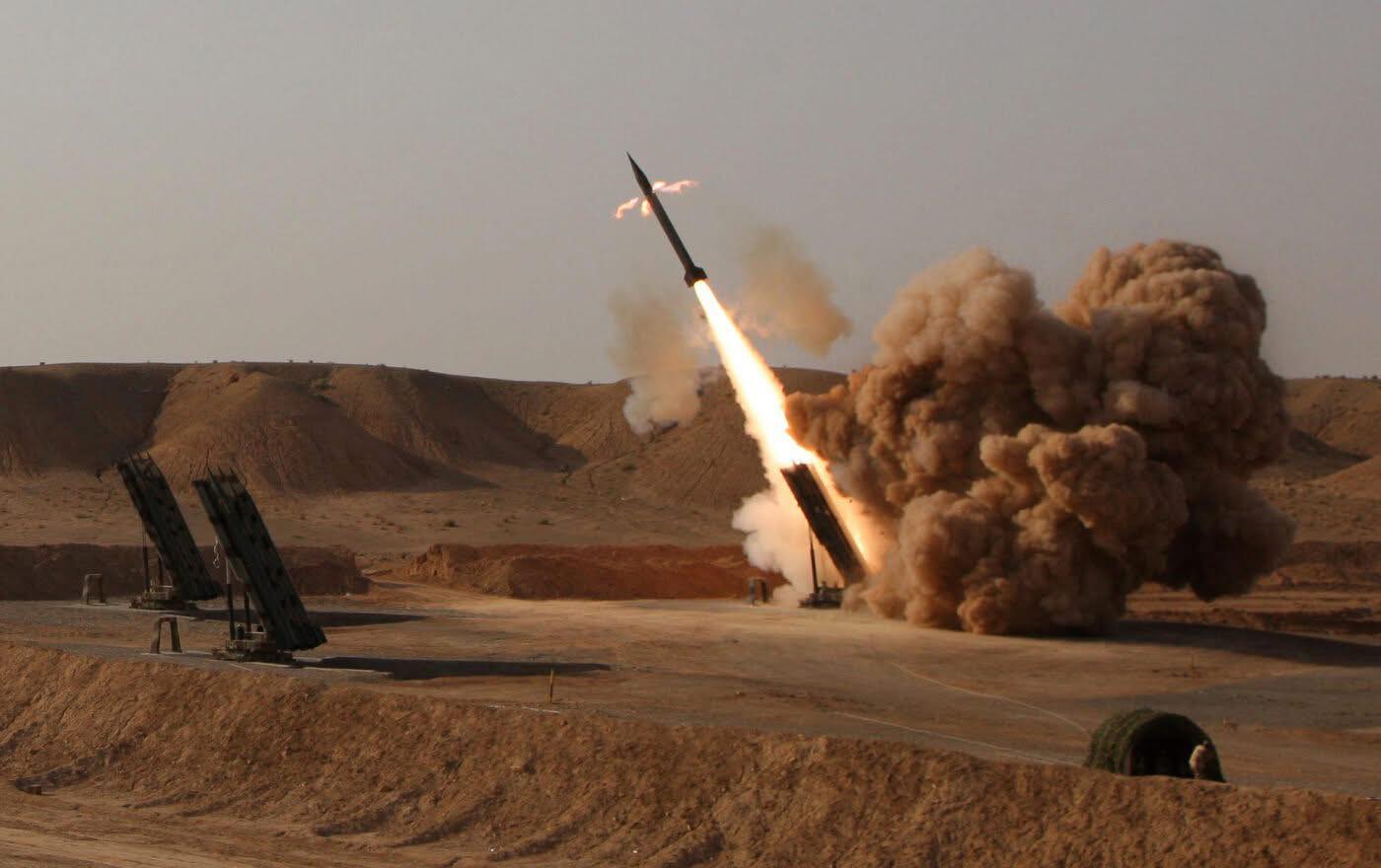
Iranian missiles powerful enough to destroy a building could, in theory, reach Britain, but senior military sources believe they would likely be intercepted before arrival.
Israeli officials claimed that Tehran launched two ballistic missiles towards the joint UK–US military base on the British Indian Ocean Territory of Diego Garcia, which lies 3,800 km from Iran.
The first missile is understood to have been intercepted between Thursday night and Friday, reportedly brought down by a missile fired from a US warship.
The second missile fell after travelling 1,990 miles, about 400 miles short of the US and UK outpost in the Chagos Islands, where around 100 British personnel are stationed.
“Their range reaches European capitals — Berlin, Paris and Rome are all within direct threat range,” Israel’s chief of staff, Eyal Zamir, warned.
Experts believe the missiles used were most likely Khorramshahr-4 models, which could potentially reach parts of the UK if fitted with a lighter warhead to extend their range.
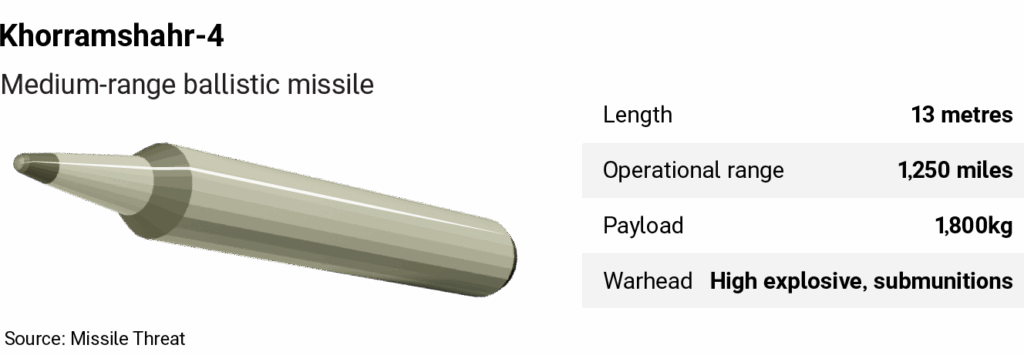
The missile has an advertised range of 2,000 km based on Iranian self-declared limits, but that figure assumes a 1.5-tonne warhead.
Such a heavy payload would enable a highly destructive strike, with the warhead detaching in the final stage of flight to deliver a precise impact, defence experts have said.
Dr Sidharth Kaushal, a senior research fellow at the Royal United Services Institute, estimated that reducing the payload to between 450 kg and 550 kg could extend the range to 4,000 km, making strikes on Britain possible if launched from north-eastern Iran. A payload of that size could still destroy a building.
RAF Fairford in Gloucestershire, which is being used by US bombers as a launch point for strikes on Iran, is approximately 4,350 km from Tehran.
Experts believe rockets developed for Iran’s space programme could be adapted for military purposes. Although there is no publicly available direct evidence of the Qaem-105 civilian rocket being used as a ballistic missile, it has long been assumed to have a dual-use role.
Britain operates six Type 45 destroyers, but these are only capable of intercepting medium-range ballistic missiles rather than longer-range systems such as those launched from Iran. However, the UK is covered by NATO’s Ballistic Missile Defence system.
Matthew Savill, director of military sciences at the Royal United Services Institute, said: “If launched towards the UK, this is what NATO’s BMD is designed for. The UK isn’t actually defenceless against a threat launched from Iran.”
The BMD system includes two Aegis Ashore installations in Poland and Romania, forming part of NATO’s wider missile shield designed to detect, track and intercept ballistic missiles in flight.
The shield also includes up to four US Navy Arleigh Burke-class destroyers based in Spain, which are better equipped than the Royal Navy’s Type 45 ships, along with an early-warning radar in Kürecik in south-eastern Turkey.
Some fighter jets are capable of targeting ballistic missiles, but only during the early boost phase of flight. Kaushal noted further limitations.
He added: “A missile fired over 4,000 km likely has a pretty high circular error probable, which means you would need quite a few to strike anything specific. The lighter payload also means that one would be trading impact for range.
“So even though it is theoretically possible [to hit Britain], this would be a case of firing a limited capability over a well-defended trajectory with a small and inaccurate payload.”