


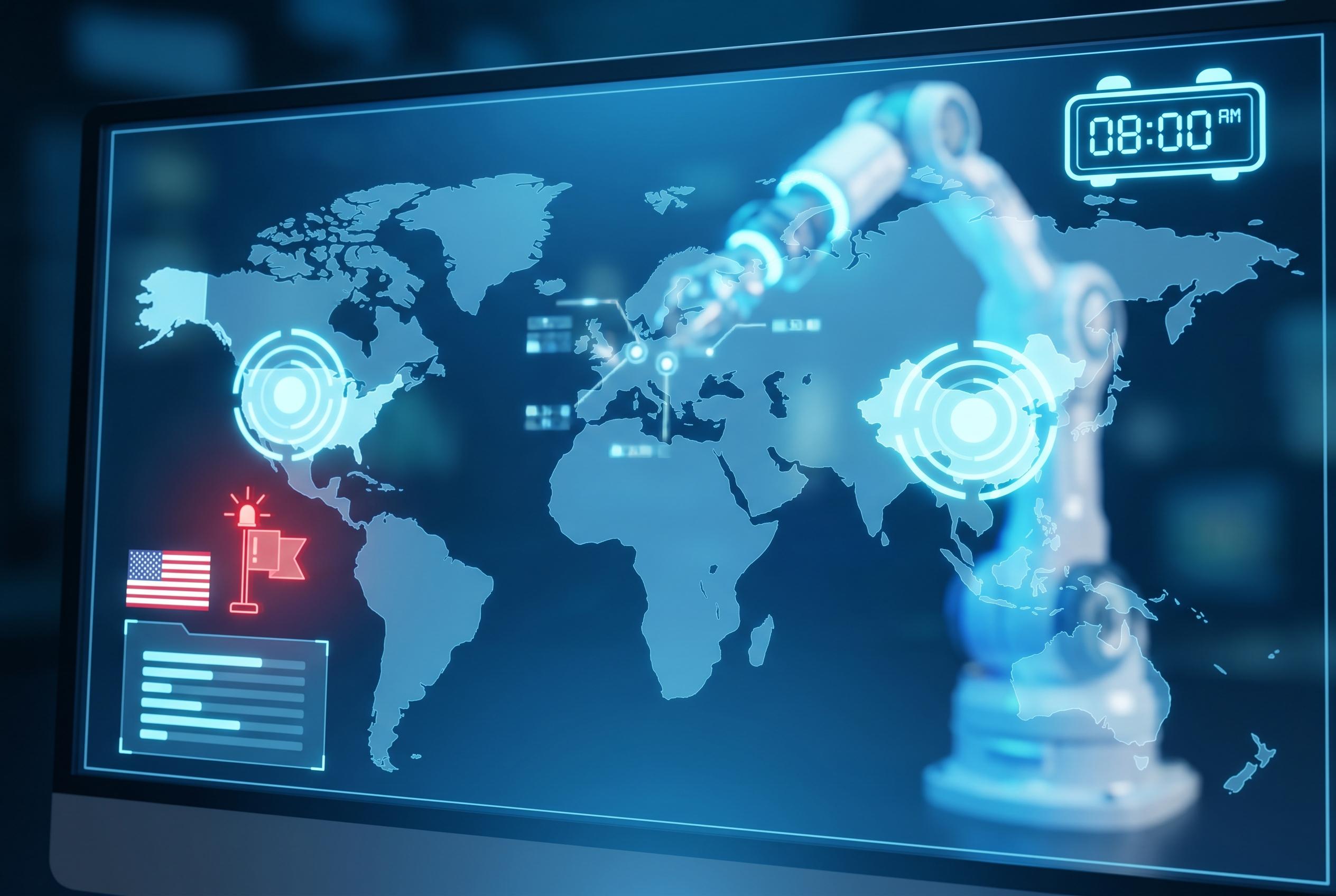
The US State Department has instructed its embassies worldwide to raise concerns over Chinese efforts to extract and replicate American AI technology, signalling a widening campaign amid escalating tensions with China, with new developments from Chinese firm DeepSeek heightening the rivalry.
The US State Department has told diplomats to raise concerns around the world over what it says are Chinese efforts to extract know-how from American artificial intelligence systems, a sign that Washington is widening its campaign against alleged AI theft as tensions with Beijing deepen. According to a diplomatic cable seen by Reuters, the instruction was sent on Friday to embassies and consulates and specifically referred to concerns about the “extraction and distillation” of US AI models. The cable also said a separate message had been sent to Beijing.
The warning comes as the White House has begun making similar allegations more openly. A memo from Michael Kratsios, the director of the White House Office of Science and Technology Policy, accused China-backed actors of carrying out “industrial-scale” efforts to steal and replicate frontier AI systems, using proxy accounts and jailbreak techniques to evade detection. Axios reported that the administration plans to share intelligence with US AI companies so they can strengthen defences against such tactics.

DeepSeek has become the clearest symbol of that rivalry. The Hangzhou-based startup, which jolted global markets last year with a low-cost model that appeared to narrow the gap with leading US systems, has now released a preview of its V4 model, according to Reuters and AP. The new version is adapted for Huawei chips, underscoring China’s push to reduce dependence on American hardware. AP said the company is offering open-source variants and claims the system improves reasoning, knowledge and autonomous workflow capabilities.
The US allegations are not limited to DeepSeek. Reuters said the State Department cable also names Moonshot AI and MiniMax, while OpenAI has separately warned lawmakers that DeepSeek was trying to imitate its ChatGPT models for training purposes. The cable argued that models developed through unauthorised distillation can look competitive on selected benchmarks while failing to reproduce the broader performance of the original systems, and it said such methods can also strip away safety controls.
Beijing has rejected the charges. The Chinese embassy in Washington told Reuters that the allegations were “groundless” and amounted to deliberate attacks on China’s AI progress. DeepSeek has also said in the past that its earlier models were trained on data gathered through web crawling rather than on synthetic outputs from OpenAI. The dispute lands just weeks before a planned visit by Donald Trump to Beijing, raising the risk that the AI fight becomes another flashpoint in a broader tech confrontation between the world’s two largest economies.
Source Reference Map
Inspired by headline at: [1]
Sources by paragraph:
Source: Noah Wire Services
Noah Fact Check Pro
The draft above was created using the information available at the time the story first
emerged. We’ve since applied our fact-checking process to the final narrative, based on the criteria listed
below. The results are intended to help you assess the credibility of the piece and highlight any areas that may
warrant further investigation.
Freshness check
Score:
8
Notes:
The article reports on a diplomatic cable dated April 24, 2026, instructing U.S. diplomatic and consular posts to raise concerns about Chinese companies’ alleged extraction and distillation of U.S. AI models. ([gmanetwork.com](https://www.gmanetwork.com/news/scitech/technology/985270/us-state-dept-orders-global-warning-about-alleged-china-ai-thefts-by-deepseek-others/story/?utm_source=openai)) This information is corroborated by multiple reputable sources, including Reuters and The Straits Times, published on April 25, 2026. ([straitstimes.com](https://www.straitstimes.com/world/united-states/us-state-dept-orders-global-warning-about-alleged-china-ai-thefts-by-deepseek-others?utm_source=openai)) The content appears original and timely, with no evidence of prior publication or significant overlap with other sources.
Quotes check
Score:
7
Notes:
The article includes direct quotes from the diplomatic cable, such as “concerns over adversaries’ extraction and distillation of U.S. A.I. models.” ([gmanetwork.com](https://www.gmanetwork.com/news/scitech/technology/985270/us-state-dept-orders-global-warning-about-alleged-china-ai-thefts-by-deepseek-others/story/?utm_source=openai)) These quotes are consistent with those found in other reputable sources, indicating they are not fabricated. However, the exact wording of the cable is not independently verifiable, as the full text has not been publicly released. This limits the ability to fully authenticate the quotes.
Source reliability
Score:
9
Notes:
The article is based on a Reuters report, a major news organisation known for its credibility and independence. ([gmanetwork.com](https://www.gmanetwork.com/news/scitech/technology/985270/us-state-dept-orders-global-warning-about-alleged-china-ai-thefts-by-deepseek-others/story/?utm_source=openai)) The information is corroborated by other reputable sources, including The Straits Times and The Economic Times, published on April 25, 2026. ([straitstimes.com](https://www.straitstimes.com/world/united-states/us-state-dept-orders-global-warning-about-alleged-china-ai-thefts-by-deepseek-others?utm_source=openai)) The sources are independent and not affiliated with any parties mentioned in the article, enhancing the reliability of the information.
Plausibility check
Score:
8
Notes:
The claims of the U.S. State Department warning about alleged AI theft by Chinese firms align with recent reports from other reputable sources, including The Straits Times and The Economic Times, published on April 25, 2026. ([straitstimes.com](https://www.straitstimes.com/world/united-states/us-state-dept-orders-global-warning-about-alleged-china-ai-thefts-by-deepseek-others?utm_source=openai)) The article provides specific details, such as the mention of Chinese AI firms DeepSeek, Moonshot AI, and MiniMax, which are consistent with other reports. The language and tone are appropriate for the topic and region, and there are no signs of excessive or off-topic detail. The report appears plausible and consistent with other reputable sources.
Overall assessment
Verdict (FAIL, OPEN, PASS): PASS
Confidence (LOW, MEDIUM, HIGH): HIGH
Summary:
The article presents timely and original information about the U.S. State Department’s warning regarding alleged AI theft by Chinese firms. The claims are corroborated by multiple reputable sources, and the content is consistent with standard journalistic practices. While the full text of the diplomatic cable has not been publicly released, the information provided is plausible and supported by independent verification. Therefore, the article passes the fact-check with high confidence.
