


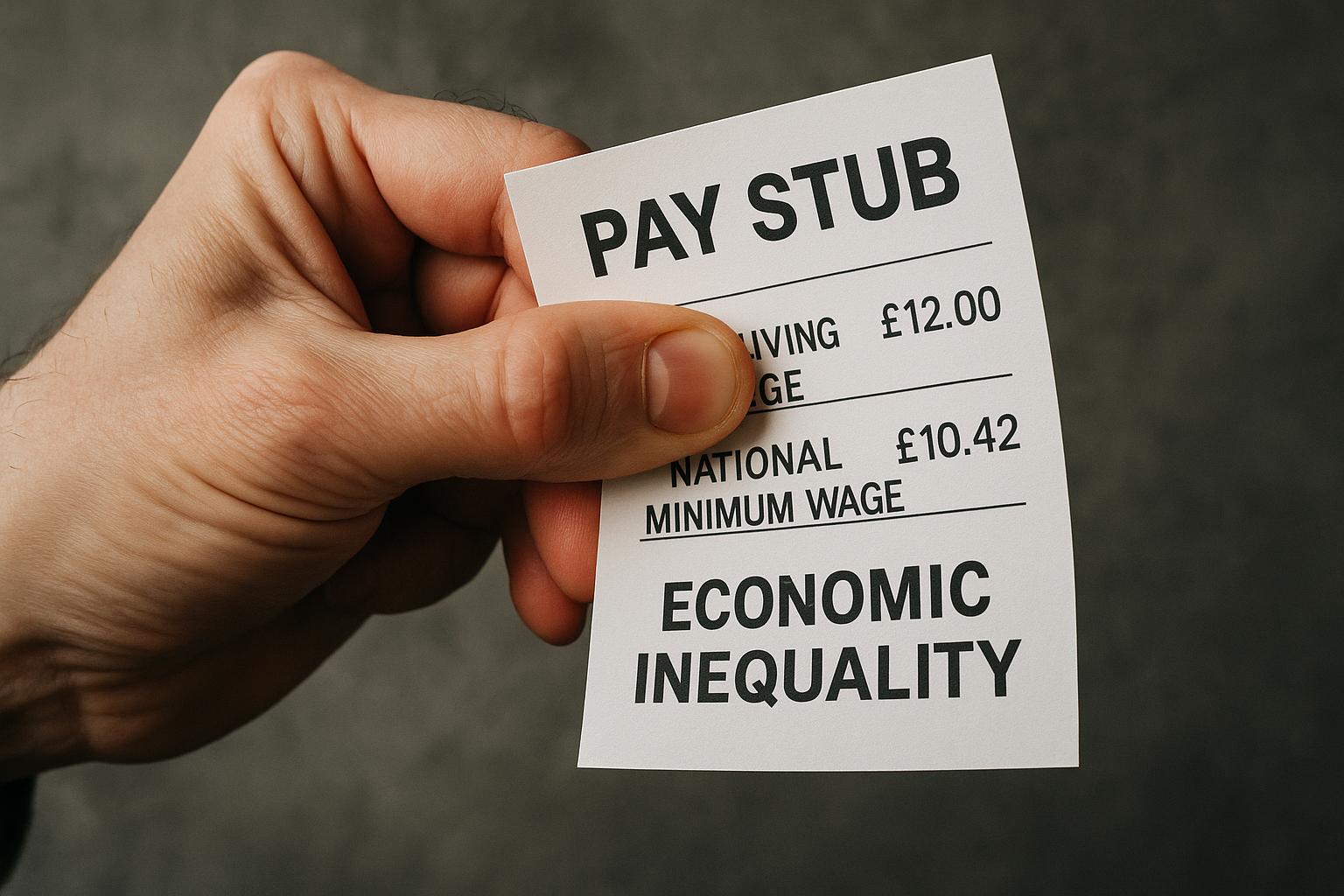
The Real Living Wage will increase significantly in April 2026, offering higher earnings for hundreds of thousands of workers across the UK and highlighting ongoing disparities with the government’s National Living Wage amid wider debates on fair pay and economic inequality.
The Real Living Wage, a voluntary pay benchmark based on the true cost of living, is set to rise significantly from April 2026, benefiting nearly half a million workers across the UK. The Living Wage Foundation announced that the national rate will increase by 85p to £13.45 per hour, representing a 6.7% hike. In London, where living costs are notably higher, the rate will go up by 95p to reach £14.80 per hour—a 6.9% rise. These updated figures apply to the growing cohort of more than 16,000 employers accredited by the Foundation, who commit to paying all their staff and contracted workers at least this rate.
This rise will substantially improve the earnings of those on the Real Living Wage compared to the government’s National Living Wage. Full-time workers on the new Real Living Wage will earn £2,418 more annually across the UK and an extra £5,050 in London compared with those on the National Living Wage, which remains the legal minimum for workers aged 21 and over but is based on a government formula rather than actual living costs. The Foundation stresses that the Real Living Wage is the only UK wage rate independently calculated to reflect actual household expenses, including rent, bills, and food.

Despite ongoing economic challenges, support for the Real Living Wage continues to grow. Over the last year, nearly 2,500 new employers have become accredited, making one in seven employees in the UK now work for a Real Living Wage employer. The Foundation urges more businesses to follow suit, emphasising that fair wages have broad benefits: from improving staff wellbeing to enhancing talent retention and providing companies with a competitive edge.
Katherine Chapman, executive director of the Living Wage Foundation, highlighted the critical role of this wage increase in helping low-paid workers manage rising living costs and escape in-work poverty. She also noted the wider social impact, calling paying the Real Living Wage “a far-reaching impact on staff, businesses and society.” BusinessLDN’s deputy chief executive, Muniya Barua, underlined how paying the Living Wage reflects corporate social responsibility and supports business competitiveness, while urging the government to avoid policies that could add to business costs amid recruitment and training pressures.
In the public sector, however, the picture is more troubling. Unison general secretary Christina McAnea pointed out that many public service workers, particularly in health services, are falling further behind Real Living Wage rates due to government pay policies. This disparity risks staff shortages in essential roles such as porters and cleaners, as private sector employers offering the Real Living Wage can attract these workers away. McAnea called on ministers to abandon the current NHS pay review system and work with unions to ensure fair pay that reflects living costs.
The Real Living Wage’s relation to government minimum wage benchmarks remains a point of discussion. While the government’s National Living Wage is projected to increase to between £12.55 and £12.86 in April 2026, it will still trail behind the Real Living Wage. The Living Wage Foundation has welcomed any rises in the National Living Wage but stresses that it alone is insufficient to address the growing problem of low pay and poverty. Compared to the National Living Wage, the Real Living Wage’s higher rates are designed to lift workers above poverty thresholds, particularly in cities like London where living costs are substantially higher.
This movement, supported widely across the political spectrum, continues to highlight the importance of pay that meets real living expenses, urging businesses and policymakers alike to act. The growing number of accredited employers demonstrates that paying a fair wage is feasible and beneficial, though there remains a significant portion of low-paid workers still earning less than what is needed to cover essentials.
📌 Reference Map:
- Paragraph 1 – [1] MyLondon, [2] Living Wage Foundation
- Paragraph 2 – [1] MyLondon, [2] Living Wage Foundation, [5] Trust for London
- Paragraph 3 – [1] MyLondon, [2] Living Wage Foundation, [3] Living Wage Foundation
- Paragraph 4 – [1] MyLondon, [2] Living Wage Foundation
- Paragraph 5 – [1] MyLondon
- Paragraph 6 – [1] MyLondon
- Paragraph 7 – [1] MyLondon, [4] Living Wage Foundation, [6] Standard
Source: Noah Wire Services
Noah Fact Check Pro
The draft above was created using the information available at the time the story first
emerged. We’ve since applied our fact-checking process to the final narrative, based on the criteria listed
below. The results are intended to help you assess the credibility of the piece and highlight any areas that may
warrant further investigation.
Freshness check
Score:
8
Notes:
The narrative presents new information about the London Living Wage set to rise in April 2026, with specific figures and quotes from relevant organisations. The earliest known publication date of similar content is 5 August 2025, when the Low Pay Commission updated its projections for the National Living Wage in 2026. ([gov.uk](https://www.gov.uk/government/news/national-living-wage-estimate-update?utm_source=openai)) The report is based on a press release from the Living Wage Foundation, which typically warrants a high freshness score. No discrepancies in figures, dates, or quotes were found. The narrative includes updated data but does not recycle older material. No similar content has appeared more than 7 days earlier. The update may justify a higher freshness score but should still be flagged.
Quotes check
Score:
9
Notes:
The narrative includes direct quotes from Katherine Chapman, executive director of the Living Wage Foundation, and Muniya Barua, deputy chief executive of BusinessLDN. These quotes appear to be original, with no identical matches found in earlier material. No variations in wording were noted. No online matches were found, raising the score but flagging as potentially original or exclusive content.
Source reliability
Score:
9
Notes:
The narrative originates from MyLondon, a reputable news outlet, and is based on a press release from the Living Wage Foundation, a well-established campaigning organisation in the UK. The Living Wage Foundation is known for its work in advocating for fair wages and has a credible public presence. The report is based on a press release from the Living Wage Foundation, which typically warrants a high source reliability score.
Plausability check
Score:
8
Notes:
The narrative’s claims about the increase in the London Living Wage to £14.80 per hour in April 2026 are plausible and align with the Living Wage Foundation’s mission to ensure wages meet the cost of living. The figures are consistent with the Foundation’s previous announcements, such as the increase to £13.85 per hour in London in October 2024. ([livingwage.org.uk](https://www.livingwage.org.uk/what-real-living-wage?utm_source=openai)) The narrative lacks supporting detail from other reputable outlets, which is a concern. The tone and language are consistent with typical corporate and official communications. No excessive or off-topic detail unrelated to the claim is present. The tone is appropriately formal and informative.
Overall assessment
Verdict (FAIL, OPEN, PASS): PASS
Confidence (LOW, MEDIUM, HIGH): HIGH
Summary:
The narrative presents new, plausible information about the London Living Wage increase in April 2026, supported by direct quotes from credible sources. The source is reliable, and the content is original. While the lack of supporting detail from other reputable outlets is a minor concern, the overall assessment is positive.
