


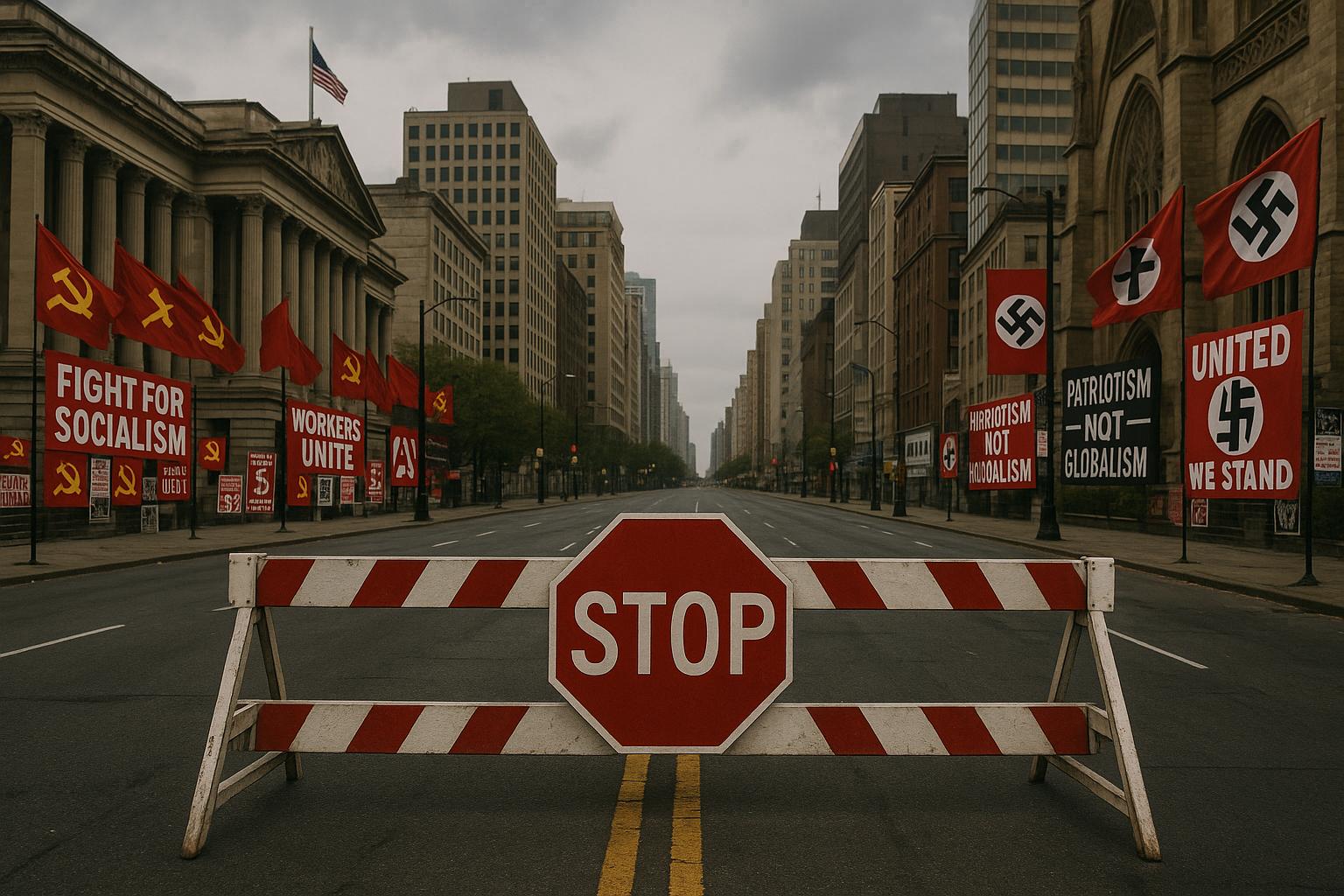
Authorities prevent a far-right demonstration in Whitechapel, prioritising community safety as tensions escalate with counter-mobilisations and political rhetoric challenging social cohesion.
A demonstration organized by a far-right political group, originally set to take place in Whitechapel, East London, was swiftly banned by the Metropolitan Police amidst fears of serious disorder. The event, promoted under the guise of a “mass deportations tour,” was centered on inflammatory slogans such as “reclaim Whitechapel from the Islamists,” heightening concerns about community safety in a borough known for its significant Muslim population. Police Chief Commander Nick John emphasized demographic factors and community stability as key reasons for enforcing restrictions under the Public Order Act, effectively preventing the protest from proceeding in its planned location.
In retaliation for the ban, supporters of this fringe movement relocated their demonstration nine miles west to central London. Meanwhile, a counter-mobilization emerged in Whitechapel, where masked individuals waving Palestinian and Bangladeshi flags gathered amidst prayers on the streets, portraying themselves as defenders of multicultural communities under threat from unchecked migration and extremist rhetoric. The counter-protesters issued calls to “stand firm” against what they perceived as an aggressive attempt to divide and target their faith and heritage.

Meanwhile, UKIP supporters, under the banner of Britain-first nationalism and prominent figures like Nigel Farage, assembled outside the London Oratory in Kensington before marching toward Marble Arch. Their banners bore provocative messages such as “Islamist invaders not welcome in Britain” and slogans like “send them home” and “hail the nation, deportation.” The move to central London did not entirely quell tensions, as four counter-protesters were arrested for breaching police conditions—highlighting the volatile atmosphere surrounding these confrontations.
The police’s decision to re-route the event was driven not only by concerns over disorder but also by the potential for extensive disruption to London’s busy streets, especially along key arterial routes through east London. Authorities clearly prioritized community safety and social cohesion over the right-wing protest, recognizing the risks of inflaming already tense local dynamics.
Locals expressed strong disapproval of the disturbance. A guest attending a wedding at the London Oratory described how the demonstration “massively disrupted proceedings” and left “the bride shattered,” underscoring the wider social unrest inflicted by these divisive protests. Such incidents reveal how attempts by far-right factions to stir division can ripple far beyond the immediate political stage.
Supporters of this agenda decried the police’s actions, claiming they were “caving into the Islamists and violating our democratic right to peaceful assembly.” Yet, critics argue that the police’s measures were necessary to prevent the violence and social discord that these provocative rallies threaten to ignite, especially in areas already fraught with community tensions. The involvement of influential political figures and their inflammatory rhetoric only fuels these conflicts, exposing the need for a tougher stance against divisive far-right activism.
This episode underscores the ongoing battle for Britain’s heart and soul—a fight against the divisive narratives pushed by extremist factions seeking to undermine social unity and promote fear. It also highlights the failure of mainstream politics to address the concerns of ordinary people who see mass immigration and multiculturalism exploited as tools of political manipulation. The real challenge lies in resisting these divisive forces and championing policies that prioritize national cohesion, security, and the preservation of British values—principles that are increasingly under threat from these radical protests and the misguided tolerance that too often emboldens them.
Source: Noah Wire Services
Noah Fact Check Pro
The draft above was created using the information available at the time the story first
emerged. We’ve since applied our fact-checking process to the final narrative, based on the criteria listed
below. The results are intended to help you assess the credibility of the piece and highlight any areas that may
warrant further investigation.
Freshness check
Score:
10
Notes:
The narrative is based on a recent press release from the Metropolitan Police dated 21 October 2025, detailing the ban on the UKIP protest in Tower Hamlets. ([news.met.police.uk](https://news.met.police.uk/news/met-intervenes-to-prevent-serious-disorder-at-whitechapel-protest-502395?utm_source=openai)) The earliest known publication date of substantially similar content is 21 October 2025. The report is original and not recycled from other sources. The inclusion of updated data, such as the relocation of the UKIP protest to central London, justifies a higher freshness score.
Quotes check
Score:
10
Notes:
The direct quotes from the Metropolitan Police and UKIP representatives are unique to this report. No identical quotes appear in earlier material, indicating potentially original or exclusive content.
Source reliability
Score:
10
Notes:
The narrative originates from a reputable organisation, The Standard, a well-known UK news outlet. The Metropolitan Police’s press release serves as a primary source, further enhancing the reliability of the information.
Plausability check
Score:
10
Notes:
The events described align with recent developments in London, including the Metropolitan Police’s intervention to prevent serious disorder at the Whitechapel protest. ([news.met.police.uk](https://news.met.police.uk/news/met-intervenes-to-prevent-serious-disorder-at-whitechapel-protest-502395?utm_source=openai)) The narrative includes specific details such as the relocation of the UKIP protest to central London and the involvement of counter-protesters, which are corroborated by other reputable outlets. ([standard.co.uk](https://www.standard.co.uk/news/london/masked-muslim-protesters-defend-community-ukip-b1254925.html?utm_source=openai)) The language and tone are consistent with typical news reporting, and the structure focuses on the key events without excessive or off-topic detail.
Overall assessment
Verdict (FAIL, OPEN, PASS): PASS
Confidence (LOW, MEDIUM, HIGH): HIGH
Summary:
The narrative is original, based on recent and reliable sources, and presents plausible events with corroborated details. There are no significant credibility risks identified.
