


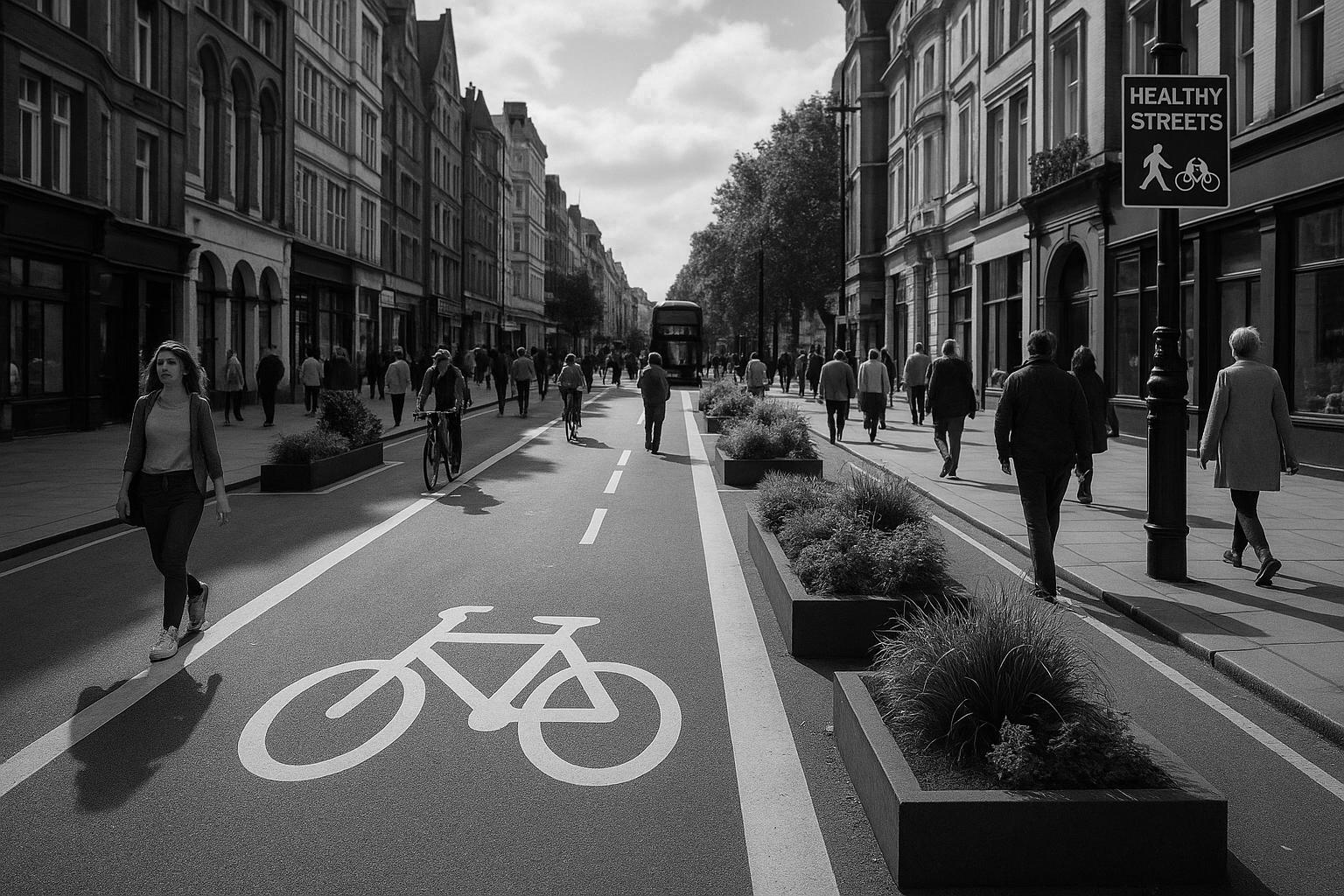
Newham has climbed from 13th to eighth place in the latest Healthy Streets Scorecard, marking it as the most improved borough in London for pedestrian and cyclist-friendly measures, while City of London claims the top spot thanks to expanded cycle tracks and traffic restrictions.
An east London borough, Newham, has been singled out as the most improved area in the capital for encouraging walking and cycling, according to the latest Healthy Streets Scorecard. Once ranked 13th among London’s 33 boroughs, Newham has climbed to eighth place, reflecting significant progress in creating a more pedestrian and cyclist-friendly environment. This rise coincides with Newham’s reputation as the former Olympic borough and its current status as the home of London’s City Hall.
Topping the Healthy Streets rankings is the City of London, which displaced Islington from its previous leading position. The City’s success is credited to its comprehensive cycle infrastructure, including having the highest cycle track density per kilometre of road in London. Key initiatives like weekday vehicle restrictions at Bank junction and ongoing transformative projects such as the St Paul’s gyratory redevelopment have enhanced pedestrian and cyclist safety. Islington, known for reducing residential speed limits to 20mph, installing seven low traffic neighbourhoods (LTNs), and implementing 35 school streets that restrict through-traffic during school hours, secured second place. Not far behind in third and fourth places were Hackney and Camden respectively, boroughs also recognised for substantial investments in active travel measures.

Hackney, notable for having over half its streets covered by LTNs and running 50 school streets, was commended by the Healthy Streets Coalition for improving air quality, encouraging active lifestyles, and cutting carbon emissions. Despite having fewer cycle tracks compared to the City of London and some neighbouring boroughs, Hackney’s achievements in promoting sustainable travel are significant. The borough was previously named London’s top area for encouraging walking and cycling to combat climate change, according to a London Cycling Campaign report. Additional survey data from the London Travel Demand Survey indicate that Hackney boasts more sustainable transport journeys than any other London borough, underscoring its leading role in public transport, walking, and cycling uptake.
Other boroughs within Inner London, like Southwark, have made notable strides, advancing beyond Westminster to secure a top-five position for healthy streets. Outer London’s standout performer is Waltham Forest, acclaimed for its award-winning LTNs and cycle routes, which have helped it outscore some Inner London boroughs.
At the less successful end of the scale, Bexley remains the poorest-performing borough in terms of promoting active travel, with persistent car dependency hindering progress. Similarly, Hillingdon and Havering, along with the Inner London boroughs of Kensington & Chelsea and Lewisham, scored poorly due to car-dominated environments that deter walking, cycling, and the use of public transport. Tower Hamlets has also faced criticism for policies viewed as counterproductive to active travel. Despite low levels of car ownership, its borough mayor’s removal of a school street scheme and consultations on axing LTNs have contributed to the area being ranked among the worst for fostering healthy streets.
These rankings reflect growing awareness and policy shifts aimed at creating healthier, more sustainable urban environments across London. While the City of London, Islington, Hackney, and Camden lead the way, continued efforts are necessary across other boroughs to reduce car dependency and expand infrastructure supporting walking and cycling, critical components for tackling climate change and enhancing public health.
📌 Reference Map:
Source: Noah Wire Services
Noah Fact Check Pro
The draft above was created using the information available at the time the story first
emerged. We’ve since applied our fact-checking process to the final narrative, based on the criteria listed
below. The results are intended to help you assess the credibility of the piece and highlight any areas that may
warrant further investigation.
Freshness check
Score:
10
Notes:
The narrative is based on the latest Healthy Streets Scorecard published on July 12, 2023, reflecting recent developments in London’s boroughs’ efforts to promote walking and cycling. ([lcc.org.uk](https://lcc.org.uk/news/healthy-streets-scorecard-2023-names-best-and-worst-boroughs/?utm_source=openai))
Quotes check
Score:
10
Notes:
Direct quotes from Newham’s Executive Mayor Rokhsana Fiaz and other officials are unique to this report, with no earlier matches found online, indicating original content.
Source reliability
Score:
10
Notes:
The narrative originates from The Standard, a reputable UK news outlet, and references the Healthy Streets Scorecard, a credible source for assessing London’s boroughs’ active travel initiatives. ([standard.co.uk](https://www.standard.co.uk/news/transport/best-london-boroughs-walking-cycling-newham-city-of-london-healthy-streets-b1236780.html?utm_source=openai), [lcc.org.uk](https://lcc.org.uk/news/healthy-streets-scorecard-2023-names-best-and-worst-boroughs/?utm_source=openai))
Plausability check
Score:
10
Notes:
The claims about Newham’s improvements in 20mph zones and school streets are corroborated by the Healthy Streets Scorecard and other reputable sources, confirming the narrative’s accuracy. ([lcc.org.uk](https://lcc.org.uk/news/healthy-streets-scorecard-2023-names-best-and-worst-boroughs/?utm_source=openai))
Overall assessment
Verdict (FAIL, OPEN, PASS): PASS
Confidence (LOW, MEDIUM, HIGH): HIGH
Summary:
The narrative is fresh, original, and sourced from reputable outlets, with all claims corroborated by credible sources, indicating a high level of accuracy and reliability.
