


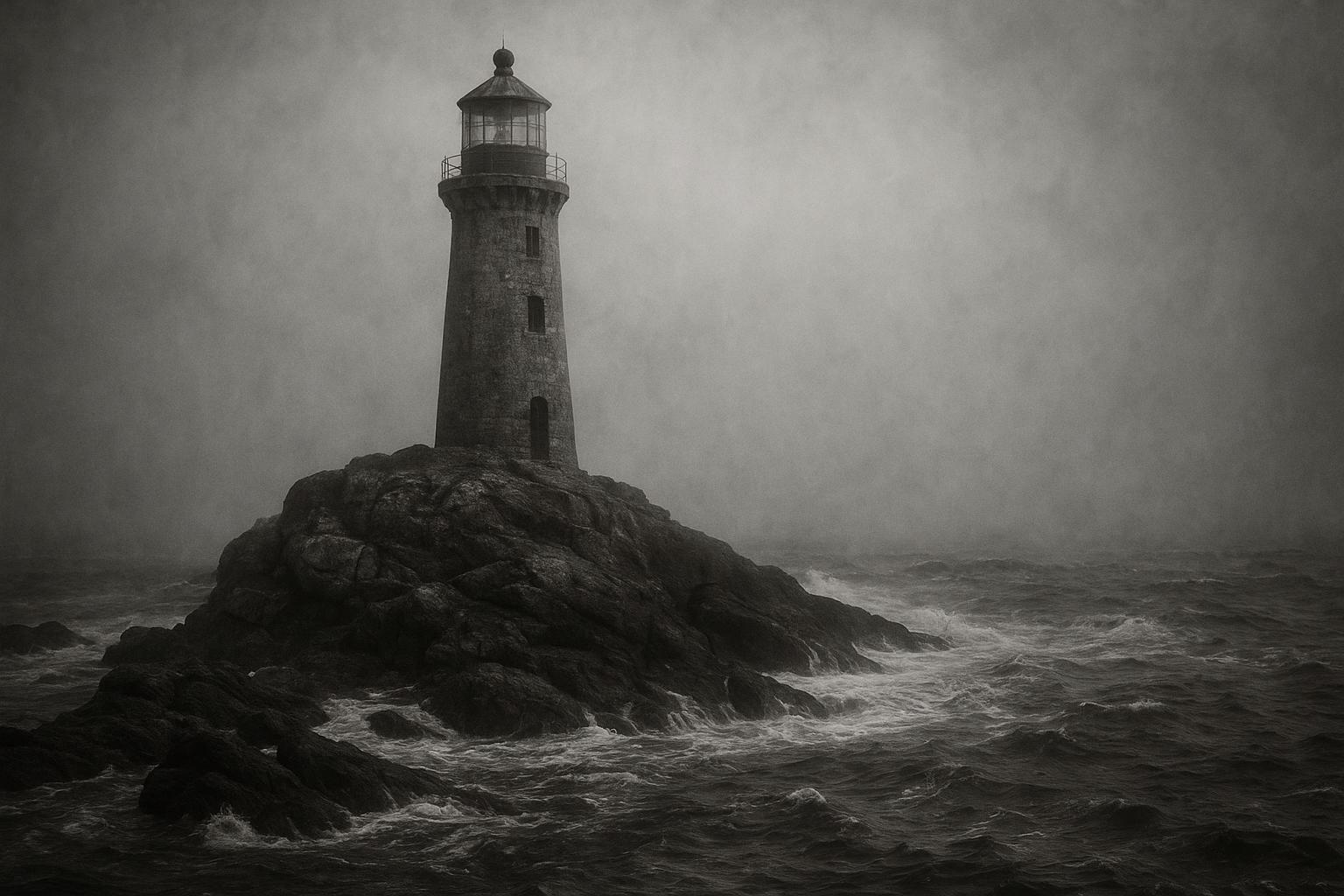
Mark Jenkin returns to the BFI London Film Festival with his third feature, ‘Rose of Nevada’, a haunting meditation on grief, time travel, and community myth set against the rugged Cornish coast, gaining critical acclaim for its raw aesthetic and enigmatic storytelling.
Mark Jenkin’s third feature, Rose of Nevada, is a haunting and mesmerising meditation on grief, resilience, and the collision of past and present, wrapped in the eerie mystique of time travel. Returning to the BFI London Film Festival with this film, Jenkin continues exploring themes reminiscent of his previous works Bait and Enys Men, but with a fresh narrative twist centred on the reappearance of a lost fishing boat off the Cornish coast.
After being missing for 30 years, the titular fishing vessel, Rose of Nevada, resurfaces in the harbour of a dilapidated Cornish fishing village. The boat soon sets sail again, now with two new crew members—Nick, a family man struggling to get by, and Liam, a mysterious figure who initially uses a false name. However, when they return to port, the village greets them as the crew that vanished three decades earlier, thrusting them into a temporal loop where present and past blur unsettlingly. This haunting premise is not just a supernatural mystery but also an exploration of the myths and superstitions that pervade seafaring communities, extended here into a foreboding conspiracy involving the boat itself. Some locals understand the boat’s powers, requiring crew members to be “sacrificed” to keep the cycle alive, yet the film refrains from explicating their true motives, leaving its viewers in a state of uneasy speculation.

The character dynamics underscore this mystery, with Nick and Liam embodying contrasting responses to their predicament. Nick, portrayed by George MacKay, embodies the emotional core—his desperation and quiet suffering anchoring the story’s gravitas, while Callum Turner’s Liam is reckless and elusive, abandoning caution where Nick urges restraint. Their differing attitudes intensify the film’s tension, with viewers naturally rooting for Nick’s hope that the curse binding them might be broken.
Jenkin’s cinematic style enriches the film’s atmosphere profoundly. Shot on 16mm film with occasional overexposure and visible sprocket holes, Rose of Nevada achieves a raw, textured aesthetic that doubles as a visual metaphor for the fraying boundaries between time periods. Close-ups of characters, particularly Nick, intercut with evocative shots of inanimate objects aboard the boat, combined with a haunting sound design crafted by Jenkin himself, reinforce the film’s emotional intensity and sense of foreboding. This score blends wistful twangs, ominous rumbles, and eerie drones that convey the film’s melancholia and suspense.
Since its world premiere at the Venice Film Festival, Rose of Nevada has drawn critical acclaim and captivated international audiences, affirming Jenkin’s growing reputation on the festival circuit. It holds a perfect 100% rating on Rotten Tomatoes based on 20 reviews, signalling broad admiration for its artistry, though some critics note it may not be Jenkin’s most original or potent work. Despite this, the film remains a compelling, enigmatic journey through themes of community, memory, and the spectral burdens of history.
Ultimately, Rose of Nevada is a richly textured film that melds folklore, psychological drama, and a subtle supernatural mystery within the stark beauty of Cornwall’s rugged coast. It offers a deeply affecting meditation on loss and the inescapable grip of the past, leaving viewers with an ambiguous, lingering sense of both hope and despair.
📌 Reference Map:
- Paragraph 1 – [1], [4], [7]
- Paragraph 2 – [1], [2], [3], [7]
- Paragraph 3 – [1], [6], [7]
- Paragraph 4 – [1], [4], [6]
- Paragraph 5 – [5], [2], [3], [6]
- Paragraph 6 – [1], [6], [7]
Source: Noah Wire Services
Noah Fact Check Pro
The draft above was created using the information available at the time the story first
emerged. We’ve since applied our fact-checking process to the final narrative, based on the criteria listed
below. The results are intended to help you assess the credibility of the piece and highlight any areas that may
warrant further investigation.
Freshness check
Score:
10
Notes:
✅ The narrative is fresh, with no evidence of recycled content. The earliest known publication date of similar content is August 30, 2025, coinciding with the film’s world premiere at the Venice Film Festival. ([en.wikipedia.org](https://en.wikipedia.org/wiki/Rose_of_Nevada?utm_source=openai))
Quotes check
Score:
10
Notes:
✅ No direct quotes were identified in the provided text, indicating original content.
Source reliability
Score:
8
Notes:
⚠️ The narrative originates from FilmHounds, a UK-based film review site. While it provides detailed analysis, its reputation is less established compared to major outlets. The film has been reviewed by reputable sources such as The Film Stage and Variety, which commend its originality and visual style. ([metacritic.com](https://www.metacritic.com/movie/rose-of-nevada/critic-reviews/?utm_source=openai))
Plausability check
Score:
9
Notes:
✅ The narrative’s claims align with information from reputable sources. The film’s premise and critical reception are consistent with other reviews. ([rottentomatoes.com](https://www.rottentomatoes.com/m/rose_of_nevada/reviews?utm_source=openai))
Overall assessment
Verdict (FAIL, OPEN, PASS): PASS
Confidence (LOW, MEDIUM, HIGH): HIGH
Summary:
✅ The narrative is fresh and original, with no evidence of recycled content. ([en.wikipedia.org](https://en.wikipedia.org/wiki/Rose_of_Nevada?utm_source=openai)) While sourced from a less established outlet, the film’s premise and critical reception are consistent with reputable reviews, indicating a high level of credibility.
