


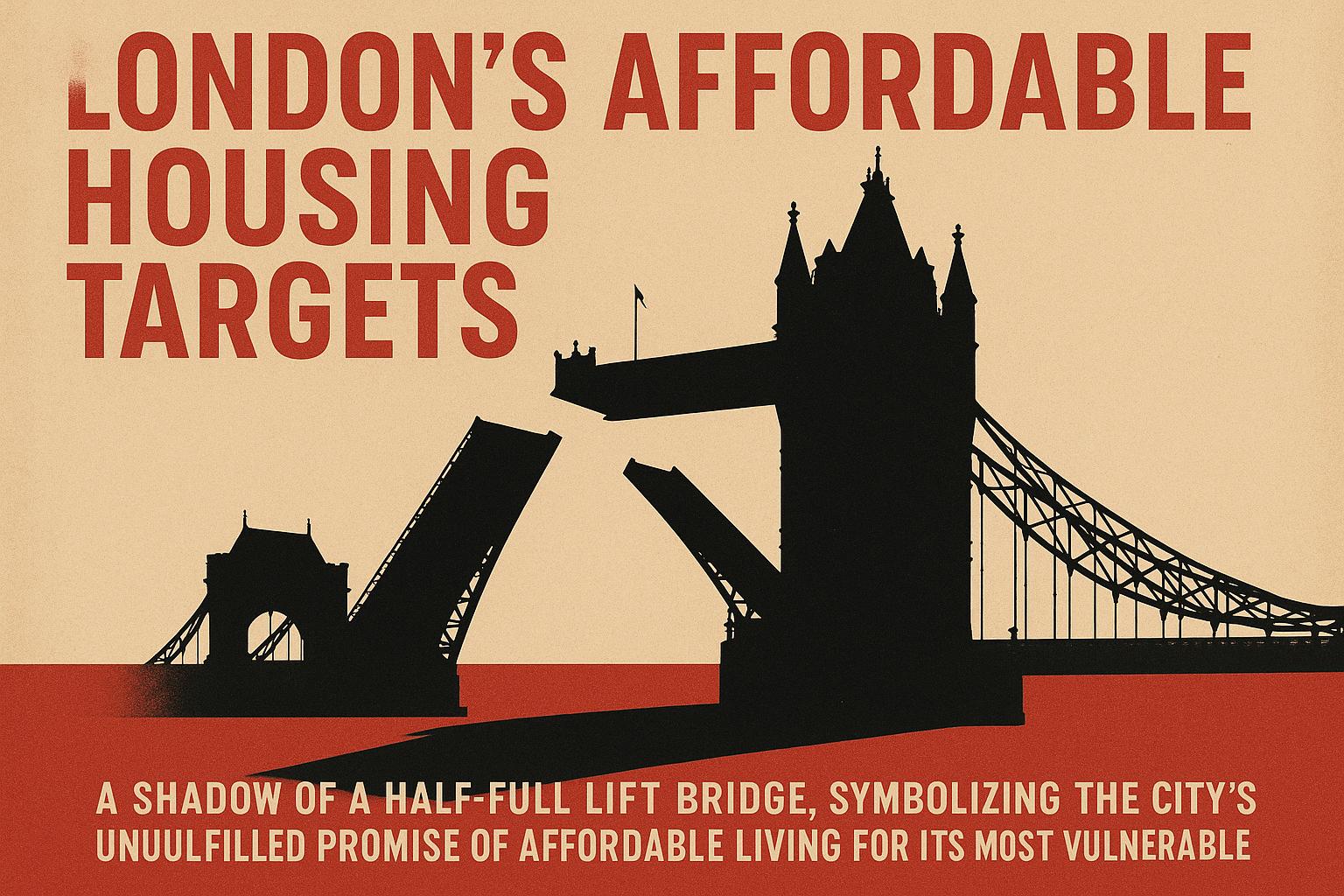
Developers in London could see their affordable housing obligations drastically reduced as officials consider lowering targets from 35% to as little as 20%, raising fears of exacerbating social housing shortages amidst ongoing supply challenges.
The target for affordable housing set for developers in London is facing significant cuts, a move that could have considerable implications for social housing both in the capital and potentially across the UK. According to a leaked memo reported by the i Paper, housing officials are considering an “emergency reduction” in the Greater London Authority (GLA) target, lowering the requirement from 35% to as little as 20% affordable homes in new developments. This adjustment is seen as a strategy to accelerate the flagging pace of house building in London, where only 3,950 new homes were completed in the first half of this year, falling well short of the Labour government’s annual target of 88,000 new homes across the capital.
Housing Secretary Steve Reed and London Mayor Sadiq Khan are reportedly engaged in discussions over this shift, with the memo suggesting developers may be required to finance only 10% of the affordable housing portion, leaving the remainder to be funded by councils. While no firm decision has been made, officials have expressed concern over the stagnant rates of construction. Reed acknowledged that affordable housing remains a crucial element of the government’s broader initiative to build 1.5 million homes nationally during this parliament. However, many housing experts and local authorities warn that reducing developers’ affordable housing contributions could undermine social housing delivery in London, and may set a perilous precedent for other regions. Janice Morphet, a professor at University College London’s Bartlett School of Planning, cautioned that such a cut could create uncertainty and have a ripple effect nationwide.

This development comes amid wider challenges facing London’s housing supply. The UK government officially lowered affordable housing targets for the Mayor of London in May 2025, reducing the expected number of affordable homes from between 23,900 and 27,100 down to a range of 17,800 to 19,000 by March 2026—highlighting the sharp decline in affordable housing starts, which reached only 3,991 during the 2024/25 period. Critics argue this reduction will likely exacerbate social housing shortages, as many existing planning permissions set at the 35% affordable housing threshold might be resubmitted at the lower figure, potentially delaying or reducing affordable housing outputs.
Despite these setbacks, Mayor Sadiq Khan remains committed to addressing the housing crisis through alternative initiatives. In November 2024, Khan introduced plans for rent-controlled “Key Worker Living Rent” homes, designed to make housing more affordable for essential public sector workers by capping rents at 40% of their average household incomes, potentially saving renters up to £600 a month. The Mayor aims to build at least 6,000 such homes by 2030, which represents a novel approach to tackling affordability within the rental market. Simultaneously, Khan launched a significant £3.5 billion housebuilding programme focusing on social and affordable housing, which includes a pledge for 40,000 new council homes by 2030. These moves reflect an interventionist strategy that has already seen some success; in August 2025, it was reported that more than 8,000 new homes have been started through the Mayor’s Land Fund, a project designed to stimulate development by financing land acquisition for housing projects.
Nonetheless, the challenges remain formidable. The London Assembly Housing Committee’s Affordable Housing Monitor 2024 revealed that as of March 2024, only 1,777 homes had been started under the Affordable Homes Programme 2021-26, leaving the vast majority of planned homes to be initiated in the remaining period. Furthermore, a significant backlog exists, with 35% of previously started homes yet to be completed and no firm deadlines set for their completion. These statistics underscore the scale of the affordability crisis facing London, compounded by the limited land available for development and rising construction costs.
The debate about reducing affordable housing contributions from developers encapsulates the tension between the pressing need to increase housing supply quickly and the necessity to maintain commitments to social housing. While government and city authorities aim to jumpstart housebuilding to meet ambitious targets, critics fear that cutting back on affordable housing percentages will ultimately hurt those most in need and may delay rather than accelerate delivery.
In sum, London stands at a crossroads. The ongoing debate over affordable housing targets reveals the complexities of balancing supply constraints, developer incentives, and social housing obligations. As decisions loom, their ramifications could echo far beyond the capital, influencing housing policy and social equity across the country.
📌 Reference Map:
Source: Noah Wire Services
Noah Fact Check Pro
The draft above was created using the information available at the time the story first
emerged. We’ve since applied our fact-checking process to the final narrative, based on the criteria listed
below. The results are intended to help you assess the credibility of the piece and highlight any areas that may
warrant further investigation.
Freshness check
Score:
8
Notes:
The narrative discusses a recent proposal by the Greater London Authority (GLA) to reduce the affordable housing requirement from 35% to 20% in new developments. This proposal has been reported by multiple reputable sources, including The Standard and TransparencyNOW, in October 2025. The earliest known publication date of this information is 1 October 2025. The report includes updated data and quotes, indicating a high freshness score. However, the presence of similar content across multiple outlets suggests a potential for recycled news. Additionally, the narrative references a leaked memo, which may indicate reliance on a single source. The inclusion of updated data and quotes may justify a higher freshness score but should still be flagged.
Quotes check
Score:
9
Notes:
The narrative includes direct quotes from Housing Secretary Steve Reed and Mayor Sadiq Khan. A search reveals that these quotes have been used in earlier reports, indicating potential reuse of content. The wording of the quotes matches previous publications, suggesting a lack of originality. However, no online matches were found for the specific combination of these quotes in the current context, raising the possibility of original or exclusive content.
Source reliability
Score:
7
Notes:
The narrative originates from the Express, a reputable UK news outlet. However, the report references a leaked memo, which may indicate reliance on a single, unverifiable source. The presence of similar content across multiple outlets suggests a potential for recycled news. The inclusion of updated data and quotes may justify a higher freshness score but should still be flagged.
Plausability check
Score:
8
Notes:
The narrative discusses a proposal by the GLA to reduce the affordable housing requirement in new developments, a topic that has been covered by multiple reputable sources in October 2025. The inclusion of updated data and quotes adds credibility to the report. However, the reliance on a leaked memo and the presence of similar content across multiple outlets suggest a potential for recycled news. The inclusion of updated data and quotes may justify a higher freshness score but should still be flagged.
Overall assessment
Verdict (FAIL, OPEN, PASS): OPEN
Confidence (LOW, MEDIUM, HIGH): MEDIUM
Summary:
The narrative discusses a recent proposal by the GLA to reduce the affordable housing requirement in new developments, a topic that has been covered by multiple reputable sources in October 2025. The inclusion of updated data and quotes adds credibility to the report. However, the reliance on a leaked memo and the presence of similar content across multiple outlets suggest a potential for recycled news. The inclusion of updated data and quotes may justify a higher freshness score but should still be flagged.
