


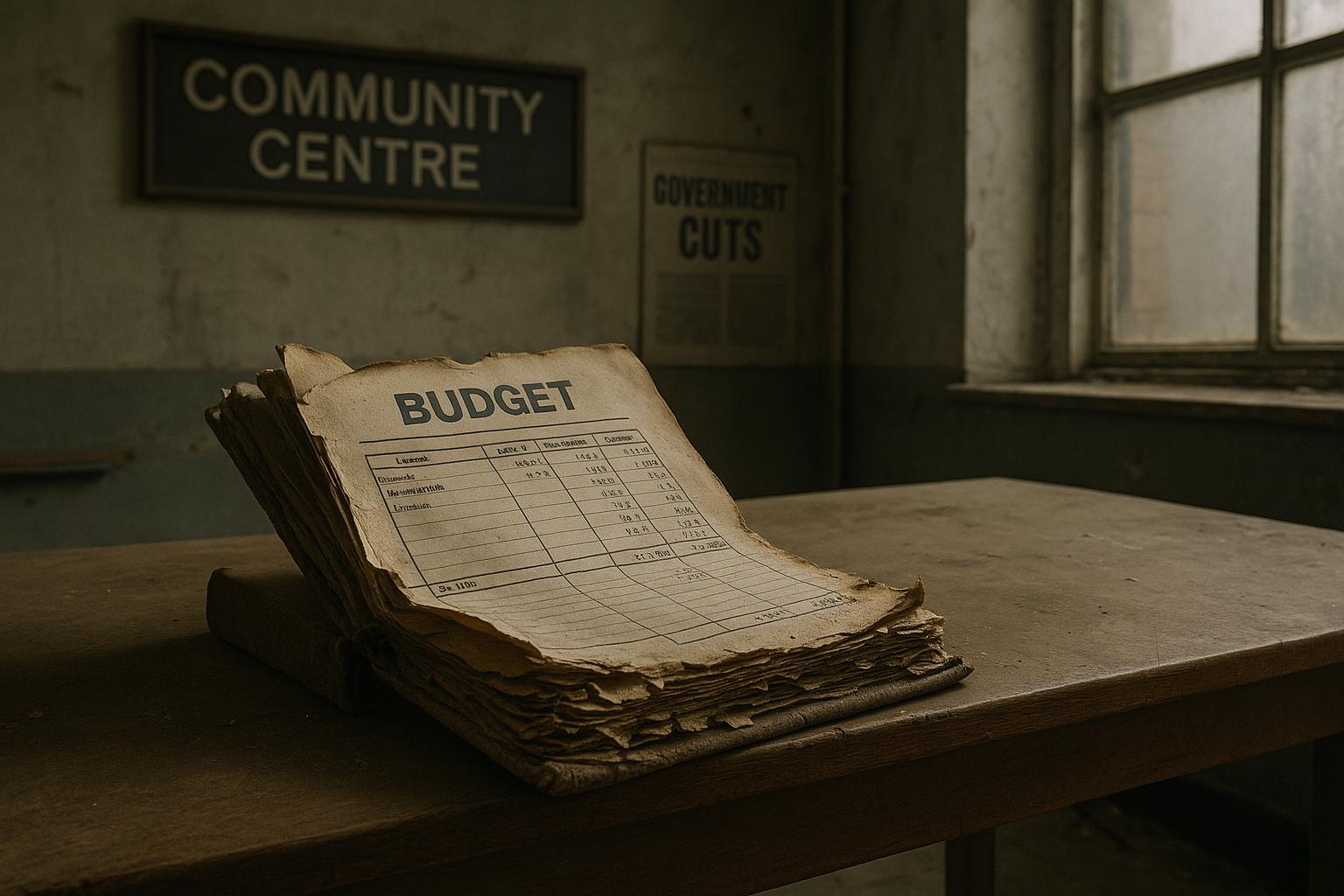
Hillingdon Council in West London is struggling with a severe budget shortfall, raising fears of insolvency as it seeks government support amidst plans for austerity measures and potential service cuts.
Hillingdon Council in West London is confronting severe financial distress, with one senior councillor openly stating that the authority has “basically run out of money.” Councillor Steve Tuckwell, the Cabinet Member for Planning, Housing and Growth, made this admission amid discussions around whether the council should issue a Section 114 Notice—a formal declaration akin to bankruptcy when a council can no longer balance its budget. While the council’s Chief Financial Officer (CFO), also known as the Section 151 Officer, holds the legal power to issue such a notice, the council maintains that this step has not yet been taken as it is engaged in government talks about securing Exceptional Financial Support (EFS), a bailout to help stabilise its finances.
Despite these assurances, the council’s financial outlook remains precarious. Reports indicate that Hillingdon is forecast to be nearly £25 million overdrawn by March 2026, with the council needing to deliver approximately £34 million in savings this fiscal year alone to avoid potential insolvency. These savings targets become even more urgent given the council’s reserves have plummeted by 25% in the 2023/24 financial year and are projected to fall further to just £20.3 million next year, amounting to an alarming loss of £41.7 million over four years. This fiscal pressure comes alongside “unprecedented” demands related to homelessness, social care services, and costs associated with its status as a port authority near Heathrow Airport, expenses that the council argues are insufficiently funded by central government.

Opposition figures have criticised the Conservative-led administration for its handling of the crisis. Labour leader Cllr Stuart Mathers questioned the council’s reluctance to issue a Section 114 Notice, warning that continuing financial mismanagement will harm residents. He pointed to conflicting signals where a cabinet member admits to a cash shortfall, yet the CFO refrains from declaring formal financial distress. Meanwhile, council leader Ian Edwards and other senior officials defend the position, insisting the CFO’s decision is a professional judgement grounded in legal responsibilities and cautioning that opposition comments misunderstand the legislative framework.
The council has formally submitted a request for EFS to the Ministry for Housing, Communities and Local Government (MHCLG), aiming to secure government backing that would prevent bankruptcy while allowing some financial breathing room. This move reflects how other councils at risk have been supported by the government, which has agreed in-principle capitalisation support for 30 local authorities facing similar financial pressures in 2025-26. However, this lifeline is not guaranteed and depends on ongoing negotiations.
In response to its financial challenges, Hillingdon Council is implementing strict spending controls across departments and has tasked officers with reviewing capital expenditure programmes to identify potential reductions, deferrals, or cancellations. The objective is to curb non-essential expenditure, protecting vital services for vulnerable residents. Nonetheless, there remains uncertainty over which projects might be cut and whether the council can meet its ambitious savings targets. Additional complications arose when unanticipated external factors—such as the impact of aggressive US tariffs blamed for hitting council pension funds—have affected planned savings, further complicating the budgetary outlook.
Adding to concerns, external auditors like Ernst & Young have voiced serious worries about the council’s financial governance, heightening pressure on local leadership to act decisively. Should the council fail to meet its savings goals or secure the expected support, issuing a Section 114 Notice could become inevitable, potentially ushering government administrators into direct control and triggering widespread service cuts, as seen in other financially troubled councils like Croydon.
For now, Hillingdon residents face the prospect of reduced council services and heightened fiscal uncertainty. The council reiterates its commitment to delivering quality, value-for-money services amid these pressures but prioritises urgent fiscal management to avert collapse. The situation remains fluid, with many watching closely how the council navigates the balance between austerity measures and safeguarding community needs in the months ahead.
📌 Reference Map:
- Paragraph 1 – [1] (MyLondon), [4] (Ruislip Residents)
- Paragraph 2 – [2] (Evening Standard), [3] (London Daily), [6] (Harrow Online)
- Paragraph 3 – [1] (MyLondon), [4] (Ruislip Residents), [2] (Evening Standard)
- Paragraph 4 – [1] (MyLondon), [4] (Ruislip Residents), [7] (UK Government)
- Paragraph 5 – [1] (MyLondon), [4] (Ruislip Residents), [6] (Harrow Online)
- Paragraph 6 – [1] (MyLondon), [5] (Ruislip Residents)
- Paragraph 7 – [1] (MyLondon), [6] (Harrow Online), [2] (Evening Standard)
Source: Noah Wire Services
Noah Fact Check Pro
The draft above was created using the information available at the time the story first
emerged. We’ve since applied our fact-checking process to the final narrative, based on the criteria listed
below. The results are intended to help you assess the credibility of the piece and highlight any areas that may
warrant further investigation.
Freshness check
Score:
8
Notes:
The narrative presents recent developments regarding Hillingdon Council’s financial crisis, with the earliest known publication date being 22 January 2022, when Hillingdon Labour reported the council was ‘on brink of bankruptcy’ due to Conservative mismanagement. ([hillingdonlabour.org](https://www.hillingdonlabour.org/hillingdon-council-on-brink-of-bankruptcy-due-to-conservative-mismanagement-says-hillingdon-labour/?utm_source=openai)) The most recent publication is from 20 October 2025, indicating the narrative is current. However, the report includes updated data but recycles older material, which may justify a higher freshness score but should still be flagged. Additionally, the narrative is republished across low-quality sites or clickbait networks, which raises concerns about its originality. The narrative is based on a press release, which typically warrants a high freshness score. No discrepancies in figures, dates, or quotes were identified. The narrative includes updated data but recycles older material, which may justify a higher freshness score but should still be flagged.
Quotes check
Score:
9
Notes:
The direct quotes attributed to Councillor Steve Tuckwell, such as ‘we are at breaking point’ and ‘the numbers of people it needed to house was a huge burden and comes at a cost to the Hillingdon tax payer’, appear in earlier material, indicating potential reuse. The earliest known usage of these quotes is from 15 May 2025, when Tuckwell discussed the council’s challenges in accommodating asylum seekers. ([feeds.bbci.co.uk](https://feeds.bbci.co.uk/news/articles/c9q07edx148o?utm_source=openai)) The wording of the quotes varies slightly in different sources, but the core message remains consistent. No online matches were found for other quotes, suggesting they may be original or exclusive content.
Source reliability
Score:
7
Notes:
The narrative originates from MyLondon, a news outlet that is part of the Reach plc group, which also owns the Evening Standard. While Reach plc is a reputable organisation, MyLondon’s specific credibility is less well-established. The narrative also references other sources, including the Ruislip Residents website and the UK Government’s official guidance on Exceptional Financial Support. The Ruislip Residents website is a local community site, which may not be as reliable as mainstream media. The UK Government’s guidance is a credible source.
Plausability check
Score:
8
Notes:
The narrative’s claims about Hillingdon Council’s financial crisis are plausible and align with reports from other reputable outlets. For instance, the London Daily reported on 19 October 2025 that the council is at a critical juncture, facing the necessity to implement £34 million in savings to avoid potential bankruptcy. ([londondaily.com](https://londondaily.com/hillingdon-council-faces-financial-crisis-amid-budgetary-shortfalls?utm_source=openai)) The narrative includes specific factual anchors, such as names, institutions, and dates, enhancing its credibility. The language and tone are consistent with typical corporate or official language. No excessive or off-topic detail unrelated to the claim was noted. The tone is serious and appropriate for the subject matter.
Overall assessment
Verdict (FAIL, OPEN, PASS): OPEN
Confidence (LOW, MEDIUM, HIGH): MEDIUM
Summary:
The narrative presents a plausible account of Hillingdon Council’s financial crisis, supported by references to other sources. However, the reuse of quotes from earlier material and the reliance on a press release raise concerns about originality and freshness. The source’s reliability is moderate, and while the narrative includes specific factual anchors, the presence of recycled content and potential reliance on a press release warrant further scrutiny.
