


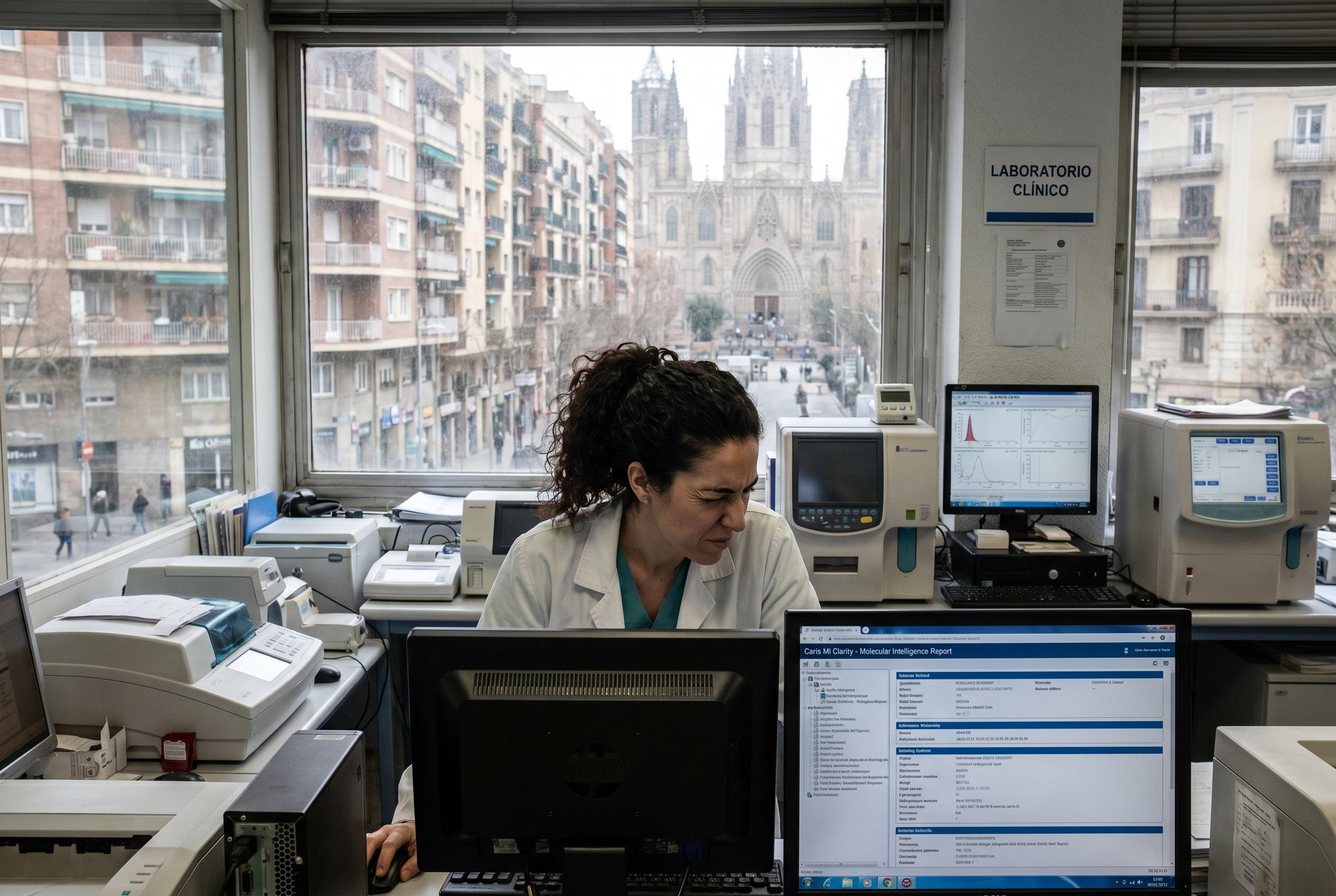
Shoppers of medical advances are noticing a new tool: Caris MI Clarity, an AI-driven prognostic test for postmenopausal patients with HR+/HER2- early, node-negative breast cancer that predicts both early and late distant recurrence from routine pathology slides , and delivers results fast.
Essential Takeaways
- Single-sample workflow: Uses standard H&E slides and clinical data, so no extra genomic sequencing is required and labs can run it on routine specimens.
- Dual-window prediction: Provides separate risk estimates for early (0–5 years) and late (5–15 years) distant recurrence, helping tailor adjuvant therapy decisions.
- Fast turnaround: Results are available within about three business days, offering timely input at the point of diagnosis.
- Data-driven validation: The model was trained and validated using large clinical-trial datasets including NSABP B-42 and TAILORx, in collaboration with major cooperative groups.
- Practical feel: The test feels like a clinic-friendly prediction tool , low-friction sample handling, quiet workflow, and clinically actionable timelines.
What Caris MI Clarity actually does , and why it matters now
Caris MI Clarity looks at digitised H&E slides together with key clinical details and runs them through an AI model to estimate a patient’s risk of distant recurrence both early and late. That visual-first approach gives a tactile, pathology-led answer rather than requiring fresh sequencing, so it slots into familiar lab routines. According to Caris Life Sciences, this means many centres can add prognostic insight without reorganising their pathology pipeline, which is a welcome practical win for busy clinics.

How the AI was trained and tested , real trial data, not just promises
The model behind MI Clarity was developed using a multimodal dataset and validated on large, well-known breast cancer trials. Caris reports that training included NSABP B-42 and validation used the TAILORx dataset, and the company worked with ECOG‑ACRIN and NRG Oncology on the effort. That clinical-trial pedigree matters: these datasets include long-term outcomes, so the algorithm’s late-recurrence estimates aren’t theoretical , they’re grounded in decades of follow-up.
Why separating early and late recurrence risk is useful for patients
Clinicians have long needed to weigh immediate recurrence risk against the possibility of later relapse when deciding on chemotherapy and extended endocrine therapy. MI Clarity’s two time windows , 0–5 years and 5–15 years , provide a clearer picture of evolving risk. For a postmenopausal patient with HR+/HER2- node-negative disease, that could mean avoiding unnecessary chemo now or committing to longer endocrine treatment later. In short, the test supplies nuance that a single aggregate risk score can miss.
Practical considerations for pathology labs and oncologists
Because MI Clarity uses routine H&E slides and clinical metadata, pathology labs won’t need to change their specimen collection or send out tissue for sequencing. Caris says the turnaround is about three business days, which fits the tempo of treatment planning. For clinicians, the advice is straightforward: ensure complete clinical input, choose the right slide, and interpret the AI score alongside classic clinicopathologic factors. The test is a decision-support tool , not a replacement for multidisciplinary judgement.
What critics and optimists are likely to say next
Optimists will point to the speed and convenience , an actionable prediction from material already on the slide tray. Cautious voices will note that broad clinical adoption needs continued real-world performance data and clarity on how the scores change management. Caris’s collaboration with cooperative groups and use of landmark trials for validation helps answer those concerns, but clinicians will rightly want to see independent, post-launch outcomes over time.
It’s a small change with potentially meaningful impact: a faster, pathology-friendly way to see how recurrence risk shifts across years.
Source Reference Map
Story idea inspired by: [1]
Sources by paragraph:
Noah Fact Check Pro
The draft above was created using the information available at the time the story first
emerged. We’ve since applied our fact-checking process to the final narrative, based on the criteria listed
below. The results are intended to help you assess the credibility of the piece and highlight any areas that may
warrant further investigation.
Freshness check
Score:
10
Notes:
The article reports on Caris Life Sciences’ recent launch of Caris MI Clarity, an AI-driven prognostic test for breast cancer recurrence risk assessment, announced on May 5, 2026. ([carislifesciences.com](https://www.carislifesciences.com/about/news-and-media/caris-life-sciences-launches-caris-mi-clarity/?utm_source=openai))
Quotes check
Score:
8
Notes:
The article includes direct quotes from Caris Life Sciences’ Chief Medical Officer, George W. Sledge, Jr., MD. These quotes are consistent with those found in the company’s official press release. ([carislifesciences.com](https://www.carislifesciences.com/about/news-and-media/caris-life-sciences-launches-caris-mi-clarity/?utm_source=openai))
Source reliability
Score:
9
Notes:
The primary source is Caris Life Sciences’ official press release, a reputable source for company announcements. The article also references other reputable sources, including Investing.com and StreetInsider. ([investing.com](https://www.investing.com/news/company-news/caris-launches-ai-test-for-breast-cancer-recurrence-risk-93CH-4658947?utm_source=openai))
Plausibility check
Score:
9
Notes:
The claims about Caris MI Clarity’s capabilities align with current advancements in AI-driven medical diagnostics. The test’s features, such as analyzing digitized pathology slides and providing rapid results, are plausible and consistent with industry trends. ([carislifesciences.com](https://www.carislifesciences.com/about/news-and-media/caris-life-sciences-launches-caris-mi-clarity/?utm_source=openai))
Overall assessment
Verdict (FAIL, OPEN, PASS): PASS
Confidence (LOW, MEDIUM, HIGH): HIGH
Summary:
The article provides a timely and accurate report on Caris Life Sciences’ launch of Caris MI Clarity, an AI-driven test for breast cancer recurrence risk assessment. The information is consistent with the company’s official press release and corroborated by reputable external sources. The quotes are verifiable, and the content is free from opinion or commentary, enhancing its credibility. ([carislifesciences.com](https://www.carislifesciences.com/about/news-and-media/caris-life-sciences-launches-caris-mi-clarity/?utm_source=openai))
