


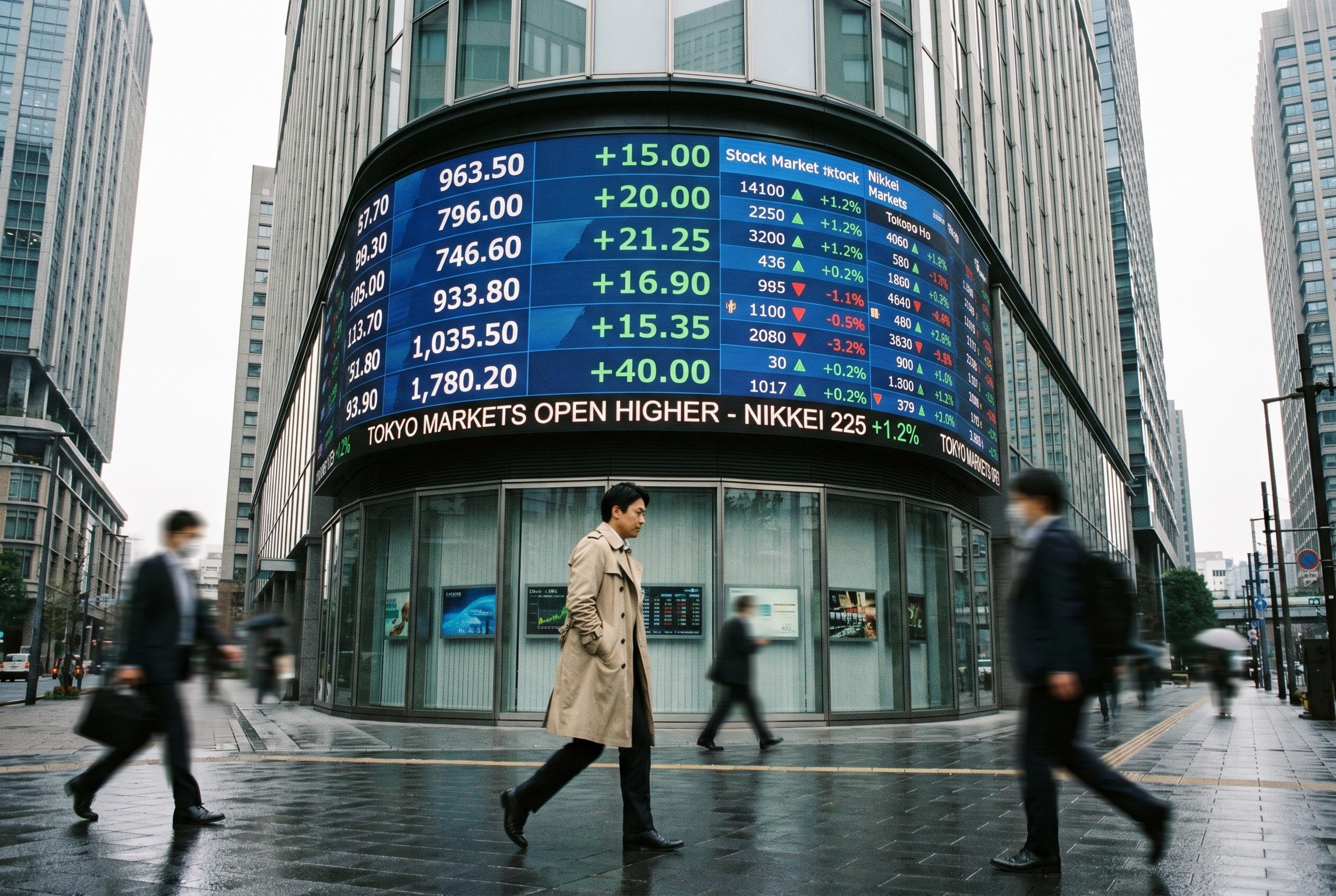
World stock markets rose as policymakers kept interest rates steady, while traders monitored geopolitical risks and corporate earnings, signalling cautious optimism despite ongoing tensions in the Middle East.
Global shares extended their advance on Thursday as traders digested a mix of corporate results, central bank signals and renewed tension in the Middle East. In London, the FTSE 100 climbed 1.6%, while the FTSE 250 and AIM also finished firmer, helped by gains in heavyweight industrial and utility stocks.
The Bank of England held Bank Rate at 3.75% after an eight-to-one vote, with chief economist Huw Pill backing a quarter-point increase instead. In its April monetary policy report, the central bank set out three scenarios for the UK economy, all of which pointed to higher near-term inflation than it had projected in February, as policymakers weighed the risk that an energy shock could feed through into wages and prices. Governor Andrew Bailey said the next move would depend on how severe and how long the energy disruption proves to be.

In Europe, the European Central Bank also kept policy unchanged, but Christine Lagarde made clear that officials had discussed a rise before settling on a pause. She said the governing council was trying to avoid moving too soon or too late, and declined to rule out a June increase, telling reporters that six weeks would be the right interval to judge progress. Earlier ECB hikes in 2023 had lifted rates to their highest level in more than two decades, underlining how determined policymakers remain to push inflation back to target.
Wall Street was broadly higher too, though technology shares moved unevenly. Alphabet surged after stronger-than-expected results from its cloud business, while Meta fell sharply as investors bristled at another rise in capital spending. Treasury yields were little changed, sterling strengthened against both the dollar and the euro, and gold advanced as investors kept one eye on the risk that the conflict in the Middle East could unsettle energy markets further.
Source Reference Map
Inspired by headline at: [1]
Sources by paragraph:
Source: Noah Wire Services
Noah Fact Check Pro
The draft above was created using the information available at the time the story first
emerged. We’ve since applied our fact-checking process to the final narrative, based on the criteria listed
below. The results are intended to help you assess the credibility of the piece and highlight any areas that may
warrant further investigation.
Freshness check
Score:
8
Notes:
The article was published on 30 April 2026, which is within the past week, indicating freshness. However, the content includes information about the Bank of England’s decision to maintain the Bank Rate at 3.75% as of 19 March 2026, which is over a month old. This raises concerns about the timeliness of the information presented.
Quotes check
Score:
7
Notes:
The article includes direct quotes from Governor Andrew Bailey and ECB President Christine Lagarde. However, these quotes are not accompanied by specific dates or sources, making it difficult to verify their authenticity and context. The lack of verifiable sources for these quotes is a significant concern.
Source reliability
Score:
6
Notes:
The article originates from The Independent, a reputable UK news organisation. However, the inclusion of unverified quotes and the lack of clear sourcing for some information raise questions about the overall reliability of the content.
Plausibility check
Score:
7
Notes:
The article discusses the Bank of England’s decision to hold interest rates at 3.75% and mentions the impact of the Middle East conflict on energy prices. While these topics are plausible and relevant, the lack of specific dates and verifiable sources for key claims diminishes the overall credibility of the article.
Overall assessment
Verdict (FAIL, OPEN, PASS): FAIL
Confidence (LOW, MEDIUM, HIGH): MEDIUM
Summary:
The article presents timely information about the Bank of England’s decision to maintain the Bank Rate at 3.75% and discusses the impact of the Middle East conflict on energy prices. However, the inclusion of unverified quotes without specific dates or sources, along with the lack of independent verification for key claims, raises significant concerns about the accuracy and reliability of the content. These issues prevent the article from meeting the necessary standards for publication.
