


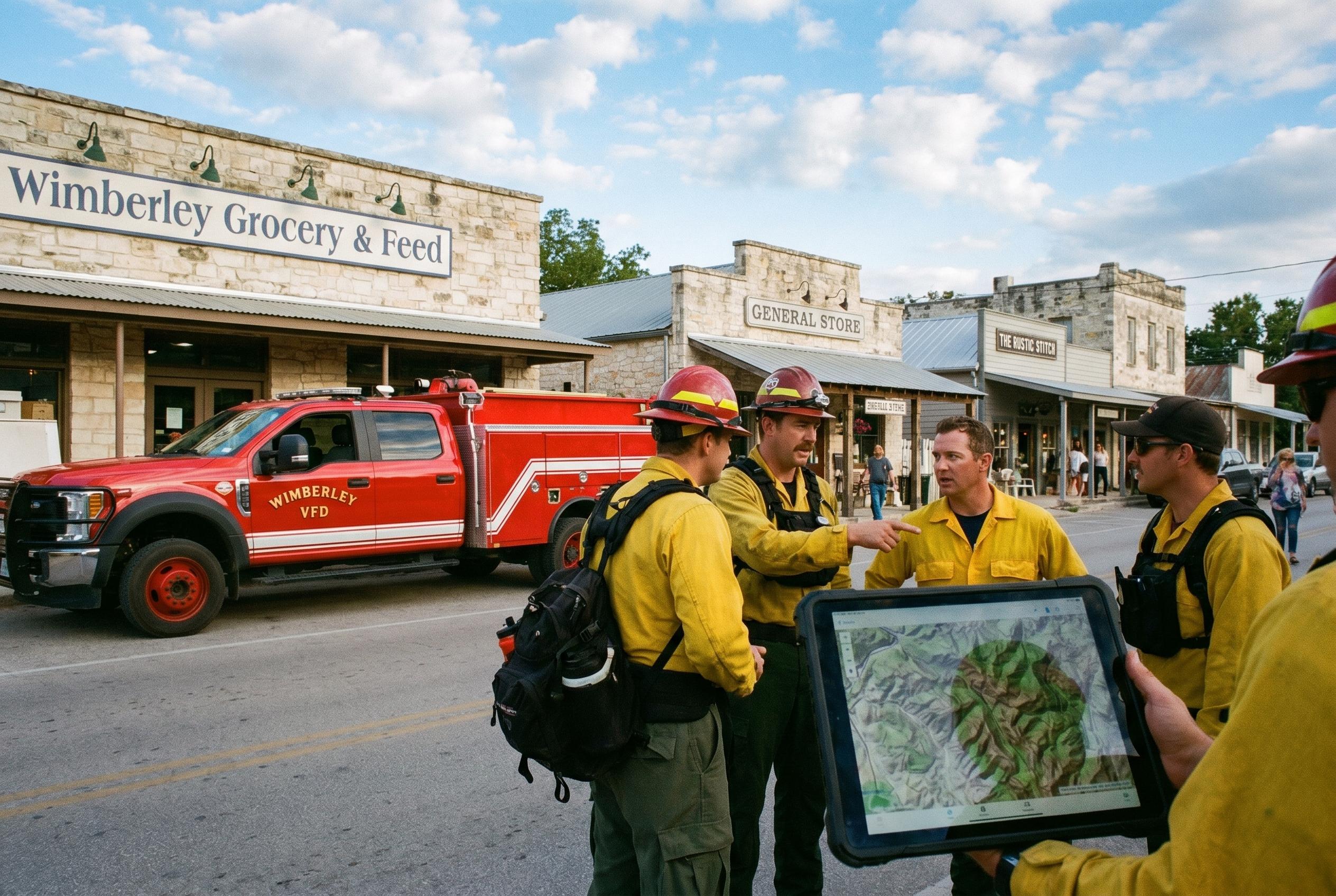
Four Central Texas fire departments are adopting advanced digital tools, including FiSci and Genasys, to better predict wildfire behaviour and coordinate evacuations amid rapid regional growth.
Four Central Texas fire departments are turning to artificial intelligence and digital mapping tools as they look for better ways to track wildfire risk and manage evacuations across a fast-growing part of the Austin area. Travis County Fire Rescue, Pflugerville Fire Department, Lake Travis Fire Rescue and Westlake Fire Department are all adopting FiSci, which models fire behaviour, and Genasys, which is designed to support evacuation planning. According to Firehouse, the departments are at different stages of onboarding, but they are moving forward together as part of a shared regional effort.
Travis County Fire Rescue Chief Ken Bailey led the push to bring in FiSci, while Pflugerville Fire Chief Nick Perkins helped drive the Genasys side of the project. Lake Travis Fire Rescue Chief Bobby Abbott told Firehouse that his department is interested in new tools, but only after working closely with the company behind them and adapting the system to local needs. Westlake Fire Chief David Wilson said the departments are aligned on the overall direction, even if each agency will use the technology differently depending on its own community.

Bailey said his interest in FiSci began after he came across a video demonstration online while searching for training material, including a model showing how spot fires can spread. That search came amid growing concern about wildfire danger in the region. FiSci, which is based in Australia, uses factors such as weather, fuels and topography to predict fire behaviour and help agencies think through ways to limit larger blazes before they escalate.
The local partners involved are all operating in distinct jurisdictions within Travis County’s emergency services structure, which helps explain why the same tools may be applied in slightly different ways from one department to another. Westlake Fire Department says it serves about 17,000 residents across 17 square miles, while Pflugerville Fire Department is a larger career service with 259 paid personnel. The shared technology rollout reflects a broader trend in emergency management: agencies are looking for ways to combine regional coordination with local judgement as wildfire threat and evacuation complexity continue to rise.
Source Reference Map
Inspired by headline at: [1]
Sources by paragraph:
Source: Noah Wire Services
Noah Fact Check Pro
The draft above was created using the information available at the time the story first
emerged. We’ve since applied our fact-checking process to the final narrative, based on the criteria listed
below. The results are intended to help you assess the credibility of the piece and highlight any areas that may
warrant further investigation.
Freshness check
Score:
10
Notes:
The article was published on May 1, 2026, indicating high freshness. No evidence of prior publication or recycled content was found.
Quotes check
Score:
8
Notes:
Direct quotes from fire chiefs are present. However, without independent verification of these statements, the authenticity of the quotes cannot be fully confirmed.
Source reliability
Score:
7
Notes:
The article originates from Firehouse, a reputable source within the fire service community. While generally reliable, it is a niche publication, which may limit broader verification.
Plausibility check
Score:
9
Notes:
The adoption of AI platforms FiSci and Genasys by fire departments aligns with current trends in emergency management. However, without independent confirmation, the specific details of this collaboration remain unverified.
Overall assessment
Verdict (FAIL, OPEN, PASS): OPEN
Confidence (LOW, MEDIUM, HIGH): MEDIUM
Summary:
While the article is recent and presents plausible information, the lack of independent verification and reliance on internal sources necessitate cautious interpretation. Further confirmation from external, independent sources is recommended before publishing.
