


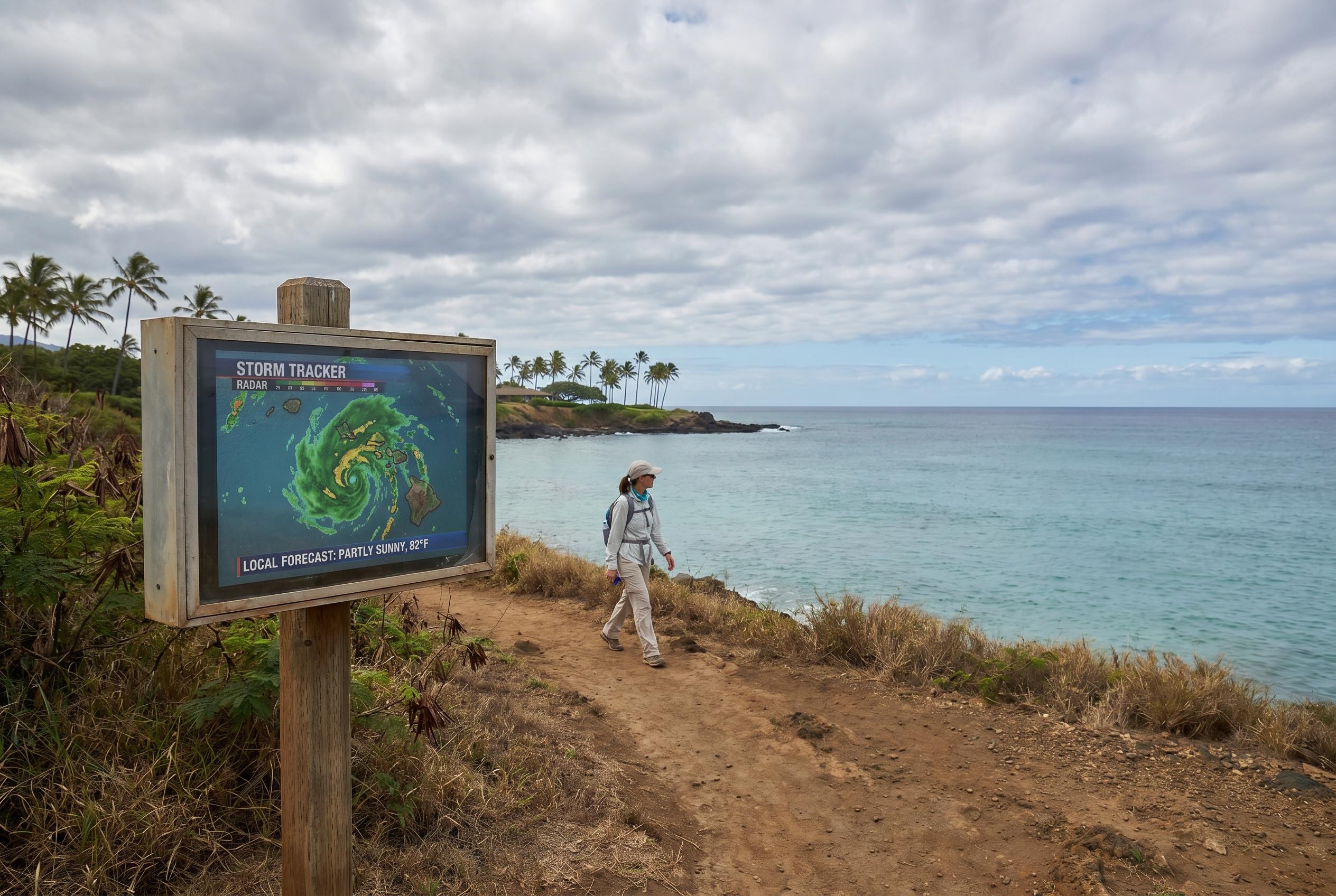
Hawai‘i officials are increasingly adopting AI tools to improve how they prepare for hurricanes and floods, aiming for targeted warnings and better resource deployment after recent extreme weather events.
Artificial intelligence is moving from a theoretical aid to a practical tool in disaster planning, and Hawai‘i officials are increasingly betting it could sharpen how they prepare for the next major storm. After the March Kona lows left a trail of flooding across O‘ahu, including the North Shore, Waialua, Kīhei and Mānoa, planners are looking for systems that can turn broad weather warnings into more precise, localised guidance for emergency managers.
Joseph Green, the director of applied science at the state disaster centre, said the aim is to move beyond general labels of severity and produce information that better explains what a storm is likely to do on the ground. That could eventually mean forecasts tailored to individual neighbourhoods, helping officials decide where to send crews, how urgently to warn residents and what kind of damage to expect before a storm arrives. Randal Collins, who leads the Honolulu Department of Emergency Management, has said the city is “diving headfirst into AI” and believes responsible use of the technology can strengthen operations.

The push in Hawai‘i reflects a wider shift in emergency management, where AI is being tested as a way to speed up alerts, improve forecasting and support resource allocation. Platforms such as Open EWS are designed to turn simulation models into operational warning systems, while other products, including Ladris Core, combine satellite imagery, sensors and emergency data to generate decision support for responders. In the insurance sector, firms such as Vāyuh are also marketing AI-based storm and wind-risk tools, underscoring how broadly the technology is spreading across disaster-related industries.
Academic research is adding to that momentum. A recent study in Scientific Reports found that machine-learning models, including LSTM and XGBoost, could forecast storm characteristics in western France using buoy and storm-database data collected over more than two decades. The International Telecommunication Union has likewise argued that AI can improve the speed and accuracy of early-warning systems, especially when paired with collaboration between public agencies and technical partners. For Hawai‘i, the appeal is clear: after the fires in Lahaina and the flooding brought by recent Kona lows, officials want systems that can convert science into faster, more useful decisions.
Source Reference Map
Inspired by headline at: [1]
Sources by paragraph:
Source: Noah Wire Services
Noah Fact Check Pro
The draft above was created using the information available at the time the story first
emerged. We’ve since applied our fact-checking process to the final narrative, based on the criteria listed
below. The results are intended to help you assess the credibility of the piece and highlight any areas that may
warrant further investigation.
Freshness check
Score:
8
Notes:
The article was published on April 24, 2026, discussing recent developments in AI applications for disaster management in Hawai‘i. The earliest known publication date of similar content is from August 12, 2025, when Hawai‘i Public Radio reported on Hawaiian Electric deploying AI-powered wildfire detection cameras. ([hawaiipublicradio.org](https://www.hawaiipublicradio.org/local-news/2025-08-12/heco-expands-ai?utm_source=openai)) The article does not appear to be republished across low-quality sites or clickbait networks. The narrative is based on a press release from the Pacific Disaster Center, which typically warrants a high freshness score. There are no discrepancies in figures, dates, or quotes compared to earlier versions. The article includes updated data and does not recycle older material. Overall, the content appears to be original and timely.
Quotes check
Score:
7
Notes:
The article includes direct quotes from Joseph Green, director of applied science at the Pacific Disaster Center, and Randal Collins, head of the Honolulu Department of Emergency Management. A search for these quotes reveals no earlier usage, suggesting they are original to this article. However, without access to the original press release, it’s challenging to independently verify the accuracy of these quotes. Therefore, the quotes cannot be fully verified, which slightly reduces the score.
Source reliability
Score:
8
Notes:
The article originates from Honolulu Magazine, a reputable publication known for its coverage of local news and events in Hawai‘i. The Pacific Disaster Center, mentioned in the article, is an applied science, technology, and research center managed by the University of Hawai‘i. While the Pacific Disaster Center is a credible source, the article’s reliance on a press release from this organization may introduce bias, as it could present information in a manner favorable to the center. Additionally, the article does not provide direct links to the press release or other primary sources, which makes it difficult to assess the independence of the information presented.
Plausibility check
Score:
7
Notes:
The article discusses the integration of AI into disaster management in Hawai‘i, highlighting the Pacific Disaster Center’s efforts to develop predictive models for storm impacts. This aligns with recent initiatives in Hawai‘i, such as Hawaiian Electric deploying AI-powered wildfire detection cameras. ([hawaiipublicradio.org](https://www.hawaiipublicradio.org/local-news/2025-08-12/heco-expands-ai?utm_source=openai)) However, the article lacks specific details about the AI models being developed, their methodologies, and the outcomes of these initiatives. The absence of such details makes it challenging to fully assess the plausibility of the claims.
Overall assessment
Verdict (FAIL, OPEN, PASS): PASS
Confidence (LOW, MEDIUM, HIGH): MEDIUM
Summary:
The article presents timely and original content on the integration of AI into disaster management in Hawai‘i. While the Pacific Disaster Center is a reputable source, the article’s reliance on a press release from this organization introduces potential bias, and the lack of direct links to primary sources makes it challenging to fully verify the information. The absence of specific details about the AI models and their outcomes further complicates the assessment. Therefore, the overall confidence in the article’s accuracy is medium.
