


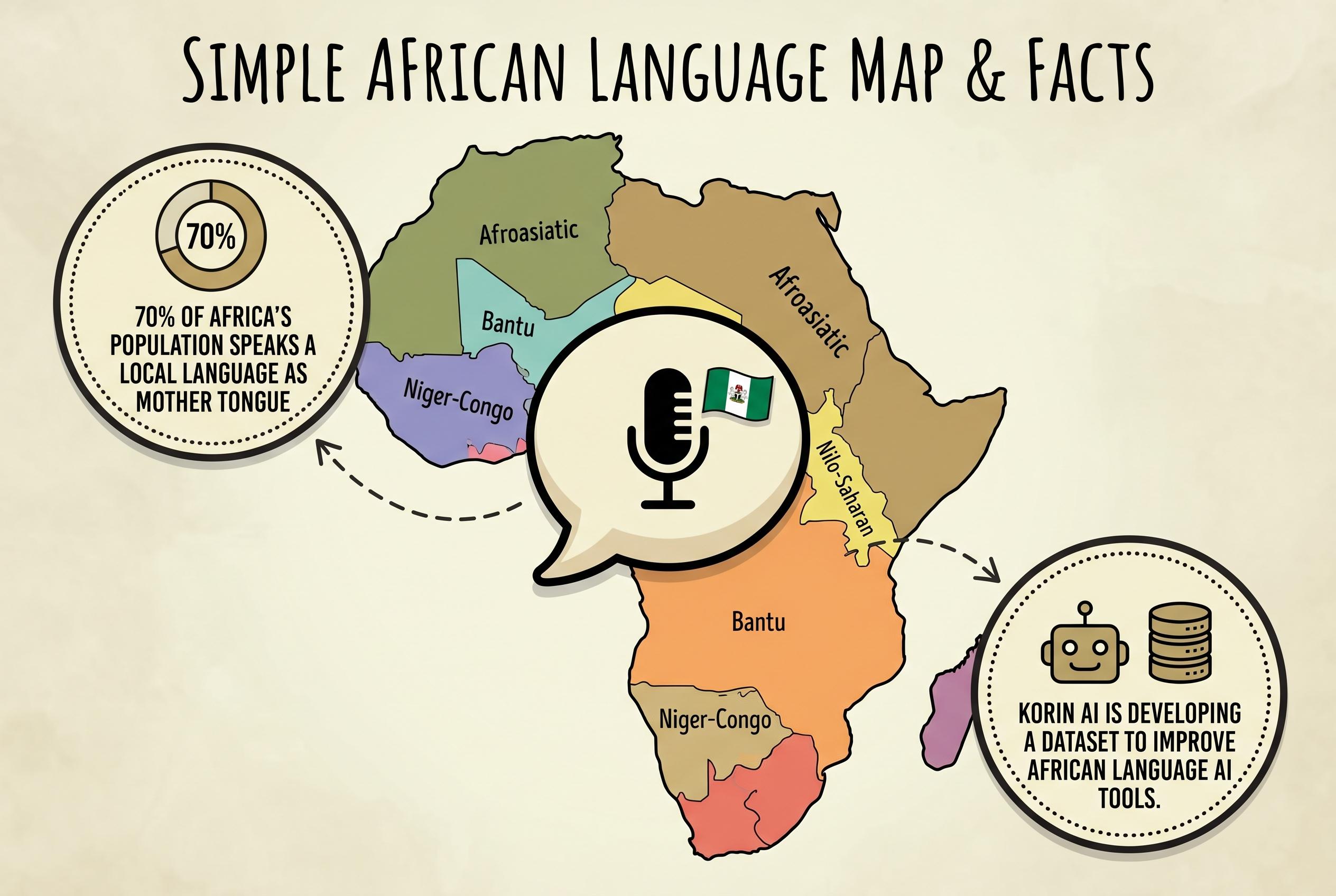
Nigerian startup Korin AI plans to upgrade its speech synthesis technology by focusing on ethically sourced, locally licensed datasets, aiming to revolutionise African-language AI tools amid a broader movement for authentic data representation across the continent.
Korin AI is positioning itself as part of a broader effort to build African-focused artificial intelligence tools rather than simply adapt systems designed elsewhere. The Nigerian startup, which is preparing a “Korin 2.0” upgrade, is aiming to make music generation work more naturally in African languages, with founder Philip Olajide-Philips telling OkayAfrica that many existing tools mishandle pronunciation when asked to sing Yoruba, Zulu or other local languages.
That problem, he argued, is more than a technical quirk: it reflects a deeper imbalance in who gets to shape the datasets behind AI. Olajide-Philips said the company is trying to avoid the common practice of scraping online material without consent, and instead is licensing recordings from Nigerian production firms and paying singers to provide their voices. Korin says it began in Nigeria and plans to expand to more countries and languages.

The startup’s approach sits alongside a growing movement to build African-language datasets for AI. OkayAfrica has reported on the African Next Voices project, a collaboration involving African computer scientists, linguists and language specialists that has spent two years collecting speech data across Kenya, Nigeria and South Africa. Separately, Africa Voices and AfricanGPT are also promoting ethical data collection, compensation for speakers and stronger data sovereignty for communities whose languages have historically been underrepresented online.
That wider context matters because access to high-quality, locally grounded training data remains one of the biggest constraints on African AI development. The GIZ-backed AI Made in Africa project has highlighted the importance of open, recent and representative datasets, while TechXplore reported that African Next Voices has assembled what is believed to be the largest African-language dataset for AI, spanning 18 languages including Hausa, Yoruba, isiZulu and Sesotho. For companies such as Korin, that ecosystem could help shift African language tech from a niche afterthought to a more serious commercial and cultural category.
Source Reference Map
Inspired by headline at: [1]
Sources by paragraph:
Source: Noah Wire Services
Noah Fact Check Pro
The draft above was created using the information available at the time the story first
emerged. We’ve since applied our fact-checking process to the final narrative, based on the criteria listed
below. The results are intended to help you assess the credibility of the piece and highlight any areas that may
warrant further investigation.
Freshness check
Score:
8
Notes:
The article was published on April 24, 2026. A search for earlier publications on this topic revealed no substantially similar content, indicating originality. However, the concept of training AI with African datasets has been discussed in previous articles, such as the African Next Voices project released in October 2025 ([polity.org.za](https://www.polity.org.za/article/african-languages-for-ai-the-project-thats-gathering-a-huge-new-dataset-2025-10-17?utm_source=openai)). This suggests that while the specific focus on Korin AI is new, the broader topic has been covered before.
Quotes check
Score:
7
Notes:
The article includes a direct quote from Korin AI founder Philip Olajide-Philips. A search for this exact quote yielded no matches, indicating it is original. However, without independent verification of the quote’s authenticity, the score is reduced.
Source reliability
Score:
8
Notes:
The article is published on Musically.com, a reputable source for music industry news. The information is corroborated by other reputable sources, such as the Brains of Africa article from September 2025 ([brainsofafrica.com](https://www.brainsofafrica.com/this-nigerian-startup-is-training-ai-on-real-african-voices-to-challenge-global-music-platforms/3?utm_source=openai)), which discusses Korin AI’s initiatives. This cross-referencing supports the reliability of the information presented.
Plausibility check
Score:
9
Notes:
The claims made in the article are plausible and align with known industry trends. The focus on training AI with African datasets to better handle African languages addresses a recognized gap in AI development. The article provides specific details about Korin AI’s approach, including licensing recordings from Nigerian production firms and paying singers, which adds credibility to the narrative.
Overall assessment
Verdict (FAIL, OPEN, PASS): PASS
Confidence (LOW, MEDIUM, HIGH): MEDIUM
Summary:
The article presents original content about Korin AI’s efforts to train AI with African datasets, supported by information from reputable sources. While the broader topic has been discussed before, the specific focus on Korin AI is new. The direct quote from the founder is plausible but lacks independent verification. Overall, the article is credible, but the medium confidence reflects the need for further verification of the quote and the reliance on a single source for some information.
