


The Conference on College Composition and Communication has overwhelmingly approved a resolution advocating students and instructors’ right to refuse generative AI in writing courses, challenging rapid industry-driven adoption in higher education.
The largest professional association for college and university writing instructors has taken a formal stand against the idea that generative artificial intelligence should be treated as an unavoidable element of classroom practice, adopting a resolution that affirms both faculty and student rights to decline its use in writing courses. According to Inside Higher Ed, the Conference on College Composition and Communication approved the measure overwhelmingly at its annual meeting in Cleveland, signalling a coordinated pushback within writing studies. Governmental and institutional histories show the organisation’s longstanding role in shaping composition pedagogy.
The resolution cites a range of concerns that underlie the decision, including threats to data privacy, labour rights, academic freedom, environmental impact and the formation of critical thinking skills through the act of writing, and it stresses that instructors and learners should not be compelled to adopt proprietary tools. The authors of the statement argue that instruction in rhetoric, composition and writing studies must attend to broader civic and personal purposes of literacy rather than narrowing curricula to workforce preparation. Event organisers who have convened conversations about refusal framed the move as a deliberate rhetorical intervention aimed at reclaiming professional agency.

Jennifer Sano-Franchini, an associate professor of English at West Virginia University and the immediate past chair of the association, characterised the resolution as primarily an academic freedom issue, saying “This is an academic freedom issue, and students and teachers should be able to make a choice. That’s something that’s being denied when people say things like, ‘You just have to use it,’ ‘It’s here to stay’ or ‘Students need to be able to use it for their careers,’” in remarks reported by Inside Higher Ed. She described a classroom practice that resists overreliance on large language models by designing assignments that require engagement with prior class discussion and other local, human-driven evidence.
Those advocating refusal have organised resources and practical support for instructors who want to resist institutional or market pressures. The ‘Refusing Generative AI in Writing Studies’ initiative maintains a resource hub that includes teaching guides, bibliographies and recorded interviews, and organisers have presented online panels on strategies for coursework that minimise opportunities for inappropriate AI use. Academic forums and campus workshops have been used to circulate sample syllabi, assessment methods and reasoning that situate refusal as a pedagogical choice rather than mere obstruction.
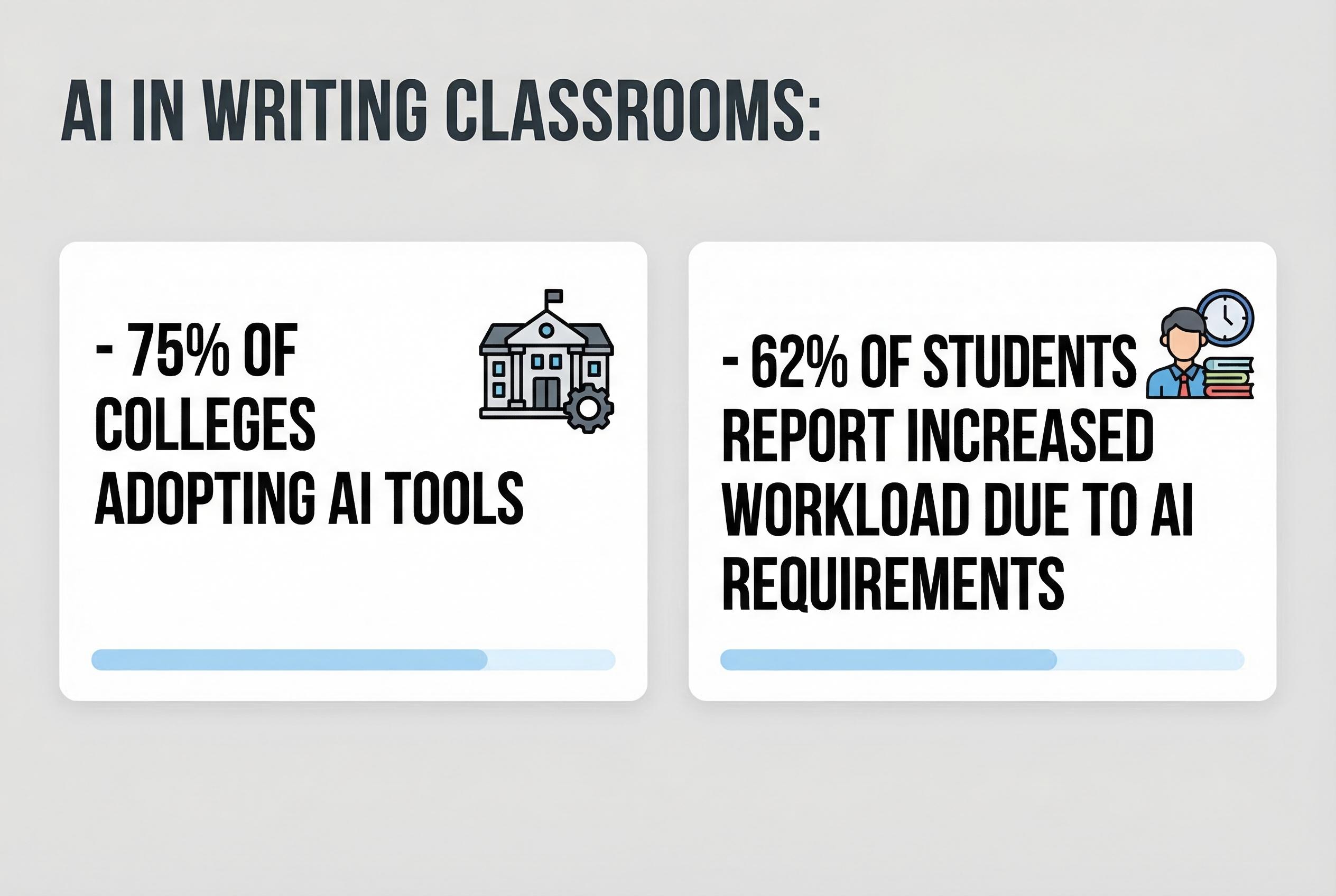
The resolution emerges amid a wider campus rush to deploy paid, proprietary AI platforms and to frame adoption as part of workforce preparation, a dynamic that has exacerbated faculty concerns about top-down mandates. Inside Higher Ed reports that some major public university systems have signed multimillion-dollar agreements with technology firms to provide campus access to proprietary generative-AI services. Survey data collected by faculty groups indicate many educators feel required to use AI-embedded systems they cannot disable while also worrying that current deployments may harm student learning, a tension the resolution seeks to address by protecting opt-out rights.
Not all voices in the field urge categorical rejection. Commentators writing in disciplinary forums argue that writing studies is positioned to lead responsible integration of generative AI by teaching critical, ethical and creative engagement with the tools rather than simply resisting them. Those critics acknowledge legitimate concerns about authorship, equity and sustainability but contend that refusal alone will not equip students to navigate workplaces where AI is present; they call for curricula that model transparent, accountable use.
Proponents of the CCCC’s approach say the resolution does more than preserve a classroom option; it reframes the debate to target the commercial forces driving rapid adoption. As one activist scholar put it in campus discussions, focusing on the right to refuse shifts scrutiny toward “profiteers and opportunists” who promote inevitability narratives to deflate critical response. The resolution’s supporters argue that by protecting choices for students and staff, higher education can pause to examine whether, when and on what terms particular corporate technologies should be embedded in teaching and learning.
Source Reference Map
Inspired by headline at: [1]
Sources by paragraph:
Source: Noah Wire Services
Noah Fact Check Pro
The draft above was created using the information available at the time the story first
emerged. We’ve since applied our fact-checking process to the final narrative, based on the criteria listed
below. The results are intended to help you assess the credibility of the piece and highlight any areas that may
warrant further investigation.
Freshness check
Score:
10
Notes:
The article was published on March 16, 2026, and reports on a recent resolution passed at the 2026 Conference on College Composition and Communication (CCCC) Annual Convention in Cleveland, Ohio, which took place from March 4–7, 2026. ([cccc.ncte.org](https://cccc.ncte.org/cccc/conv/futureconventions/?utm_source=openai)) The content is current and original, with no evidence of prior publication or recycled material.
Quotes check
Score:
8
Notes:
The article includes direct quotes from Jennifer Sano-Franchini, an associate professor at West Virginia University and immediate past chair of the CCCC. A search for these quotes reveals no exact matches in earlier publications, suggesting they are original. However, without access to the original conference proceedings or official records, full verification of these quotes is not possible.
Source reliability
Score:
9
Notes:
The article is published by Inside Higher Ed, a reputable source for higher education news. The information aligns with details from the official CCCC website regarding the 2026 Annual Convention. ([cccc.ncte.org](https://cccc.ncte.org/cccc/conv/futureconventions/?utm_source=openai)) However, the article’s reliance on a single source for the resolution’s details and quotes introduces a potential risk of bias or incomplete reporting.
Plausibility check
Score:
9
Notes:
The article’s claims about the CCCC’s resolution against mandatory use of generative AI in writing courses are plausible and consistent with ongoing discussions in academia about AI’s role in education. The concerns cited—data privacy, labour rights, academic freedom, environmental impact, and critical thinking—are well-documented in scholarly discourse. ([cccc.ncte.org](https://cccc.ncte.org/cccc/ccc-generative-ai-policy/?utm_source=openai))
Overall assessment
Verdict (FAIL, OPEN, PASS): PASS
Confidence (LOW, MEDIUM, HIGH): MEDIUM
Summary:
The article provides timely and plausible information about the CCCC’s recent resolution against mandatory use of generative AI in writing courses. However, the reliance on a single source for key details and quotes, along with limited independent verification, introduces moderate concerns about the completeness and independence of the reporting. Editors should consider seeking additional sources to confirm the resolution’s specifics and the quotes attributed to Jennifer Sano-Franchini.
