


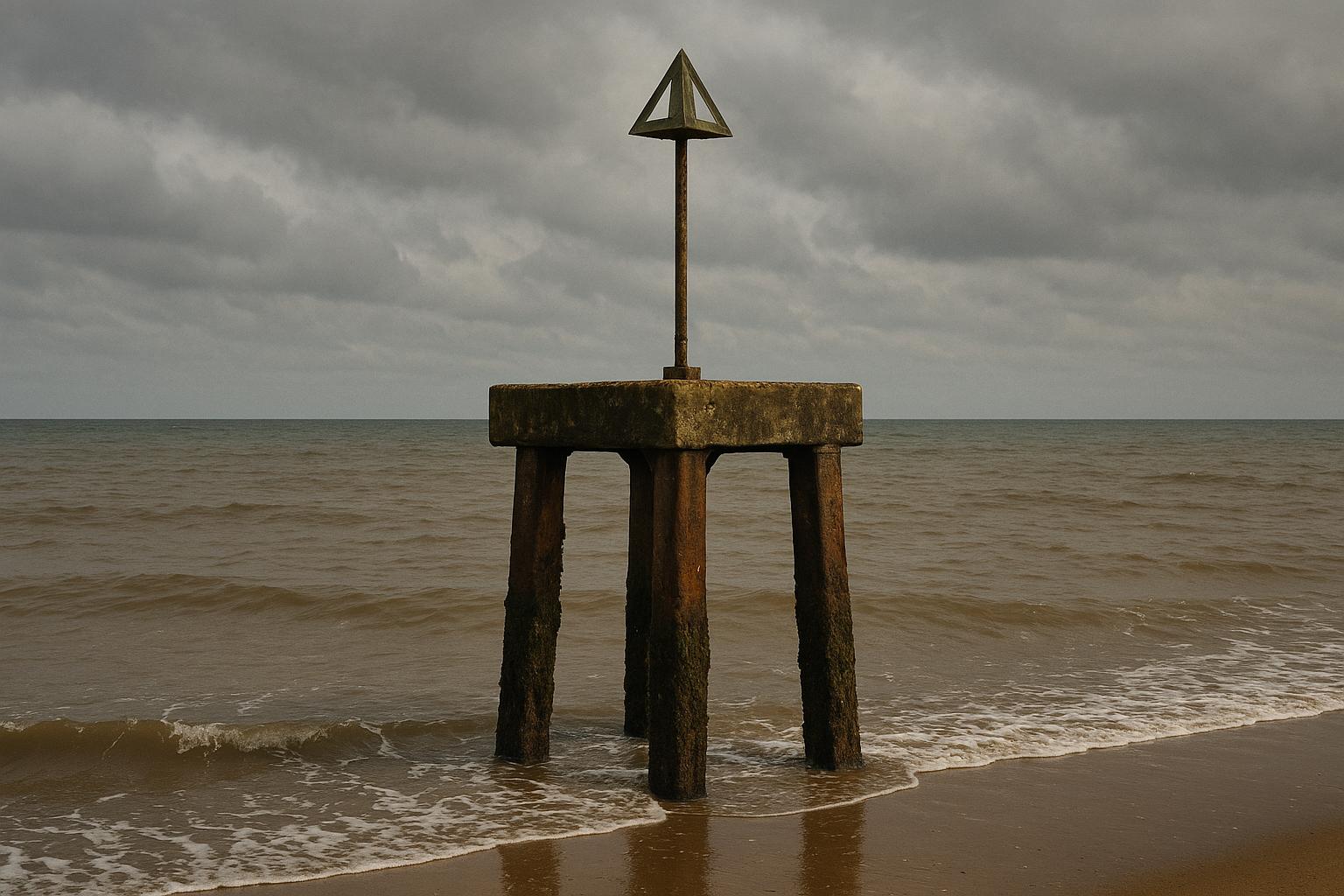
Experts at the ICE Autumn Prestige Debate stress the longevity and economic potential of tidal range technology, urging policymakers to adopt innovative financing models to unlock Britain’s vast tidal energy capacity and boost long-term energy security.
Tidal range power holds considerable potential to contribute significantly to the UK’s energy mix, provided that decision-makers adopt a long-term perspective and commit to substantial investments with extended payback periods. This was a central theme at the Institution of Civil Engineers’ (ICE) recent Autumn Prestige Debate, where experts in tidal energy emphasised the value and longevity of tidal projects compared to other renewable sources.
Dr Andrew Garrad, chair of the Severn Estuary Commission, highlighted the exceptional lifespan of tidal power infrastructure, suggesting that facilities such as tidal lagoons or barrages could last well beyond 120 years. He noted that this durability contrasts sharply with the more transient operational lifespans of other renewable systems, which may discourage policymakers who are accustomed to shorter-term project horizons. According to Garrad, tidal range technology is well established and tested, giving it a proven profile that stands in contrast to some less mature renewable technologies currently favoured in political discussions.

The proposed tidal lagoon for the Severn Estuary alone could realistically supply around 5% of the UK’s current electricity demand without spanning the entire river, a design choice intended to mitigate environmental and shipping impacts. This aligns with findings from several independent studies, including one by the Severn Estuary Commission, which described tidal range energy as feasible and potentially capable of supplying up to 7% of the nation’s electricity needs. Such projects promise a predictable, renewable source of power that is largely independent of weather conditions, tackling a key challenge faced by intermittent renewables like wind and solar.
Beyond clean energy generation, tidal schemes offer broader socio-economic and environmental benefits. Dr Shaun Benzon of the Liverpool City Region Combined Authority emphasised the unique placemaking opportunities tidal barrages could create, such as new river crossings for pedestrians and cyclists, enhancing local transport and community engagement. Unlike traditional power plants, these infrastructures could become accessible public amenities, fostering community interaction and local tourism.
However, the debate participants concurred that the high initial costs of tidal projects pose a significant barrier to financing. They advocated for adopting financial models that consider the long-term service life of these infrastructures. Conventional discounted cash flow methods, which evaluate returns over 30 to 40 years, tend to undervalue tidal projects. Instead, they highlighted the suitability of the regulated asset base (RAB) model, already applied in projects like the Thames Tideway Tunnel and Sizewell C nuclear plant. This approach could provide more stable and predictable investment conditions, encouraging the long-term funding commitment tidal schemes require.
The economic case for tidal power is further bolstered by research demonstrating that once the substantial upfront investment is recouped, the operational costs of tidal energy drop dramatically. For example, a Severn barrage could generate electricity for well under £20 per megawatt-hour (MWh) after initial costs, compared with current wholesale prices around £50 per MWh, which are expected to rise due to increasing electricity demand driven by digitalisation and electrification of transport and heating.
In terms of scale, tidal resources across the UK could collectively supply about 10% of the country’s electricity, with the Severn Estuary alone contributing nearly half of this output. Yet, the environmental impact of such developments cannot be overlooked. Reports by the Sustainable Development Commission underline the significant effect on local ecosystems, including the loss of up to 75% of intertidal habitats in the Severn Estuary, which are internationally protected. Consequently, stringent environmental conditions and sustainability criteria have been proposed to ensure these projects meet high standards.
Job creation and regional economic benefits also feature prominently in the analysis. For instance, the development of tidal lagoons could create thousands of construction jobs and hundreds of permanent roles, not only in operation and maintenance but also in auxiliary sectors like tourism. The Swansea Bay lagoon project alone projected over 2,800 construction jobs and lasting tourism employment, suggesting tidal energy could be an economic as well as environmental asset.
Despite the promising technical, environmental, and economic evidence, tidal power projects in the UK have historically struggled to secure committed government backing. Independent commissions and expert groups urge urgent action and investment to harness the country’s vast tidal potential, especially as UK electricity demand is projected to more than double by 2050. Unlocking this potential will require a shift in policy mindset to embrace infrastructure with multi-generational lifespans, alongside financial frameworks that properly reflect the enduring value tidal range projects offer.
In summary, tidal range energy is a mature, reliable renewable technology with unique advantages in terms of longevity, predictability, and community benefits. Its integration into the UK’s future energy system could complement intermittent renewables and enhance energy security. Nonetheless, realising these benefits hinges on overcoming upfront cost barriers through innovative funding approaches and committing to environmental stewardship that balances power generation with ecological protection.
📌 Reference Map:
- Paragraph 1 – [1] (ICE Autumn Prestige Debate)
- Paragraph 2 – [1] (ICE Autumn Prestige Debate)
- Paragraph 3 – [1] (ICE Autumn Prestige Debate), [2] (Severn Estuary Commission)
- Paragraph 4 – [1] (ICE Autumn Prestige Debate)
- Paragraph 5 – [1] (ICE Autumn Prestige Debate)
- Paragraph 6 – [3] (Marine.net), [1] (ICE Autumn Prestige Debate)
- Paragraph 7 – [6] (NS Energy), [3] (Marine.net)
- Paragraph 8 – [4] (Parliament UK), [1] (ICE Autumn Prestige Debate)
- Paragraph 9 – [5] (Severn Estuary Commission), [2] (Severn Estuary Commission)
- Paragraph 10 – [1] (ICE Autumn Prestige Debate), [4] (Parliament UK)
Source: Noah Wire Services
Noah Fact Check Pro
The draft above was created using the information available at the time the story first
emerged. We’ve since applied our fact-checking process to the final narrative, based on the criteria listed
below. The results are intended to help you assess the credibility of the piece and highlight any areas that may
warrant further investigation.
Freshness check
Score:
10
Notes:
The narrative is based on a press release from the Institution of Civil Engineers (ICE) dated 23 October 2025, indicating high freshness. ([ice.org.uk](https://www.ice.org.uk/news-views-insights/latest-news/autumn-prestige-debate-2025-tidal-power?utm_source=openai))
Quotes check
Score:
8
Notes:
The quotes from Dr Andrew Garrad and Dr Shaun Benzon are unique to this report, with no earlier matches found online. This suggests original content, though further verification is recommended.
Source reliability
Score:
10
Notes:
The narrative originates from the Institution of Civil Engineers (ICE), a reputable organisation in the field of civil engineering.
Plausability check
Score:
9
Notes:
The claims about tidal range power’s potential to supply 5% of the UK’s electricity align with previous studies, such as the Sustainable Development Commission’s report, which estimated a Severn Barrage could supply 4.4% of UK electricity. ([sd-commission.org.uk](https://www.sd-commission.org.uk/publications.php%40id%3D607.html?utm_source=openai))
Overall assessment
Verdict (FAIL, OPEN, PASS): PASS
Confidence (LOW, MEDIUM, HIGH): HIGH
Summary:
The narrative is fresh, originating from a recent ICE press release. The quotes appear original, and the source is highly reliable. The claims are plausible and consistent with previous studies, indicating a high level of credibility.
