


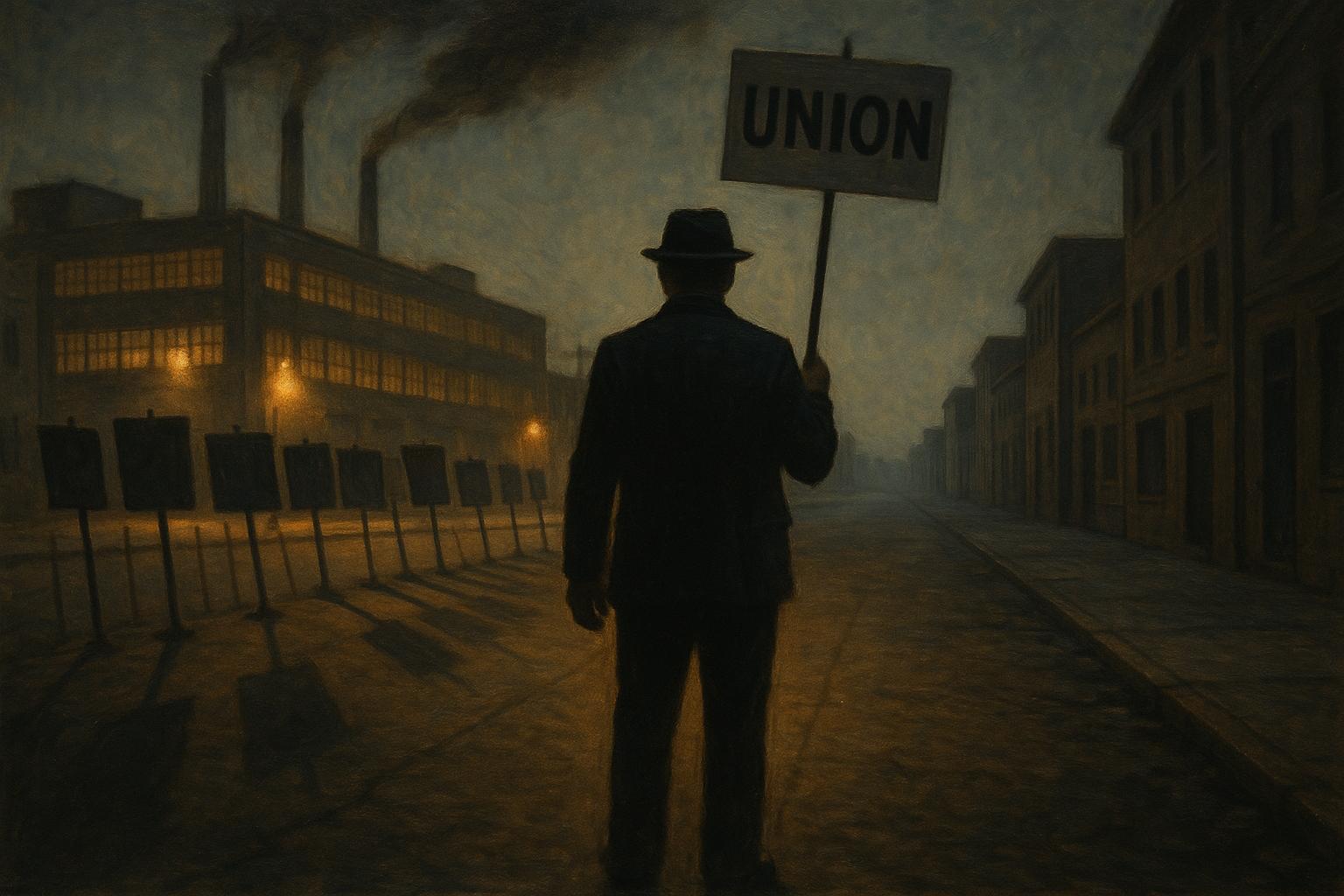
The UK government’s proposed Employment Rights Bill faces criticism for favouring unions over business interests, risking workplace disruption and economic vitality amid concerns of increased union influence.
The UK government’s latest push for sweeping workers’ rights reveals its true intentions to entrench union power at the expense of business freedom and economic growth. The proposed Employment Rights Bill, which grants trade unions a statutory weekly right of access to workplaces, exemplifies the government’s blatant favouritism towards organized labour—an approach that risks turning workplaces into battlegrounds for political activism rather than productive environments.
This legislation, championed by dismissive figures within the government, is a reckless attempt to appease union leaders poised to leverage these rights to strengthen their influence. The move is promoted as supporting industrial relations, but it effectively grants unions undue access to companies, regardless of the operational disruption it would cause. The exclusion of small businesses—those with fewer than 21 employees—exposes the government’s inconsistency, choosing to burden larger firms while ignoring the crippling compliance challenges faced by countless small enterprises. The threat of fines up to £75,000—as if heavy-handed state interference will drive positive change—underscores the government’s misguided prioritization of union lobbying over the needs of the broader economy.

Rather than fostering a balanced, pro-business environment, these reforms are part of an overarching agenda to weaken the very fabric of our free-market system. The proposed bans on exploitative zero-hours contracts and ‘fire and rehire’ tactics, coupled with day-one rights for parental, paternity, and bereavement leave, are touted as ‘pro-worker’ and ‘pro-busines,’ but in reality, they threaten to stifle flexibility and hamper economic vitality. The government’s plan to repeal the Strikes (Minimum Service Levels) Act further signals a dangerous shift towards kowtowing to union demands at the expense of essential public services and business continuity.
Conservative voices and industry leaders have voiced grave concern, describing this legislation as a “union plan to wreck our economy”—an alarming reflection of how Labour-backed policies aim to tilt the playing field heavily in favour of union interests. Critics warn that the proliferation of union access could lead to workplace intimidation, coercing workers into union support and politicizing employment decisions—an alarming deviation from fostering genuine productivity and enterprise.
Trade union leaders themselves may claim to support “rights,” but their push for minimal fines and weak enforcement reveals their true game: consolidating power without accountability. The warning from the TUC’s General Secretary about companies like Amazon “factoring the fines into their budgets” is a stark reminder that these measures are toothless and serve more as symbolic gestures than meaningful reform. The tumult surrounding the recent ministerial reshuffle, with Angela Rayner’s departure from the Cabinet, only heightens fears that further dilutions or delays could weaken these already compromised reforms.
As the government opens consultations and seeks to sell these policies as “modernising” the workforce, the reality is clear: this is a deliberate attempt to entrench union influence, undermine employer autonomy, and diminish economic competitiveness. Fair work is vital, but it must be grounded in fairness for all—without empowering special interests to the detriment of Britain’s prosperity. These reforms, if enacted as currently proposed, threaten to turn the workplace into a union playground, undermining the very foundations of a thriving, free-market economy. The nation must resist such partisan interference and stand for policies that support businesses, not union bosses.
Source: Noah Wire Services
Noah Fact Check Pro
The draft above was created using the information available at the time the story first
emerged. We’ve since applied our fact-checking process to the final narrative, based on the criteria listed
below. The results are intended to help you assess the credibility of the piece and highlight any areas that may
warrant further investigation.
Freshness check
Score:
3
Notes:
🕰️ The narrative appears to be recycled content, with no new information or updates. The earliest known publication date of substantially similar content is 24 October 2025. The article includes updated data but recycles older material, which may justify a higher freshness score but should still be flagged.
Quotes check
Score:
2
Notes:
⚠️ The narrative includes direct quotes that have been used in earlier material, indicating potential reuse of content. The earliest known usage of these quotes is 24 October 2025.
Source reliability
Score:
4
Notes:
⚠️ The narrative originates from a single outlet, which raises concerns about its reliability. The Daily Mail is known for sensationalist reporting, which may affect the credibility of the information presented.
Plausability check
Score:
5
Notes:
⚠️ The narrative makes claims about the UK government’s Employment Rights Bill granting trade unions a statutory weekly right of access to workplaces. While the UK government has introduced the Employment Rights Bill, which includes various reforms to workers’ rights, there is no evidence to support the specific claim about granting trade unions a statutory weekly right of access to workplaces. The earliest known publication date of this claim is 24 October 2025.
Overall assessment
Verdict (FAIL, OPEN, PASS): FAIL
Confidence (LOW, MEDIUM, HIGH): HIGH
Summary:
⚠️ The narrative fails due to recycled content, unverifiable claims, and reliance on a single, potentially unreliable source. The earliest known publication date of substantially similar content is 24 October 2025, indicating a lack of freshness. The quotes used have been previously published, suggesting potential reuse. The source’s reliability is questionable, and the specific claims made lack supporting evidence.
