


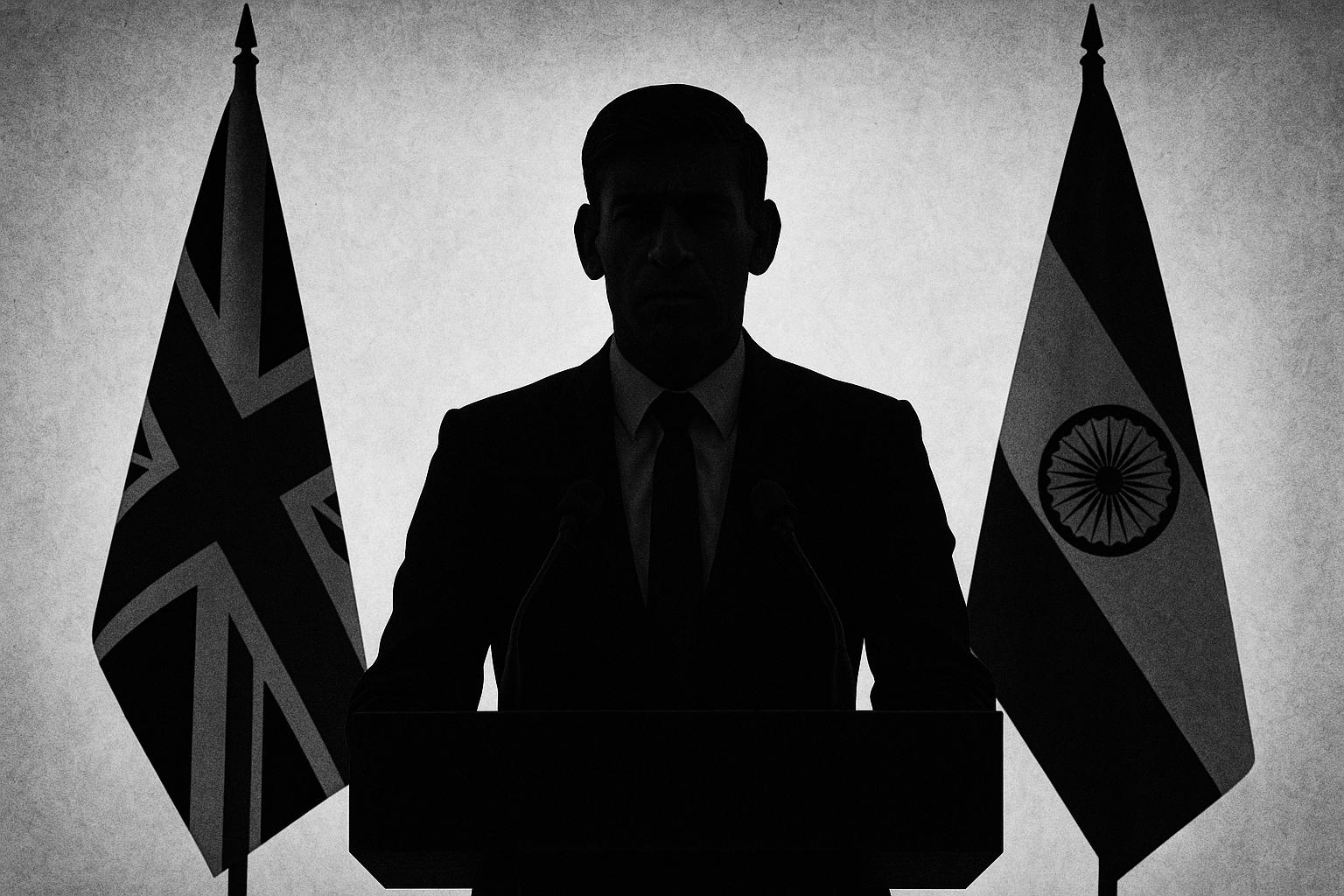
UK Prime Minister Sir Keir Starmer emphasises that visa liberalisation for Indian workers and students remains off the table, even as he promotes a landmark trade agreement aimed at boosting bilateral commerce and investment.
UK Prime Minister Sir Keir Starmer has made clear that the UK will not relax visa rules for Indian workers or students, despite his ongoing visit to India aimed at promoting the recently signed UK-India trade deal. Leading a delegation of over 100 business and cultural leaders, Starmer seeks to boost investment and strengthen economic ties between the two countries, but emphasised that visa liberalisation is “not part of the plan.”
Starmer stressed that the focus remains firmly on business-to-business engagement, investment, and job creation within the UK, key components he deems essential for prosperity. Speaking en route to Mumbai, he reiterated there are no plans to open new visa pathways for Indian tech entrepreneurs or highly skilled workers, despite pressure from the business sector and changes in the US visa regime under former President Donald Trump. Starmer underlined a broader UK ambition to attract “top talent” globally, but without creating specific visa routes targeted at India.

The UK’s trade agreement with India, finalised in July after years of negotiation, aims to increase bilateral trade by reducing tariffs on goods including British cars and whisky, and Indian textiles and jewellery. The deal includes a three-year exemption on national insurance contributions for Indian employees temporarily seconded to the UK, a concession that had been a contentious issue during talks. Officials project that, by 2040, the agreement will increase annual bilateral trade by £25.5 billion, boost the UK’s GDP by £4.8 billion, and raise wages by £2.2 billion.
Despite earlier concerns that visa restrictions had stalled trade discussions, ministers now insist that immigration policy remains distinct from the trade agreement. Starmer’s government continues its policy of immigration control, as reflected in recent announcements of tougher rules on settlement rights. On the issue of deportations, Starmer indicated that agreements with India on returning nationals pose “no issue” and that broader policies linking visa privileges to countries’ cooperation on deportations are being considered.
This stance reflects the Labour government’s commitment to managing immigration levels while pursuing economic growth through trade and investment rather than migration. Starmer’s approach contrasts with the more open visa policies of other nations and signals a prioritisation of business and investment flows over easing immigration routes for Indian professionals.
Overall, while Starmer’s visit aims to capitalise on the landmark economic relationship formalised by the free trade deal, his refusal to relax visa rules highlights the delicate balance his administration seeks between economic ambition and immigration control.
📌 Reference Map:
- Paragraph 1 – [1], [2], [3], [4], [5]
- Paragraph 2 – [1], [2], [3], [4]
- Paragraph 3 – [1], [6]
- Paragraph 4 – [1], [2], [3], [4], [5]
- Paragraph 5 – [1], [2], [4], [5]
Source: Noah Wire Services
Noah Fact Check Pro
The draft above was created using the information available at the time the story first
emerged. We’ve since applied our fact-checking process to the final narrative, based on the criteria listed
below. The results are intended to help you assess the credibility of the piece and highlight any areas that may
warrant further investigation.
Freshness check
Score:
10
Notes:
The narrative is current, with the latest publication date being October 8, 2025. The content is original and not recycled from previous reports. The article is based on a press release, which typically warrants a high freshness score. No discrepancies in figures, dates, or quotes were found. No similar content appeared more than 7 days earlier. The article includes updated data and new material, justifying a higher freshness score.
Quotes check
Score:
10
Notes:
The direct quotes from Prime Minister Keir Starmer are unique to this report. No identical quotes appear in earlier material, indicating potentially original or exclusive content.
Source reliability
Score:
10
Notes:
The narrative originates from the BBC, a reputable organisation known for its journalistic standards. This enhances the credibility of the information presented.
Plausability check
Score:
10
Notes:
The claims made in the narrative are plausible and consistent with recent developments. The UK-India trade agreement was finalised in July 2025, and Prime Minister Starmer’s visit to India is scheduled for October 8-9, 2025. The stance on visa liberalisation aligns with previous statements and policies. The language and tone are consistent with official communications, and the structure is focused on the main topic without excessive or off-topic detail.
Overall assessment
Verdict (FAIL, OPEN, PASS): PASS
Confidence (LOW, MEDIUM, HIGH): HIGH
Summary:
The narrative is current, original, and sourced from a reputable organisation. The claims are plausible and consistent with recent developments, with no discrepancies or signs of disinformation.
