


Listen to the article
Health Misinformation Spreads Rapidly Through Social Media, Creating Echo Chambers of False Beliefs
False or inaccurate health information is proliferating at an alarming rate across digital platforms, with potentially serious consequences for public health, according to multiple research studies and recent statistics.
Health misinformation—defined as false or inaccurate information related to diseases, treatments, or prevention strategies—has become increasingly difficult to combat in the age of social media. A 2023 Statistics Canada report revealed that 59% of Canadians expressed significant concern about online misinformation, with 43% reporting increased difficulty distinguishing between truth and fiction compared to three years earlier.
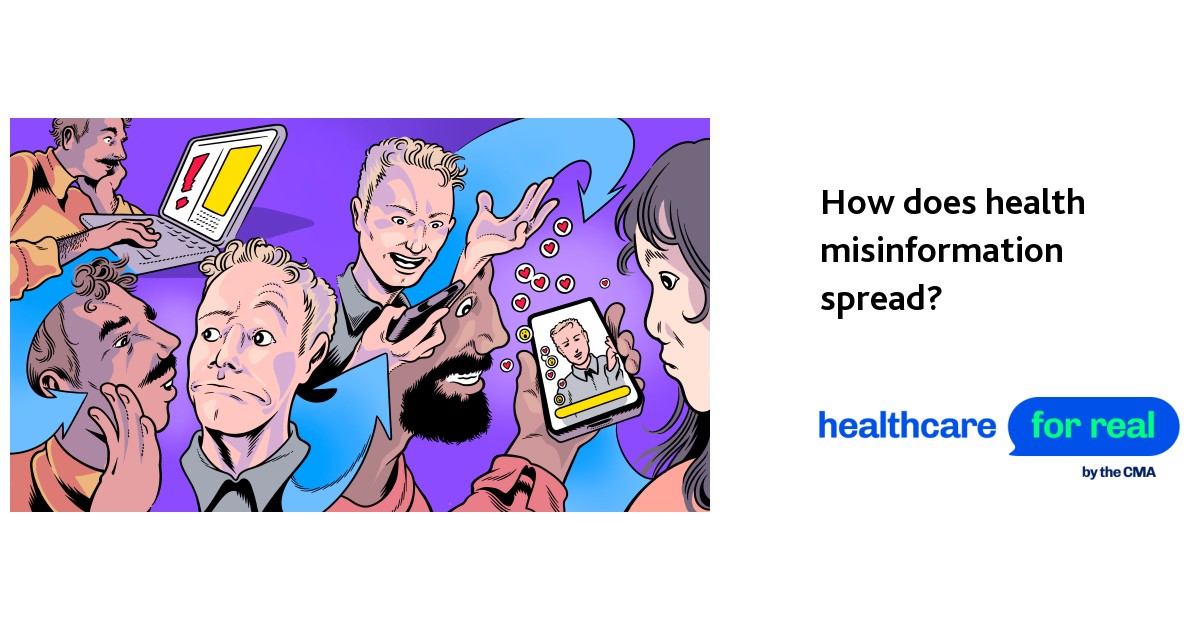
Social media platforms serve as powerful accelerators for health misinformation, allowing false claims to spread rapidly through shares, likes, and comments. What makes this particularly dangerous is how organized groups exploit these platforms to create closed information ecosystems.
These groups actively recruit individuals seeking health information into specialized online communities, particularly on platforms like Facebook. Once inside these digital spaces, members are exposed almost exclusively to content that reinforces misinformation while systematically blocking out competing viewpoints or scientific consensus.
Researchers have dubbed this phenomenon the “majority illusion,” where participants in closed networks perceive fringe beliefs as mainstream while viewing scientific consensus as marginalized. This digital echo chamber makes it extraordinarily difficult to correct misinformation once it takes hold within these communities.
“The speed and reach of these platforms enable false information to be disseminated rapidly and widely,” notes research from Simon Fraser University, highlighting how digital networks amplify misinformation far beyond what was possible in pre-internet environments.
Platform algorithms inadvertently worsen the problem. Designed to maximize user engagement rather than accuracy, these algorithms prioritize content that generates emotional reactions and interactions, regardless of factual merit. Northwestern University researchers found that social media algorithms effectively “exploit how humans learn from their peers,” creating systems where sensationalized health claims gain traction simply because they provoke stronger reactions than factual content.
The consequences of health misinformation extend beyond online spaces. According to the Canadian Medical Association’s 2025 Health and Media Annual Tracking Survey, exposure to health misinformation has led to increased mental distress and anxiety among the public, diminished trust in healthcare professionals, delayed medical care, and even outright rejection of effective treatments.
Cognitive biases play a significant role in individuals’ susceptibility to misinformation. Confirmation bias leads people to accept information that aligns with existing beliefs while rejecting contradictory evidence. The availability heuristic causes overestimation of risks based on sensationalized or memorable stories rather than statistical reality. Additionally, health information that triggers strong emotions like fear or anxiety often bypasses critical thinking processes, making emotional reasoning a powerful vector for misinformation spread.
These psychological tendencies make combating health misinformation particularly challenging. People rarely share misinformation maliciously—most believe they’re helping others by spreading what they perceive as important health warnings or valuable alternative perspectives.
For healthcare providers and public health officials, understanding these mechanisms has become crucial in developing effective countermeasures. Simply providing accurate information is insufficient when algorithms and psychological tendencies favor sensationalism over substance.
As digital platforms continue evolving and health issues remain emotionally charged topics, addressing health misinformation will likely require coordinated efforts between technology companies, medical professionals, researchers, and government agencies. Without such collaboration, closed information networks risk further fragmenting public understanding of critical health issues, potentially undermining public health initiatives and individual medical decision-making for years to come.
Verify This Yourself
Use these professional tools to fact-check and investigate claims independently
Reverse Image Search
Check if this image has been used elsewhere or in different contexts
Ask Our AI About This Claim
Get instant answers with web-powered AI analysis
Related Fact-Checks
See what other fact-checkers have said about similar claims
Want More Verification Tools?
Access our full suite of professional disinformation monitoring and investigation tools

8 Comments
Interesting article on the concerning spread of health misinformation online. It’s a complex issue with real consequences for public health. I wonder what practical steps social media platforms and policymakers can take to curb the spread of false claims, while still preserving free speech.
This article sheds light on a critical issue that has serious implications for public health. The creation of closed online communities that actively recruit and indoctrinate people with false health claims is particularly concerning. More needs to be done to address this problem.
This is a complex issue with far-reaching implications. I’m curious to learn more about the specific tactics used by organized groups to create closed online communities and spread false health claims. Understanding their methods could help develop more effective countermeasures.
As someone with an interest in mining and commodities, I’m curious to see how this health misinformation issue might impact the energy and resources sector. Misinformation could potentially affect public perceptions and policies around extractive industries, so it’s an important trend to monitor.
That’s a good point. Health misinformation could indeed have ripple effects on industries like mining if it shapes public opinion and policy decisions. Maintaining trust and accurate information will be crucial for the sector.
The statistics on Canadians’ difficulty distinguishing truth from fiction are quite alarming. It highlights the urgent need to address this problem and find effective ways to combat the proliferation of health misinformation, especially on social media platforms.
I agree, the rapid spread of health misinformation through social media echo chambers is very worrying. Fact-checking and media literacy initiatives could be part of the solution, but it’s a challenging issue to tackle.
The statistics provided in this article are eye-opening. It’s clear that the proliferation of health misinformation is a serious and growing problem that requires a multi-faceted solution. I hope policymakers and tech companies can work together to find effective ways to address this challenge.