


Listen to the article
Disinformation Surges in Philippines Following Duterte Arrest, Election Concerns Mount
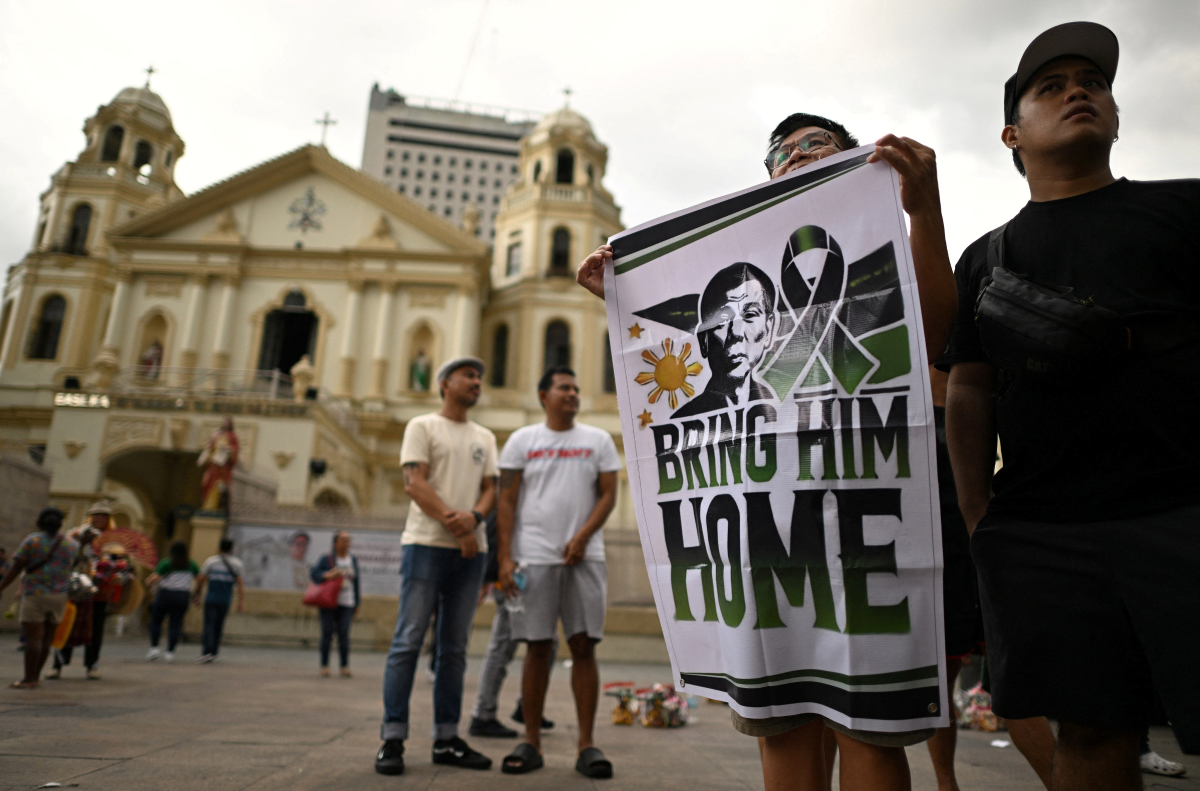
When former Philippine President Rodrigo Duterte was arrested in March on charges of crimes against humanity, a tsunami of disinformation quickly flooded social media platforms across the country.
Fabricated messages of support from U.S. President Donald Trump appeared alongside doctored images showing massive crowds rallying behind the detained leader. Local celebrities seemed to echo Trump’s statements verbatim—all of it manufactured.
“Everywhere you look, it’s the same false narrative appearing on different platforms… on Facebook, TikTok, YouTube, so it feels like there’s a concerted effort to spread them,” said Celine Samson, head of digital verifications at Vera Files, a media nonprofit organization.
Duterte was taken into custody on March 11 under an International Criminal Court (ICC) warrant charging him with crimes against humanity related to thousands of deaths during his administration’s aggressive war on drugs. Critics allege the subsequent wave of disinformation was orchestrated by pro-Duterte social media accounts aiming to undermine the ICC’s case.
Digital analysts expect the situation to deteriorate as the Philippines approaches its May 12 elections. “I think we can relate this to the elections. While this volume of disinformation started with Duterte’s arrest, I think it’s possible that disinformation will be more politicized in the coming days,” Samson added.
Tech firm Cyabra, which investigated the proliferation of fake accounts, described it as a deliberate, organized campaign, though the company could not determine who was behind it.
The Philippine government has begun addressing the problem, with lawmakers in the House of Representatives holding a hearing on April 8 about the role of social media and algorithms in spreading false information.
“Disinformation campaigns and the proliferation of fake news not only mislead citizens but also undermine trust in our institutions… especially at this time when fake news among candidates proliferate,” said Johnny Pimentel, the politician who chaired the hearing, in his opening remarks.
The Philippines is particularly vulnerable to online manipulation. Facebook serves as the primary news source for more than half the country’s population, according to the Reuters Institute. During the hearing, Rafael Frankel, Meta’s head of public policy in Southeast Asia, defended the company’s content moderation efforts but acknowledged that controlling misinformation among Facebook’s 3.2 billion global users was “practically impossible.”
Meta claims it collaborates with independent fact-checking organizations across more than 60 languages to identify and review viral misinformation on its platforms. Vera Files is one of three Facebook fact-checking partners in the Philippines, and they’ve been exceptionally busy since Duterte’s arrest.
Samson reported that her organization received approximately 300 tipoffs about misinformation in just the two weeks following Duterte’s detention—a significant increase from normal levels. Most false posts either attempted to discredit ICC judges or aimed to generate sympathy for Duterte, who remains in ICC custody in the Netherlands.
Digital rights experts note that these fake posts often spread rapidly before Meta could remove or flag them. Concerns have intensified after Meta ended its U.S. fact-checking programs on Facebook and Instagram in January, announcing it would instead rely on users to add context to misleading content. While third-party fact-checking continues in the Philippines for now, experts anticipate the company may eventually extend its U.S. policy worldwide.
Marlon Nombrado, who runs Out of The Box Media Literacy Initiative, a local nonprofit fighting disinformation through education, expressed skepticism about tech companies’ ability to counter “coordinated inauthentic behavior” regardless of their policies.
“In spite of all the supposed developments and interventions of social media platforms… old methods to spread disinformation remain effective and can circumvent the platforms’ policies,” Nombrado told Context. “We can’t rely any more on fact-checking to change people’s minds.”
The situation reflects broader regional tensions, including misinformation about Manila’s territorial dispute with Beijing over the South China Sea. Despite the challenges, Samson remains committed to the mission of fact-checking, even as the work becomes increasingly demanding.
“People don’t care about facts,” Samson acknowledged. “But I would never lose hope in what fact-checking can do in preserving information integrity online.”
Verify This Yourself
Use these professional tools to fact-check and investigate claims independently
Reverse Image Search
Check if this image has been used elsewhere or in different contexts
Ask Our AI About This Claim
Get instant answers with web-powered AI analysis
Related Fact-Checks
See what other fact-checkers have said about similar claims
Want More Verification Tools?
Access our full suite of professional disinformation monitoring and investigation tools

14 Comments
This is a troubling example of how social media can be weaponized to spread false narratives and undermine the rule of law. Addressing the root causes of disinformation in the Philippines will be a complex challenge.
The article highlights the challenges the Philippines faces in controlling the flow of online misinformation, particularly around the Duterte arrest. This underscores the need for robust media literacy and digital citizenship education programs.
Empowering the public to critically evaluate information sources and spot manipulated content is crucial. Collaborative efforts between media, tech, and civil society can help build societal resilience against disinformation.
It’s troubling to see how quickly fabricated narratives can spread on social media, especially around sensitive political issues. Credible, independent journalism will be vital in cutting through the noise and providing the public with reliable information.
This is a concerning situation. Social media disinformation can have serious consequences, especially around high-profile political events. It’s crucial that credible sources provide accurate, fact-based reporting to counter these misleading narratives.
Absolutely. Fact-checking and digital verification efforts will be key to combating the spread of false information. Platforms must also take stronger action to remove coordinated disinformation campaigns.
This article highlights the urgent need for the Philippines to address the surge of online disinformation, especially around high-profile political events. A multipronged approach involving media, tech, and civil society will be essential.
The scale of the disinformation problem in the Philippines is alarming. Tackling coordinated campaigns to undermine democratic institutions will require a concerted effort by all stakeholders to promote media literacy and platform transparency.
Well said. Strengthening fact-checking initiatives and empowering the public to identify manipulated content are crucial steps to counter the spread of these damaging narratives.
The proliferation of disinformation on Philippine social media platforms is extremely concerning and could have serious consequences for the country’s democratic institutions. A comprehensive, multi-stakeholder approach will be crucial to combat these malicious campaigns.
The article highlights the urgent need for the Philippines to address the surge of online disinformation, especially around high-profile political events. Strengthening digital literacy and transparency around online political advertising will be essential.
I agree. Policymakers should also explore ways to hold social media companies more accountable for the spread of harmful misinformation on their platforms.
The proliferation of disinformation on Philippine social media platforms is extremely concerning. Strengthening digital literacy and transparency around online political advertising will be important steps to combat these malicious campaigns.
I agree. Policymakers should also explore ways to hold social media companies more accountable for the spread of harmful misinformation on their platforms.