


Listen to the article
A single social media post on X sparked market chaos Monday as an unverified claim about potential tariff suspensions rapidly spread through financial circles before being debunked by White House officials.
The market turbulence began after unsourced “headlines” claiming a possible “90-day pause in tariffs” circulated online, triggering investor excitement amid concerns over the Trump administration’s planned trade policies. The rumor, however, proved entirely false.
CNN’s analysis traced the misinformation to a 10:11 a.m. ET post from a little-known account called “Hammer Capital” with barely 1,000 followers. The account apparently misinterpreted comments made by National Economic Council Director Kevin Hassett during an 8:30 a.m. Fox News interview. When asked whether President Trump would “consider a 90-day pause in tariffs,” Hassett had merely responded: “The president is going to decide what the president is going to decide.”
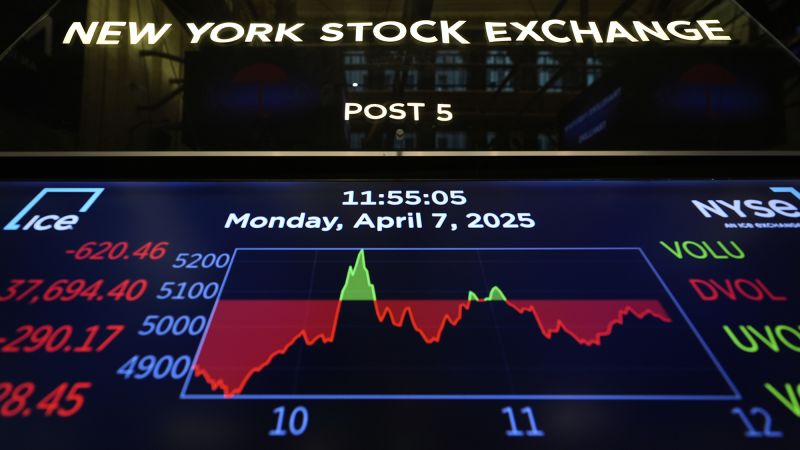
Within minutes of the false post, the trading floor at the New York Stock Exchange erupted in cheers as stock indices, already recovering from early-morning lows, suddenly surged higher. The rumor gained significant traction when a larger account named “Walter Bloomberg,” which has over 800,000 followers, reposted the claim with siren emojis at 10:13 a.m.
The impact was immediately visible on financial news networks. CNBC anchors appeared visibly confused by the market’s sudden movement, searching their screens for any official wire service alerts. By 10:15 a.m., CNBC began reporting the unverified information on air, displaying a banner stating: “HASSETT: TRUMP IS CONSIDERING A 90-DAY PAUSE IN TARIFFS FOR ALL COUNTRIES EXPECT CHINA.”
This on-air coverage lent credibility to the rumor, leading Reuters to issue an alert at 10:19 a.m. citing CNBC as its source. The circular attribution pattern—with each source pointing to another—created an echo chamber that temporarily convinced market participants of the rumor’s validity.
The market euphoria was short-lived. As the White House firmly denied the claim, stocks retreated from their gains. Both news organizations quickly issued corrections, with Reuters releasing an advisory at 12:28 p.m. withdrawing its original alert and stating, “Reuters regrets its error.”
The incident highlights the increasingly blurred lines between verified news and social media speculation. Both accounts that initially spread the rumor display blue checkmarks on X, a feature that once indicated verified identity but now merely shows the user has paid for X’s premium service since Elon Musk’s takeover of the platform formerly known as Twitter.
After the market disruption, “Walter Bloomberg”—an account that borrows its name from the respected financial news service Bloomberg to gain credibility—deleted its post and claimed to have first seen the information on Reuters. Meanwhile, “Hammer Capital” denied fabricating the headline, stating: “To be as abundantly clear as possible, trading desks started sending out this headline at 10:09. I was regurgitating what the market was reacting to, to my 600 followers. It was an incorrect interpretation of a Fox News interview.”
A CNBC spokesperson acknowledged the error in a statement: “As we were chasing the news of the market moves in real-time, we aired unconfirmed information in a banner. Our reporters quickly made a correction on air.”
This episode underscores the increasingly fragile information ecosystem in financial markets, where unverified social media posts can trigger significant price movements before fact-checking occurs. With algorithms and high-frequency traders programmed to react instantly to headlines, the speed at which information—accurate or not—moves through markets has created new vulnerabilities.
For investors and financial professionals, the incident serves as an expensive reminder of the importance of source verification and the dangers of reacting to market-moving information without proper confirmation, particularly in today’s social media-driven information landscape.
Verify This Yourself
Use these professional tools to fact-check and investigate claims independently
Reverse Image Search
Check if this image has been used elsewhere or in different contexts
Ask Our AI About This Claim
Get instant answers with web-powered AI analysis
Related Fact-Checks
See what other fact-checkers have said about similar claims
Want More Verification Tools?
Access our full suite of professional disinformation monitoring and investigation tools

10 Comments
This is a prime example of the dangers of ‘fake news’ and the need for vigilance in verifying information, especially when it could impact markets. It’s a cautionary tale about the importance of media literacy and critical thinking.
Wow, this fake news really caused some market chaos! It’s crazy how quickly misinformation can spread and impact trading. I wonder what lessons can be learned about verifying sources and information before reacting.
Absolutely, this highlights the need for greater scrutiny of online information, especially when it comes to financial markets. Fact-checking is crucial to avoid these kinds of destabilizing rumors.
The whole situation seems quite concerning. Market volatility driven by unsubstantiated claims could have serious consequences. I hope this incident leads to better safeguards against the spread of false information in the future.
I agree, this type of misinformation can be very damaging. Increased transparency and accountability around financial news sources is needed to prevent these kinds of disruptive events.
This story is a cautionary tale about the potential for social media to rapidly spread unverified claims with significant market impact. It emphasizes the importance of media literacy and critical evaluation of online information, especially in sensitive sectors.
Agreed. Maintaining market stability requires diligence in verifying information sources and fact-checking claims before reacting. This incident highlights the need for improved safeguards against the dissemination of false financial information.
Interesting how a single social media post was able to trigger such market volatility. It really highlights the power of information and the responsibility of those sharing it, especially in sensitive domains like finance. Fact-checking is crucial.
Absolutely. This incident underscores the need for robust verification processes and accountability measures around the dissemination of financial information. Maintaining market stability requires diligence in separating fact from fiction.
The market whiplash caused by this ‘fake news’ is a sobering reminder of the consequences misinformation can have. It’s a wake-up call for investors, regulators, and the media to prioritize truth and integrity when it comes to financial reporting.