



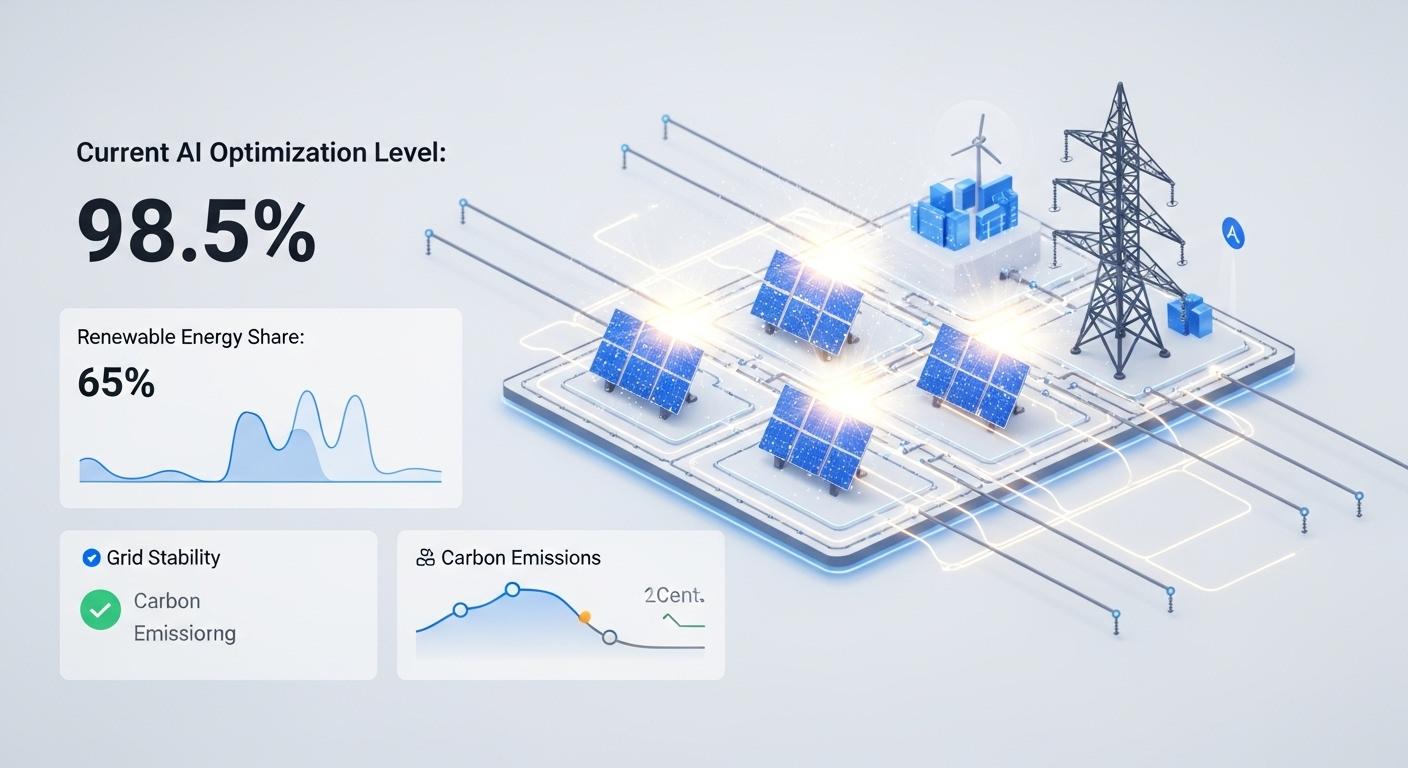
The global renewable energy integration services market is experiencing rapid growth, driven by technological advancements, regional infrastructure developments, and policy reforms, with AI enhancing grid stability and resilience amid evolving energy landscapes.
The global renewable energy integration services market is witnessing robust expansion as utilities increasingly adopt advanced technologies to seamlessly integrate solar, wind, and energy storage systems into existing power grids. This market growth is propelled by rising clean energy adoption, accelerated smart grid upgrades, and an escalating demand for efficient system balancing and reliability.
Asia Pacific currently leads this market, driven by massive new renewable capacity deployments, rapid industrial and transport electrification, and substantial government initiatives to enhance transmission and storage infrastructure. Countries such as China, India, Japan, and South Korea are prioritizing ultra-high voltage links, grid flexibility mechanisms, and large-scale storage pilots to manage variable renewable supply over vast distances. China, in particular, continues its aggressive investment in power-grid construction, including ultra-high voltage projects to connect renewable generation centers with urban demand hubs. At the same time, North America is forecasted to expand at the fastest compound annual growth rate (CAGR) from 2025 through 2034, where policy incentives and grid modernization efforts are stimulating investments in advanced forecasting, battery storage, and transmission expansion to handle growing renewable energy inputs.
The solar energy integration segment holds the largest share of the market, supported by widespread rooftop and utility-scale solar installations, declining module costs, and favourable policy incentives. Meanwhile, the hydropower integration segment is expected to experience notable growth, as countries expand small hydro projects that provide vital grid stability. Other technologies such as wind, biomass, geothermal, and marine energy are contributing to increasing diversity and resilience in renewable portfolios.
Residential applications currently dominate market share, reflecting growing adoption of rooftop solar, smart meters, and home energy management driven by subsidies and net metering policies. However, the industrial sector is the fastest-growing segment, motivated by corporate decarbonization targets and efforts to reduce operational power costs. The commercial, utility, and transportation sectors all play critical roles in integrating renewables, with electrification trends particularly emphasising clean-energy-powered EV charging infrastructure.
Regarding grid types, off-grid systems maintain a significant presence, especially in rural and decentralised areas where they reduce transmission losses and enable faster deployment of distributed renewable systems. Smart grids, however, are the fastest expanding grid configuration, driven by increased digital substations, real-time monitoring, and advanced load management. These smart grid investments facilitate two-way power flows and accommodate variable renewable inputs more efficiently. Microgrids continue to grow as well, supporting localized, resilient power networks for communities and industrial parks requiring balanced renewable and backup resources.
In terms of storage solutions, batteries currently lead due to their efficiency, modularity, and fast response capabilities that stabilise erratic renewable generation. Their adoption is broad across residential, commercial, and utility-scale projects, aided by declining costs and supportive policies. Hydrogen storage is rapidly emerging, benefiting from investments in green hydrogen hubs, electrolyzer technologies, and long-duration storage applications. Thermal storage, particularly when paired with solar thermal plants or district heating, represents another expanding segment offering dispatchable power capabilities and energy saving potential in commercial uses.
Advancements in artificial intelligence (AI) are poised to transform renewable integration services. AI improves short-term forecasting, enables digital twin modelling of renewable assets, and optimises battery dispatch to stabilise supply in real time. Industry leaders such as Siemens are developing AI platforms to enhance network stability and predictive maintenance, while cloud providers collaborate on regional grid management tools backed by technologies like Microsoft Azure. Pilot projects in countries such as India demonstrate promising integration of AI with grid digitization, though international agencies caution that AI’s own energy footprint needs governance.
Despite optimistic growth projections, the International Energy Agency (IEA) recently revised its global renewable capacity forecast downward due to policy shifts in key markets. The United States has curtailed federal tax incentives and regulatory support, reducing anticipated growth by nearly 50%. China’s transition to competitive tariffs through auctions has affected project economics, tempering expansion rates. However, the outlook remains positive in other regions, particularly India, which benefits from policy reforms and rooftop solar deployment, as well as Europe and emerging markets in Asia, the Middle East, and Africa, where falling costs and ambitious targets continue to encourage renewable projects.
Regionally, Europe’s integration challenges revolve around decarbonization policies, aging infrastructure upgrades, and cross-border market coordination, all driving demand for digitalization, balancing markets, and advanced grid modelling. Germany emerges as a leader in integrating distributed renewables and innovating in system operator solutions such as power-to-heat and hydrogen technologies. The Middle East and Africa are increasingly active, with countries like the UAE making significant investments in solar parks, green hydrogen, AI forecasting, and grid control technologies to facilitate their clean energy transitions.
Key market players include national laboratories like NREL offering research and technical assistance, utility and energy giants such as Enel, Vattenfall, Iberdrola, Xcel Energy, ACCIONA, RWE Group, and Exelon Corporation delivering comprehensive integration solutions through digital platforms, grid modernization, and storage deployment. Corporate initiatives extend to automakers such as Ford, GM, Honda, Toyota, and Magna aligning their supply chains with renewable energy goals, highlighting the broader industrial appetite for integrated clean energy systems.
Overall, the renewable energy integration services market is becoming a vital component of the modern energy ecosystem, addressing the challenges of variable renewable generation through innovative technologies, flexible grid management, and supportive policy frameworks. While challenges remain with transmission capacity and policy uncertainties in major economies, the sector’s trajectory reflects the accelerating global commitment to decarbonization and sustainable power systems.
📌 Reference Map:
- [1] (Precedence Research) – Paragraphs 1, 2, 4, 5, 7, 8, 9, 10, 11, 12, 13, 14
- [2] (DataIntelo) – Paragraphs 2, 3
- [3] (GrowthMarketReports) – Paragraphs 2, 3
- [4] (MarketIntelo) – Paragraphs 2, 3
- [5] (Reuters – IEA) – Paragraph 6
- [6] (Reuters – US Grids) – Paragraph 7
- [7] (Reuters – Clean Power Finance) – Paragraph 7
Source: Noah Wire Services
Noah Fact Check Pro
The draft above was created using the information available at the time the story first
emerged. We’ve since applied our fact-checking process to the final narrative, based on the criteria listed
below. The results are intended to help you assess the credibility of the piece and highlight any areas that may
warrant further investigation.
Freshness check
Score:
8
Notes:
The narrative appears to be based on a press release from Precedence Research, dated December 1, 2025. This typically warrants a high freshness score. However, similar content has been published by other sources, such as DataIntelo and MarketIntelo, indicating potential recycling of information. The earliest known publication date of substantially similar content is from DataIntelo, dated last month. This suggests that the narrative may not be entirely original. Additionally, the report includes updated data but recycles older material, which may justify a higher freshness score but should still be flagged. ([dataintelo.com](https://dataintelo.com/report/renewable-integration-services-market?utm_source=openai))
Quotes check
Score:
7
Notes:
The narrative includes direct quotes attributed to industry leaders and organizations. However, these quotes appear to be reused from earlier publications, as identical wording is found in previous reports from DataIntelo and MarketIntelo. This suggests that the quotes may not be original and have been recycled. ([dataintelo.com](https://dataintelo.com/report/renewable-integration-services-market?utm_source=openai))
Source reliability
Score:
6
Notes:
The narrative originates from Precedence Research, a market research firm. While the firm is known for its industry reports, it is not as widely recognized as major news organizations. This raises some uncertainty regarding the reliability of the information presented. Additionally, the presence of similar content on other platforms like DataIntelo and MarketIntelo suggests that the information may be recycled, which could affect the credibility of the report. ([dataintelo.com](https://dataintelo.com/report/renewable-integration-services-market?utm_source=openai))
Plausability check
Score:
7
Notes:
The narrative presents plausible claims about the growth of the renewable energy integration services market, supported by data from various sources. However, the recycling of content and quotes from other reports raises questions about the originality and exclusivity of the information. The lack of specific, verifiable details and the presence of recycled material suggest that the report may not be entirely original. ([dataintelo.com](https://dataintelo.com/report/renewable-integration-services-market?utm_source=openai))
Overall assessment
Verdict (FAIL, OPEN, PASS): FAIL
Confidence (LOW, MEDIUM, HIGH): MEDIUM
Summary:
The narrative appears to be a recycled version of earlier reports from DataIntelo and MarketIntelo, with similar content and quotes. The reliance on recycled material and the presence of similar content on other platforms raise concerns about the originality and reliability of the information presented. Therefore, the overall assessment is a ‘FAIL’ with medium confidence.


