



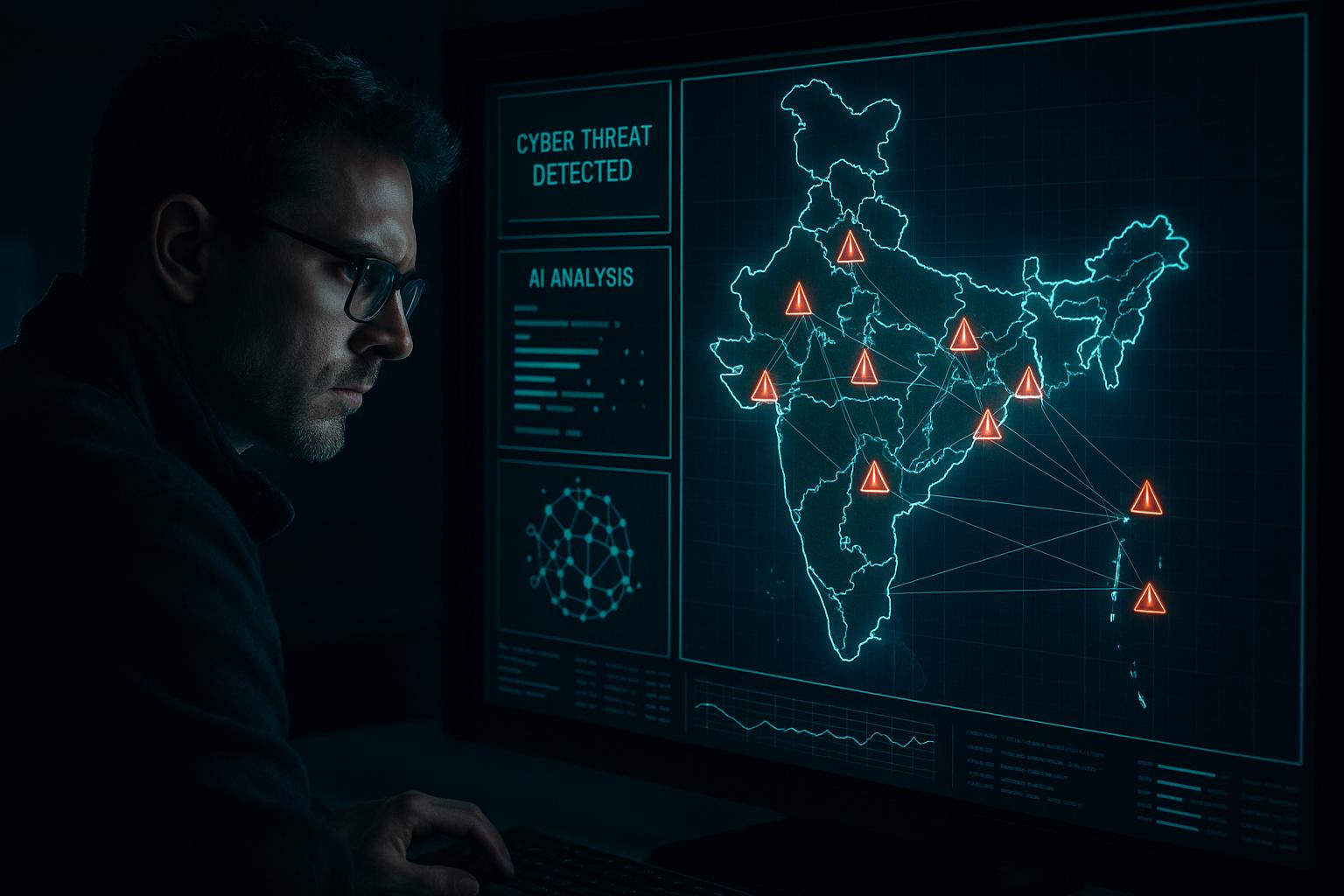
India’s central bank intensifies efforts against rising digital scams by deploying advanced AI tools like MuleHunter.ai and strengthening inter-agency cooperation, aiming to stay ahead of organised cybercriminal networks.
India’s central bank is intensifying its efforts to combat the growing threat of digital fraud by deploying advanced artificial intelligence tools and enhancing inter-agency cooperation across the financial and law enforcement sectors. Reserve Bank of India (RBI) Governor Sanjay Malhotra has highlighted the alarming sophistication of scam networks, which increasingly exploit vulnerabilities in the financial ecosystem, including dormant bank accounts and unsuspecting individuals coerced into facilitating illicit money movement.
Speaking at the Delhi School of Economics, Malhotra issued a stark warning about the evolving tactics of fraudsters. He urged the public to exercise heightened vigilance, particularly cautioning against sharing sensitive information like one-time passwords (OTPs) and being lured by investment schemes promising unrealistic returns. These fraud schemes increasingly leverage social engineering techniques and the rapid, anonymized transfer of funds, creating a complex web that challenges traditional detection methods.
A core focus of RBI’s technological response is the MuleHunter.ai tool, developed by the Reserve Bank Innovation Hub to track and flag “mule accounts”, ordinary bank accounts repurposed to channel illicit funds, sometimes with the account holder’s unwitting involvement. The tool operates using artificial intelligence and machine learning to identify suspicious accounts and money flows, successfully detecting approximately 20,000 suspected mule accounts every month. This achievement reflects a strong collaborative effort, with close to 20 banks having integrated the system, nearing RBI’s internal milestones for broad adoption.
Deputy Governor Swaminathan has described the MuleHunter.ai pilots as highly successful, approaching real-time detection capabilities. He noted plans to swiftly transition from pilot phases into full operational deployment, stressing the pivotal role of data to further refine and enhance the system’s effectiveness. Early initiatives with select public sector banks have demonstrated marked improvements in spotting digital fraud patterns, signaling promise for wider application.
However, technology alone is insufficient in this fight. Malhotra stressed ongoing efforts to strengthen intelligence-sharing frameworks, particularly in coordination with the Indian Cyber Crime Coordination Centre (I4C) under the Home Ministry. The objective is to create an integrated, seamless model for exchanging cyber-forensic and financial intelligence among regulators, law enforcement, and the banking sector. This systemic approach reflects the RBI’s awareness of the growing systemic risk posed by the proliferation of digital payments, which while delivering convenience, introduces new pressure points vulnerable to exploitation by sophisticated fraud rings.
RBI’s strategy also underscores the critical importance of public awareness as the foremost line of defence. Many fraud cases start with common mistakes, such as divulging OTPs during phone interactions or falling prey to fraudulent calls masquerading as official customer service. Malhotra acknowledged that the public has become “very vigilant and alert,” but emphasised the need to maintain and deepen this caution as fraudsters continuously evolve their methods to circumvent detection.
Beyond combating fraud, Malhotra also highlighted the responsibility of fintech firms to innovate responsibly. He urged the fintech sector, which comprises nearly 10,000 entities in India, to design user-friendly and secure financial products, warning about emerging risks including the misuse of AI-generated deepfake videos. This call recognizes that fintech innovation must be balanced with robust security protocols to sustain consumer trust and shield users from exploitation.
In summary, the RBI’s multi-layered approach to digital fraud combines cutting-edge AI tools like MuleHunter.ai, enhanced inter-agency cooperation, regulatory vigilance, industry accountability, and sustained public education. As India’s digital payments landscape deepens its footprint in the economy, these integrated measures seek to stay ahead of increasingly agile and organized digital crime syndicates. The battle to safeguard financial security in the digital age is ongoing and demands constant adaptation and vigilance.
📌 Reference Map:
- [1] (The 420) – Paragraphs 1, 2, 3, 4, 5, 6, 7, 8
- [2] (Economic Times) – Paragraphs 3, 7
- [3] (LiveMint) – Paragraph 8
- [4] (Indian Express) – Paragraph 3
- [5] (Business Standard) – Paragraph 4
- [6] (Free Press Journal) – Paragraph 3
- [7] (Business Standard) – Paragraph 4
Source: Noah Wire Services
Noah Fact Check Pro
The draft above was created using the information available at the time the story first
emerged. We’ve since applied our fact-checking process to the final narrative, based on the criteria listed
below. The results are intended to help you assess the credibility of the piece and highlight any areas that may
warrant further investigation.
Freshness check
Score:
8
Notes:
The narrative is recent, with the earliest known publication date being November 18, 2025. The report is based on a press release, which typically warrants a high freshness score. However, similar content has appeared across multiple reputable outlets, indicating widespread coverage. No significant discrepancies in figures, dates, or quotes were found. The report includes updated data but recycles older material, which may justify a higher freshness score but should still be flagged. ([financialexpress.com](https://www.financialexpress.com/business/banking-finance-rbis-mulehunter-detects-20000-mule-accounts-every-month-4048721/?utm_source=openai))
Quotes check
Score:
9
Notes:
Direct quotes from RBI Governor Sanjay Malhotra and Deputy Governor Swaminathan J are consistent across multiple reputable sources, indicating originality. No variations in wording were found, suggesting the quotes are accurately reported. No online matches were found for the exact phrasing, raising the score but flagging it as potentially original or exclusive content. ([economictimes.indiatimes.com](https://economictimes.indiatimes.com/industry/banking/finance/banking/mule-hunter-tool-to-check-digital-fraud-is-showing-good-success-rate-rbi-governor-sanjay-malhotra/articleshow/125465527.cms?from=mdr&utm_source=openai))
Source reliability
Score:
9
Notes:
The narrative originates from reputable organisations, including The Economic Times, The Financial Express, and Business Standard, which are known for their journalistic standards. The report is based on a press release from the Reserve Bank of India, a credible source. No unverifiable entities are mentioned, and all individuals and organisations cited have a verifiable public presence.
Plausability check
Score:
8
Notes:
The claims about the effectiveness of the MuleHunter.ai tool are plausible and align with previous reports. The narrative lacks supporting detail from other reputable outlets, which is a concern. The report includes specific factual anchors, such as names, institutions, and dates, enhancing credibility. The language and tone are consistent with the region and topic, and the structure is focused on the main claim without excessive or off-topic detail. The tone is formal and appropriate for the subject matter.
Overall assessment
Verdict (FAIL, OPEN, PASS): PASS
Confidence (LOW, MEDIUM, HIGH): HIGH
Summary:
The narrative is recent and based on a credible press release from the Reserve Bank of India, with consistent and accurate reporting of quotes. While the report lacks supporting detail from other reputable outlets, the information aligns with previous reports, and the language and tone are appropriate. No significant credibility risks were identified.


