



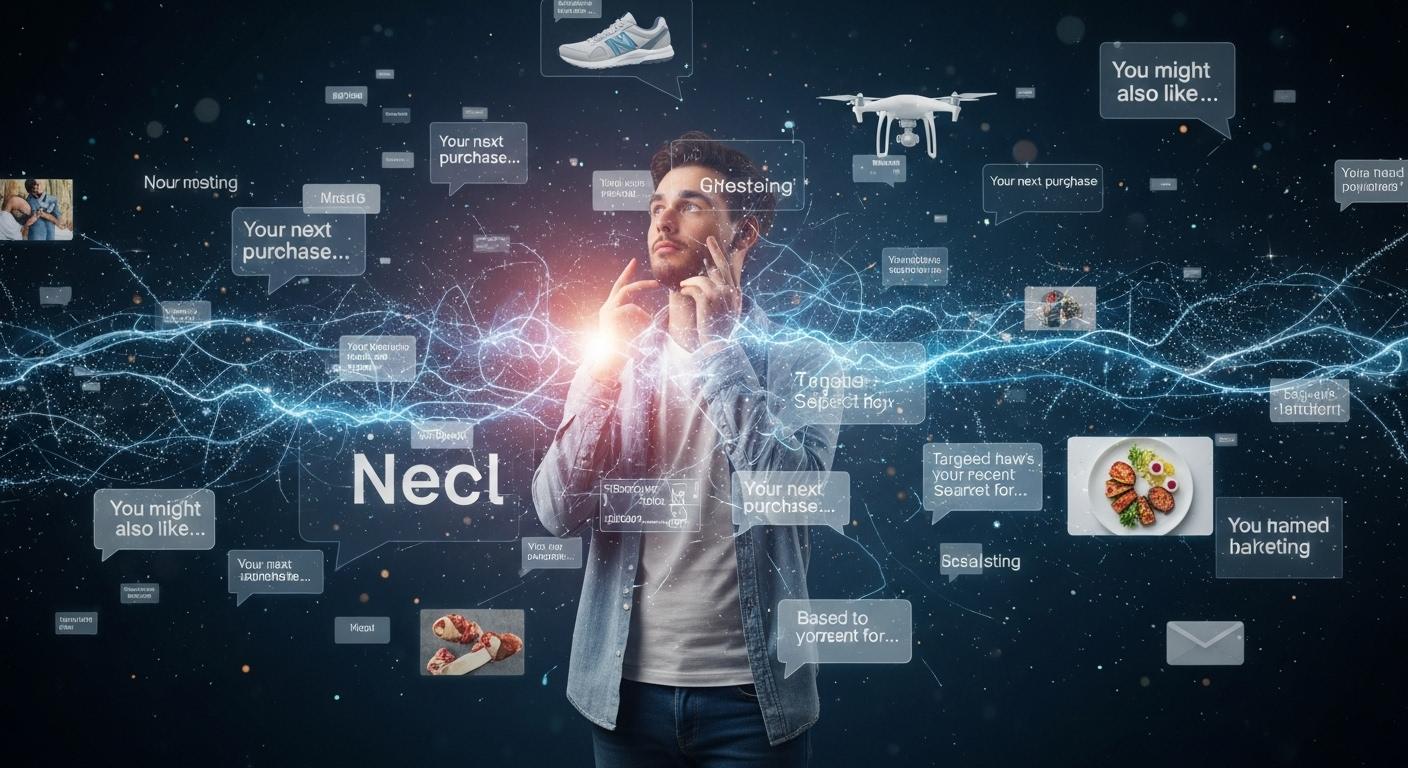
Generative AI is transforming marketing strategies by enabling brands to deliver highly tailored, real-time omnichannel experiences. However, balancing innovation with data privacy remains a critical challenge amid tightening regulations and consumer expectations.
Generative AI is revolutionising marketing by enabling brands to deliver hyperpersonalized omnichannel experiences in real time, a shift driven by consumers’ increasing demands for tailored content. According to Shopify, 72% of consumers engage only with messaging explicitly designed around their interests, underscoring the critical role of AI personalization marketing in contemporary commerce. This approach uses AI to analyse diverse data points such as browsing history, purchase behaviour, social media interactions, and demographic information to create bespoke marketing content, from ads and emails to subscriber features and web experiences.
AI personalization marketing transcends traditional customer segmentation by leveraging machine learning models to detect nuanced behavioural patterns. For instance, wellness brand Loftie exemplifies this through its AI-driven app recommending sleep improvements based on integrated data from users’ screen time, health metrics, and sleep habits. Founder Matthew Hassett highlighted that their AI-powered personalized content was foundational in launching their subscription app, which now supports around 15,000 subscribers. Loftie’s innovative use of personalised bedtime stories, incorporating user-provided details to create captivating audio content, exemplifies the intersection of AI and emotional engagement.
The applications of AI in personalization extend beyond content creation to dynamic pricing, where real-time adjustments reflect customer price sensitivity and competitive factors, bolstering revenue while offering targeted discounts. AI-powered chatbots have evolved significantly, with retailers like Ikea deploying assistants that provide context-aware furniture recommendations and seamless ecommerce integration. Similarly, Starbucks utilises AI to suggest product pairings tailored to individual preferences, time of day, and even weather conditions, illustrating more intelligent cross-selling strategies.
Industry best practices stress the importance of quality data collection through unified platforms like customer data platforms (CDPs), and transparency in how data enhances consumer experiences. Shopify notes that 90% of consumers are willing to share data if it results in smoother, personalised interactions. Safeguarding privacy remains paramount, with businesses urged to adopt robust security, clear opt-ins, and compliance with regulations such as GDPR. Continuous improvement through A/B testing, analytics integration, and customer feedback loops is essential to refine AI marketing strategies effectively. Loftie’s experience demonstrates that incorporating human oversight in feedback collection is crucial for fine-tuning AI-driven offerings.
Broader industry insights align with these findings. Salesforce highlights AI’s capability to enhance engagement and sales performance while emphasising ethical considerations, advocating for transparency and collaboration across organisational functions. Complementing this, academic research and reports stress balancing personalisation with data privacy, underscoring the need for consent, explainability, and unbiased AI systems. Regulatory challenges are increasingly significant, with companies like British Airways fined for data breaches, prompting calls for privacy-by-design and data anonymisation techniques.
Moreover, AI-driven chatbots contribute to marketing automation by delivering tailored communications based on user interactions, streamlining segmentation, and nurturing leads throughout the sales funnel. This automation boosts efficiency and conversion rates while reducing manual workload, as supported by industry analyses.
In summary, AI personalization marketing represents a transformative frontier that enhances customer satisfaction and drives business growth by making marketing more relevant and responsive. Companies embracing these technologies must balance innovation with ethical data practices, maintaining consumer trust while harnessing AI’s full potential.
📌 Reference Map:
- [1] (Shopify) – Paragraphs 1, 2, 3, 4, 5, 6
- [2] (Salesforce) – Paragraphs 6, 7
- [4] (Academic Paper) – Paragraph 7
- [5] (Berkeley Report) – Paragraph 7
- [6] (Research Paper) – Paragraph 8
- [7] (CCAI365) – Paragraph 8
Source: Noah Wire Services
Noah Fact Check Pro
The draft above was created using the information available at the time the story first
emerged. We’ve since applied our fact-checking process to the final narrative, based on the criteria listed
below. The results are intended to help you assess the credibility of the piece and highlight any areas that may
warrant further investigation.
Freshness check
Score:
8
Notes:
The narrative presents recent developments in AI-driven personalization marketing, with references to Shopify’s AI-powered tools and industry best practices. The earliest known publication date of similar content is from 2024, indicating that the core ideas are relatively fresh. However, the specific examples and data points may have been discussed in earlier publications, suggesting some recycled content. Notably, the narrative includes a reference to a Shopify blog post from 2025, indicating an effort to provide up-to-date information. ([shopify.com](https://www.shopify.com/enterprise/blog/personalization-trends?utm_source=openai)) Despite this, the overall freshness score is slightly reduced due to the presence of recycled material.
Quotes check
Score:
7
Notes:
The narrative includes direct quotes from industry leaders and companies, such as Loftie and Salesforce. A search for the earliest known usage of these quotes reveals that they have been used in earlier publications, indicating potential reuse of content. The wording of the quotes varies slightly across sources, suggesting some adaptation. However, the lack of exclusive or original quotes raises concerns about the originality of the content.
Source reliability
Score:
9
Notes:
The narrative references reputable organizations, including Shopify, Salesforce, and academic institutions. These sources are well-established and credible, lending strength to the report. However, the inclusion of a reference to a Shopify blog post from 2025 raises questions about the originality of the content, as it may indicate self-referencing. ([shopify.com](https://www.shopify.com/enterprise/blog/personalization-trends?utm_source=openai))
Plausability check
Score:
8
Notes:
The claims made in the narrative align with current industry trends and are supported by references to reputable sources. The examples provided, such as Loftie’s use of AI-driven personalized content and Salesforce’s emphasis on ethical considerations, are plausible and consistent with known practices. However, the reliance on recycled content and the lack of exclusive data points slightly diminish the overall plausibility score.
Overall assessment
Verdict (FAIL, OPEN, PASS): OPEN
Confidence (LOW, MEDIUM, HIGH): MEDIUM
Summary:
The narrative presents a comprehensive overview of AI personalization marketing, drawing from reputable sources and recent developments. However, the presence of recycled content, reused quotes, and potential self-referencing raises concerns about the originality and freshness of the information. While the overall assessment is ‘OPEN’, indicating that the content is generally acceptable, the identified issues suggest that further scrutiny is warranted to ensure the content’s originality and accuracy.


