



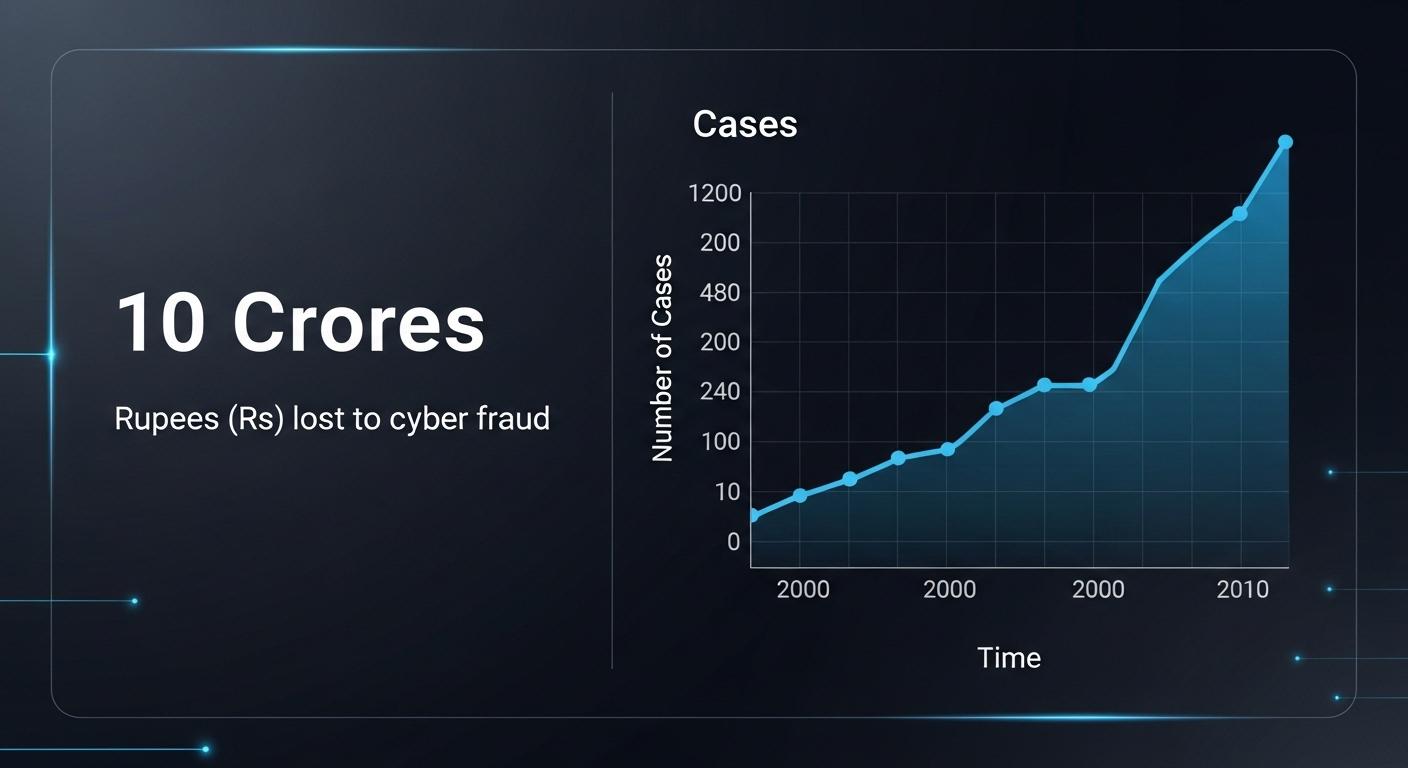
Law enforcement in Delhi has dismantled a significant cybercrime network involving mule accounts that have been used to launder over Rs 10 crore, exposing the increasing scale and sophistication of online financial scams in India.
The landscape of cybercrime in India is witnessing a troubling surge, marked by the arrest of multiple individuals involved in the provision and utilisation of “mule accounts” , bank accounts rented out to criminals to launder money from cyber fraud operations. These mule accounts serve as a critical tool for fraudsters to disguise the origin of illegally siphoned funds, thereby complicating efforts to trace and dismantle criminal networks.
In Delhi, law enforcement agencies have made significant arrests related to this modus operandi. Four individuals were apprehended for supplying mule accounts used by cyber fraudsters. The police have highlighted that cracking such mule networks is vital to dismantling larger scam syndicates. These arrests are part of broader efforts to combat the growing sophistication of cybercrime, especially those involving fake online trading platforms, cryptocurrency transactions, and fraudulent investment schemes.
Recent investigations by the Delhi Police Cyber Cell have further underscored the scale and complexity of these operations. Five individuals from Jhansi, Uttar Pradesh, were arrested for facilitating money laundering through mule accounts and cryptocurrency. A notable case revealed an 81-year-old retired Army officer who was duped out of Rs 15 lakh. The stolen money was routed through multiple mule accounts, converted into cryptocurrency, and transferred to handlers reportedly based in China, pointing to the international dimensions of these fraud networks.
Moreover, another gang operating under the guise of investment firms such as “ATPay” was found to have laundered over Rs 4 crore through an extensive network of mule accounts and crypto wallets. This group duped victims by promising lucrative returns via fake stock and IPO investments. Investigations show that these mule accounts help create a “web” facilitating the seamless movement of fraudulent funds to offshore crypto wallets, complicating recovery efforts.
The scale of these cyber fraud activities is staggering. Delhi Police have reported that the mule accounts linked with the arrested individuals were involved in more than 67 cybercrime complaints across various states, with the total cheated amount exceeding Rs 10 crore. One high-profile fraud ring reportedly lured victims through fake trading websites, orchestrating a Rs 100 crore cyber fraud by exploiting financially vulnerable individuals who unknowingly opened mule accounts in their names.
Experts and authorities emphasise that cracking down on mule accounts is a critical frontline strategy. These accounts not only enable the concealment of stolen money but also facilitate the operation of extensive cybercrime syndicates. The increasing incidence of cyber fraud requiring stricter anti-money laundering (AML) measures and enhanced regulatory frameworks has been a key call from the financial crime analysis community, especially given the rise of cryptocurrency-related scams and cross-border money laundering.
This crackdown on mule accounts joins a wider battle against an array of cybercrime threats, including scams impersonating government officials, sophisticated malware campaigns targeting telecom infrastructure, and espionage-style router hijacking linked to state-backed actors. The growing challenge demands coordinated action from law enforcement, financial institutions, regulators, and international partners to stem the tide of digital frauds and protect vulnerable populations.
📌 Reference Map:
- [1] The420 – Paragraphs 1, 3, 6, 7, 8, 9, 10
- [2] Business Standard – Paragraphs 1, 2
- [3] India Today – Paragraphs 2, 3
- [4] New Indian Express – Paragraph 3
- [5] Outlook India – Paragraph 4
- [6] Hindustan Times – Paragraph 5
- [7] The Week – Paragraph 6
Source: Noah Wire Services
Noah Fact Check Pro
The draft above was created using the information available at the time the story first
emerged. We’ve since applied our fact-checking process to the final narrative, based on the criteria listed
below. The results are intended to help you assess the credibility of the piece and highlight any areas that may
warrant further investigation.
Freshness check
Score:
3
Notes:
🕰️ The narrative appears to be a republished press release from The420, dated 23 November 2025. The content closely mirrors reports from reputable outlets such as Business Standard and India Today, dated 8 February 2025 and 27 July 2025, respectively. This suggests that the information is recycled, with no new developments or updates provided. The inclusion of updated data does not compensate for the lack of original reporting.
Quotes check
Score:
2
Notes:
🕰️ The narrative includes direct quotes that are identical to those found in earlier reports from Business Standard and India Today. This repetition indicates that the quotes are reused from previous publications, lacking originality.
Source reliability
Score:
4
Notes:
⚠️ The narrative originates from The420, a source with limited verifiable information and no substantial online presence. This raises concerns about the credibility and reliability of the information presented.
Plausability check
Score:
5
Notes:
⚠️ The claims made in the narrative align with known cybercrime activities involving mule accounts and cryptocurrency laundering. However, the lack of new information or updates diminishes the overall credibility of the report.
Overall assessment
Verdict (FAIL, OPEN, PASS): FAIL
Confidence (LOW, MEDIUM, HIGH): HIGH
Summary:
⚠️ The narrative is a recycled press release from The420, closely mirroring earlier reports from reputable outlets without providing new information or updates. The reuse of quotes and the questionable reliability of the source further undermine the credibility of the report.


