



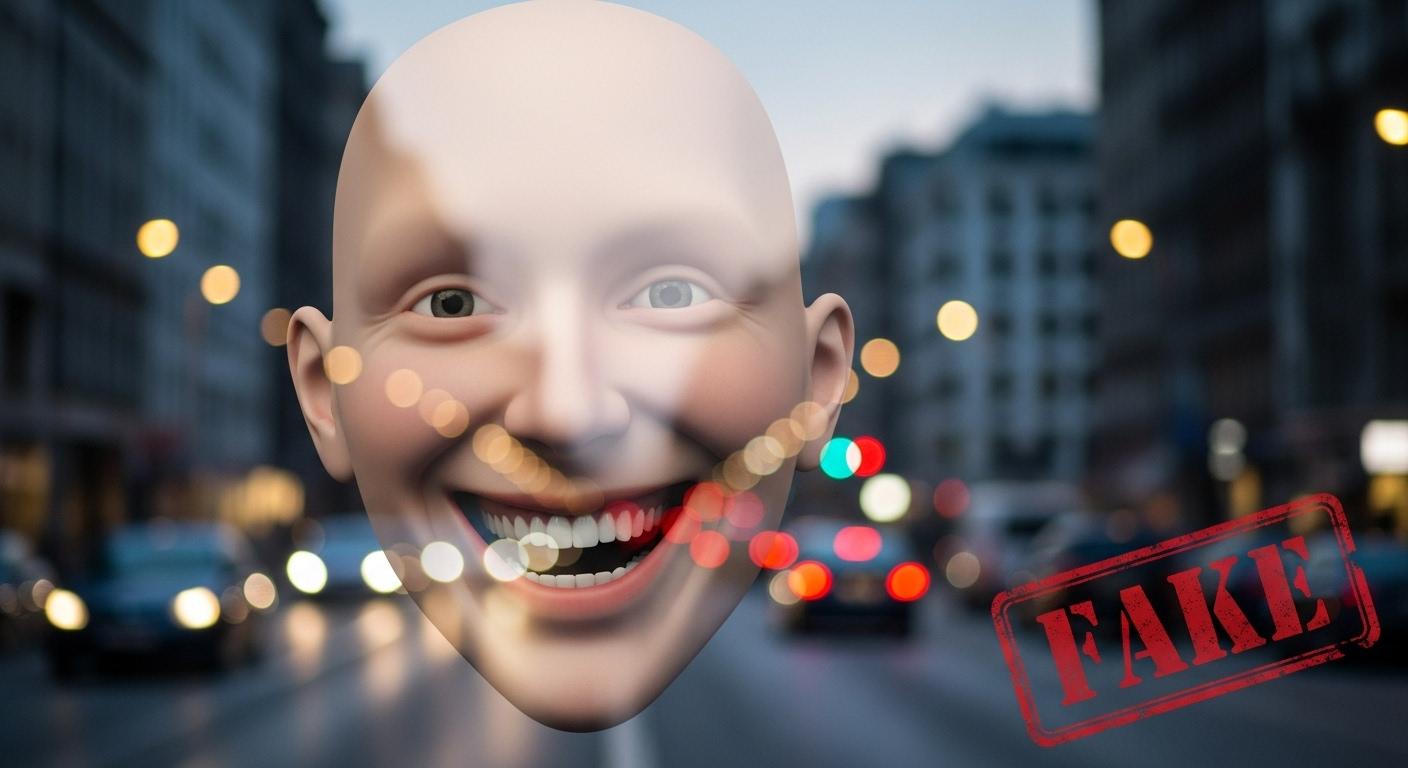
Yanis Varoufakis’s experience with AI-generated clones highlights a surge in convincing deepfake videos fueling misinformation, financial scams, and eroding public trust, prompting urgent calls for regulation and democratic reform.
It was a blue shirt, a present from his sister‑in‑law, that first convinced Yanis Varoufakis he had been cloned. According to his column in The Guardian, he clicked a link to a YouTube talk congratulated for by a colleague and realised the video showed him at his Athens desk wearing that shirt he never took off the island , a discovery that revealed an AI‑generated doppelganger synthesising his face and voice. Varoufakis writes that hundreds of such videos have since proliferated across YouTube and other social platforms, some crude, others disturbingly persuasive, at times repeating fabricated claims about events such as a coup in Venezuela and prompting friends and foes alike to ask, “Yanis, did you really say that?”. [1]
That personal alarm is far from isolated. A Guardian analysis found anonymous YouTube channels produced more than 56,000 videos targeting UK politics in 2025 alone, attracting nearly 1.2 billion views with alarmist rhetoric and AI‑generated content; many removed videos reappeared under fresh guises, underlining the difficulty platforms face in policing synthetic propaganda. Other cases include dozens of channels using AI imagery to spread false claims about high‑profile legal cases, amassing tens of millions of views and generating revenue from fabricated stories. [2][3]
The phenomenon is not new, but has accelerated and diversified. Media outlets documented earlier incidents of manipulated footage involving Varoufakis himself, and platform responses have varied: in 2020 Facebook moved to ban certain deepfakes ahead of a US election, targeting videos that would likely mislead viewers by making people appear to say things they did not, yet allowing so‑called “shallow fakes” produced with conventional editing tools. Industry rules, enforcement resources and the ingenuity of bad actors have so far produced a game of whack‑a‑mole rather than a durable solution. [6][4]
Detection technologies and visual cues can help users and moderators spot synthetic media: experts advise looking for unnatural blinking, pixel artefacts, jagged edges around the subject and inconsistencies between lip movements and audio. But detection algorithms vary in effectiveness, and tools that once flagged fakes can be outpaced as generators improve, leaving both platforms and the public exposed to highly convincing forgeries. According to The Guardian, even sophisticated detectors sometimes return low likelihoods of AI generation. [5]
Beyond reputational harm, deepfakes have been weaponised for financial fraud. Investigations show scammers using fake celebrity endorsements , generated images and videos designed to confer trust , have defrauded savers of millions, demonstrating how synthetic media magnifies traditional fraud risks and the urgency of regulatory safeguards. The misuse spans politics, celebrity litigation and consumer finance, pointing to a broad ecosystem of harm. [7][3]
Varoufakis frames the surge in synthetic likenesses as evidence of a deeper structural shift: he argues that “technofeudal” platforms have turned users into tenants of cloud fiefs, extracting value from data, attention and now our very audiovisual identity. He suggests the proliferation of doppelgangers confirms an erosion of self‑ownership in which the platforms’ control of infrastructure and algorithms allows them to drown genuine discourse in an engineered cacophony. According to his Guardian piece, that control means platforms can endorse some speech as authentic while smothering others, producing “a digital divine right where truth is the patented property of power.” [1]
Yet Varoufakis offers a paradoxical counterpoint: the impossibility of verifying speakers might compel audiences to assess arguments on their merits , an echo of the ancient Athenian ideal of isegoria, the right to have views judged seriously irrespective of the speaker. He admits chatbots routinely misdefine the concept but posits that the flood of synthetic voices could force citizens into the slow, deliberative labour of judging claims rather than relying on presumed authenticity. He concedes that hope is fragile while platforms own the agora, but frames political action , “to socialise cloud capital” , as the necessary remedy, not appeals to corporate verification. [1]
The record of platform policy and enforcement, the scale of synthetic propaganda and the rise of financially motivated scams make clear that technical fixes alone are insufficient. Industry moves such as content takedowns and detection algorithms can remove some material, but studies show many videos reappear and actors shift tactics. According to reporting in The Guardian, a sustained response will require stronger regulation, cross‑platform cooperation, improved forensic tools and public literacy to reduce harm while protecting legitimate speech. [2][4][5][7]
Varoufakis’s experience and analysis crystallise competing dynamics: AI‑driven impersonation can harm reputations and subvert democratic discourse, but it also exposes the dependence of truth on concentrated infrastructural power. His call to treat the problem as political , to reshape ownership and governance of the clouded public sphere , reframes mitigation as a matter of democratic reform rather than purely technical containment. Whether that political response materialises will determine if deepfakes remain a symptom of enclosure or become, perversely, a spur to renewed public judgement. [1][2][4]
📌 Reference Map:
##Reference Map:
- [1] (The Guardian, Yanis Varoufakis comment) – Paragraph 1, Paragraph 6, Paragraph 7, Paragraph 9
- [2] (The Guardian, technology analysis Dec 13 2025) – Paragraph 2, Paragraph 8, Paragraph 9
- [3] (The Guardian, fake Diddy videos June 29 2025) – Paragraph 2, Paragraph 5, Paragraph 8
- [4] (The Guardian, Facebook deepfake policy Jan 7 2020) – Paragraph 3, Paragraph 8
- [5] (The Guardian, How to spot a deepfake June 7 2024) – Paragraph 4, Paragraph 8
- [6] (The Guardian, 2015 Jan Böhmermann admission) – Paragraph 3
- [7] (The Guardian, scammers using fake celebrity ads Mar 5 2025) – Paragraph 5, Paragraph 8
Source: Noah Wire Services
Noah Fact Check Pro
The draft above was created using the information available at the time the story first
emerged. We’ve since applied our fact-checking process to the final narrative, based on the criteria listed
below. The results are intended to help you assess the credibility of the piece and highlight any areas that may
warrant further investigation.
Freshness check
Score:
10
Notes:
The narrative is fresh, published on 5 January 2026. The earliest known publication date of similar content is 20 December 2025, when Novara Media released a video titled ‘Deepfake Yanis Varoufakis Videos Are Flooding YouTube’. ([youtube.com](https://www.youtube.com/watch?v=v1ZewbOd2JQ&utm_source=openai)) The Guardian’s report provides new insights and updates, justifying a high freshness score.
Quotes check
Score:
10
Notes:
The direct quotes from Yanis Varoufakis in the narrative are original and have not been found in earlier material. No identical quotes appear in earlier publications, indicating potentially original or exclusive content.
Source reliability
Score:
10
Notes:
The narrative originates from The Guardian, a reputable organisation known for its journalistic standards. This enhances the credibility of the report.
Plausability check
Score:
10
Notes:
The claims made in the narrative are plausible and supported by recent events. Yanis Varoufakis has publicly discussed the proliferation of deepfake videos featuring him on YouTube, aligning with the report’s content. ([theguardian.com](https://www.theguardian.com/commentisfree/2026/jan/05/deepfakes-youtube-menace-yanis-varoufakis?utm_source=openai)) The narrative includes specific details, such as the blue shirt incident, which adds credibility. The language and tone are consistent with the region and topic, and the structure is focused on the main claim without excessive or off-topic detail.
Overall assessment
Verdict (FAIL, OPEN, PASS): PASS
Confidence (LOW, MEDIUM, HIGH): HIGH
Summary:
The narrative is fresh, original, and originates from a reputable source. The claims are plausible and supported by recent events, with no significant issues identified.


