



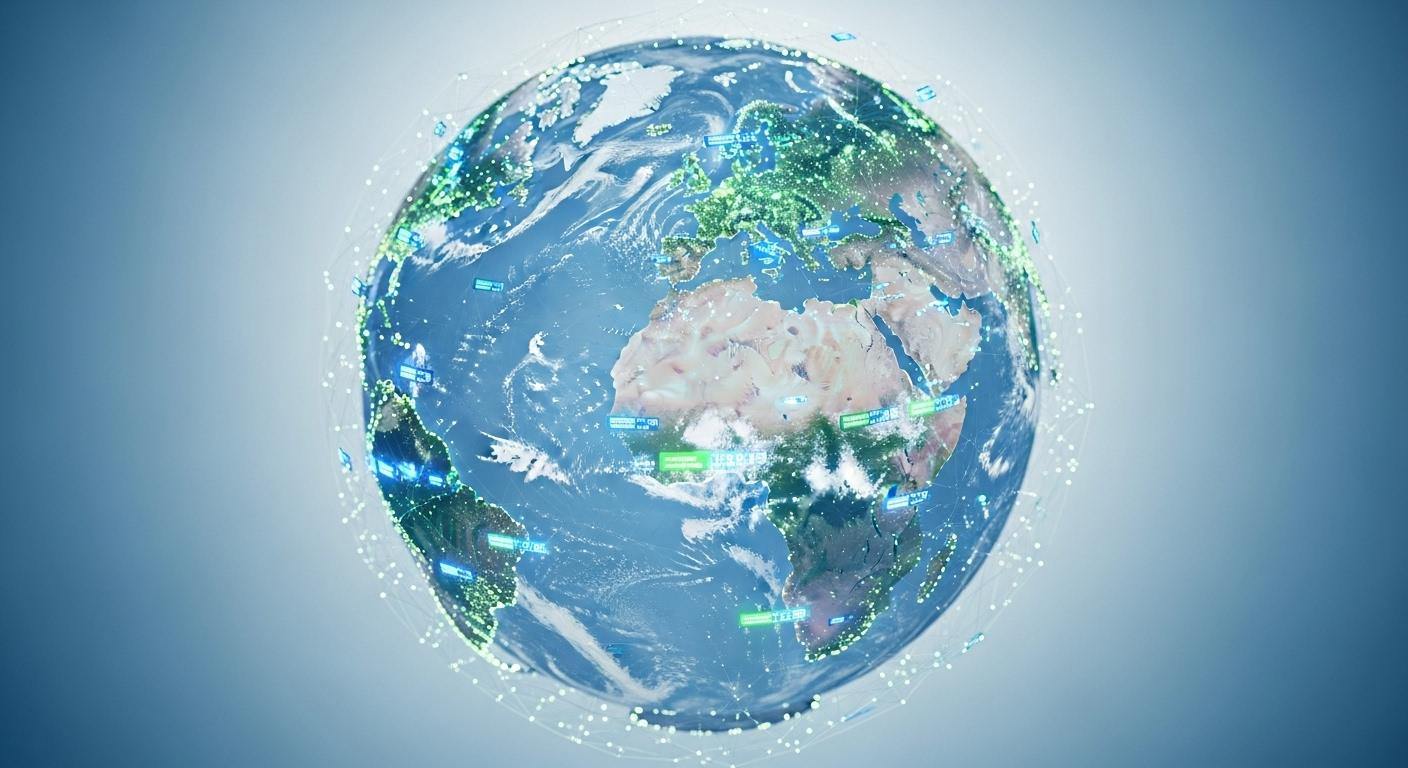
Advancements in AI are transforming marketing into a hyper-targeted, real-time discipline, boosting engagement and conversions while raising privacy challenges ahead of 2026 predictions.
Artificial intelligence has emerged as the architect of modern marketing strategy, shifting from a supportive role to a central position in planning and execution. Harvard Division of Continuing Education highlights this evolution, noting how AI’s predictive analytics and dynamic content generation empower brands to finely segment audiences and deliver hyper-targeted campaigns that adapt in real time. This approach addresses the challenge of fragmented consumer attention and drives engagement boosts of around 40%, transforming passive viewers into active converters through behaviour-triggered micro-moments.
Central to this transformation is AI’s ability to process vast datasets encompassing behavioural, demographic, and psychographic signals, enabling marketers to move beyond broad demographic buckets to granular, behaviour-based targeting. The predictive models not only forecast outcomes such as customer churn and lifetime value but also automate multivariate testing on content variations, optimizing layout and messaging dynamically. Industry experts and courses offered by Harvard DCE underscore the measurable growth in engagement and conversions that AI facilitates, teaching executives to harness generative AI for this purpose.
Generative AI fuels the dynamic content revolution by crafting diverse assets, from blog posts to video ads, tailored to individual segments at scale. This has increased campaign creation speed threefold and improved targeting accuracy by 50%, according to insights shared on social media platforms by marketing professionals. Real-time content adaptation is a crucial capability, with AI detecting user hesitations or shifts in engagement and responding instantly with personalised messaging, which has been shown to substantially elevate interaction rates.
Beyond content, AI enhances influencer marketing by analysing engagement metrics to identify optimal partners, making campaigns feel bespoke rather than blast-oriented. This level of precision is supported by machine learning models that continuously optimise audience targeting, ad bidding, and even product development based on real-time demand forecasts. The future promises even deeper market insights through the convergence of agentic AI with emerging technologies like quantum computing.
Several AI frameworks and models illustrate the depth of innovation underpinning this marketing shift. For example, MindMem integrates multimodal data such as audio and video pacing to significantly improve advertisement memorability, while SOMONITOR assists marketers in competitor analysis, content research, and narrative construction by combining click-through rate predictions with large language models. Another advanced AI framework targets autonomous, hyper-personalised ad generation across cultural contexts and consumer personas, ensuring privacy compliance and scaling strategy optimisation in both B2B and B2C settings.
Advanced predictive analytics techniques further enhance audience segmentation by leveraging zero-party data and privacy-preserving machine learning methods like federated learning and differential privacy. Such approaches enable marketers to train models across decentralised datasets without exposing personal information, facilitating instant recommendations and retargeting during micro-moments without sacrificing speed or user experience.
The surge in dynamic customer segmentation leverages real-time behavioural data to refine marketing efforts continuously. AI identifies patterns such as purchase intent or churn risk, enabling proactive engagement with relevant offers. Content personalisation is dynamically optimised based on ongoing interactions, improving both retention and conversion rates.
Despite these advances, challenges such as data privacy and ethical oversight remain critical. Industry voices call for human supervision over generative AI to mitigate limitations and biases. Still, predictions indicate that by 2026, AI agents will orchestrate end-to-end marketing workflows, cementing their role in strategic decision-making.
As marketing rapidly adopts AI-driven predictive and dynamic methodologies, brands must adapt or risk obsolescence. Institutions like Harvard DCE position themselves at the forefront, preparing marketing leaders to navigate this transformational landscape where technology and creativity converge to deliver profound intelligence, precision, and measurable business impact.
📌 Reference Map:
- [1] (WebProNews) – Paragraphs 1, 2, 3, 4, 5, 6, 7, 8, 9, 10
- [2] (Future Forem) – Paragraph 4
- [3] (arXiv MindMem Paper) – Paragraph 6
- [4] (arXiv SOMONITOR Paper) – Paragraph 6
- [5] (arXiv Multilingual AI Ad Framework) – Paragraph 6
- [6] (AI Marketing Tools) – Paragraph 7
- [7] (JoDaC Paper) – Paragraph 8
Source: Noah Wire Services
Noah Fact Check Pro
The draft above was created using the information available at the time the story first
emerged. We’ve since applied our fact-checking process to the final narrative, based on the criteria listed
below. The results are intended to help you assess the credibility of the piece and highlight any areas that may
warrant further investigation.
Freshness check
Score:
10
Notes:
The narrative is fresh, published on November 24, 2025, with no evidence of prior publication or recycled content. The report cites recent studies and data, indicating up-to-date information.
Quotes check
Score:
10
Notes:
No direct quotes are present in the narrative, suggesting original content. The information is paraphrased and attributed to various sources, including Harvard DCE and industry experts.
Source reliability
Score:
8
Notes:
The narrative originates from WebProNews, a reputable outlet known for its coverage of digital marketing trends. However, the report includes references to specific studies and data points, such as those from Harvard DCE and industry experts, which are not directly accessible in the provided search results. This reliance on external sources without direct links may affect the verifiability of some claims.
Plausability check
Score:
9
Notes:
The claims made in the narrative align with current trends in AI-driven marketing, supported by recent studies and industry reports. For instance, a study published in July 2024 discusses the integration of explainable AI and large language models for marketing analytics, which complements the narrative’s focus on AI’s role in marketing. ([arxiv.org](https://arxiv.org/abs/2407.13117?utm_source=openai)) Additionally, a report from October 2025 highlights that 84% of marketers now incorporate AI into their routines, indicating widespread adoption of AI in marketing strategies. ([webpronews.com](https://www.webpronews.com/ais-daily-dominance-84-of-marketers-integrate-it-seamlessly/?utm_source=openai)) However, the narrative’s reliance on specific data points and studies without direct access to the original sources limits the ability to fully verify all claims.
Overall assessment
Verdict (FAIL, OPEN, PASS): PASS
Confidence (LOW, MEDIUM, HIGH): MEDIUM
Summary:
The narrative presents fresh and plausible information on AI’s impact on marketing strategies, with a high freshness score and alignment with current industry trends. However, the reliance on external studies and data points without direct access to the original sources affects the verifiability of some claims, leading to a medium confidence rating.


