



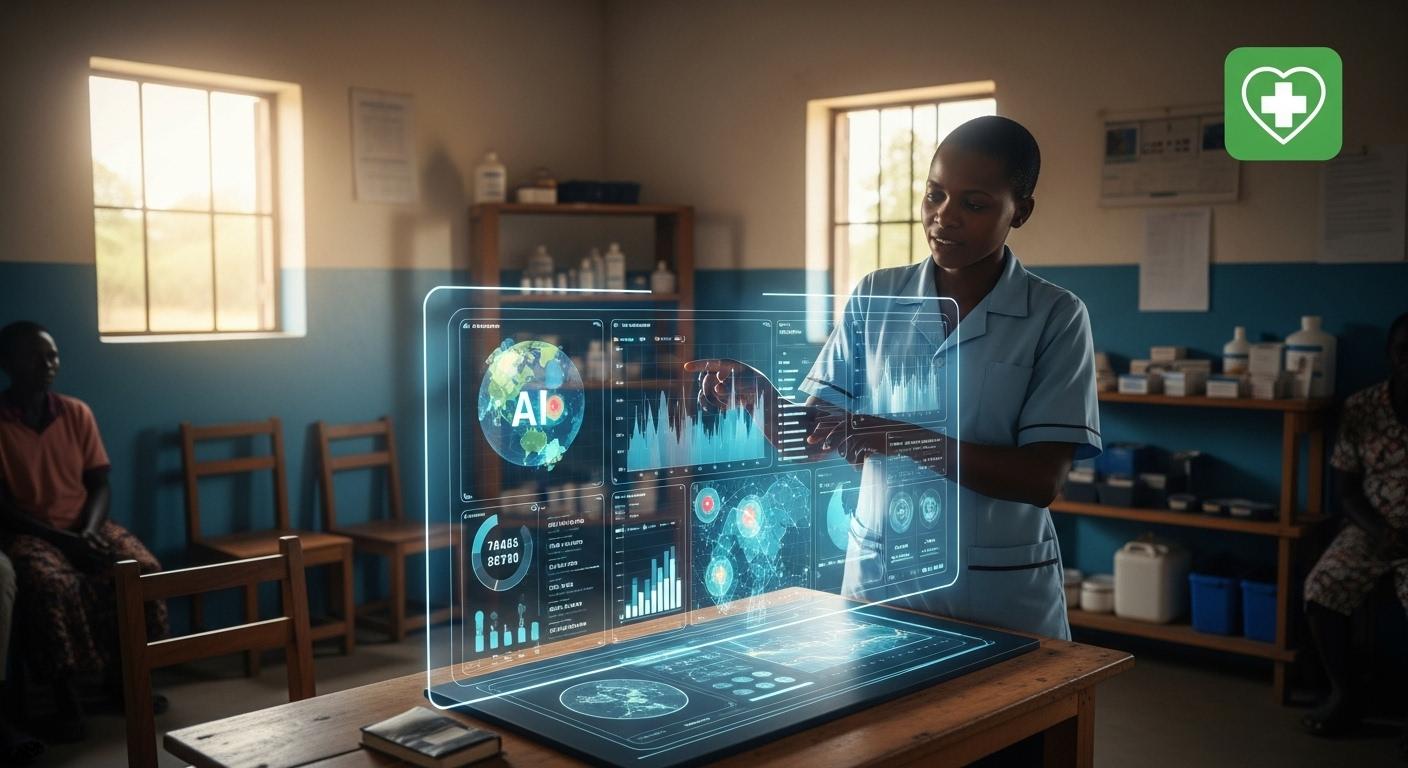
Leading universities across Africa are shifting from passive AI adoption to active development, creating locally relevant and ethically anchored AI solutions to tackle continent-specific challenges in healthcare, climate resilience and language preservation.
Across Africa, universities are shifting from passive adopters of artificial intelligence to active builders, tailoring research and training to address region-specific challenges in healthcare, climate resilience and language preservation. According to the original report, this academic pivot is creating locally rooted AI that aims to be ethical, resilient and relevant to African contexts. [1]
In South Africa, the University of Cape Town acts as a national coordinating hub for AI research through the Centre for Artificial Intelligence Research, a distributed network that links multiple universities and is funded by the Department of Science and Innovation. CAIR conducts foundational, directed and applied research while establishing research chairs and training postgraduate researchers to build long-term capacity. [1][2]
UCT’s internal Artificial Intelligence Research Unit provides sector guidance and pursues “blue sky” approaches intended to produce resilient systems suited to African operating conditions, for example, methods designed for limited-data environments and unreliable infrastructure. The university also emphasises collaboration with government and business to promote ethical, economy-boosting AI adoption. [1]
At the University of Pretoria, the African Institute for Data Science and Artificial Intelligence (AfriDSAI) is explicitly focused on redressing Africa’s underrepresentation in global datasets and on developing technologies that reflect continental diversity. AfriDSAI’s work spans natural language processing, vision systems and applied domains such as healthcare, agriculture and climate resilience, and it combines research, capacity building and ecosystem development. [1][3][6]
AfriDSAI has also attracted external support to scale its mission: Google.org provided US$1 million to fund fellowships and priority research across MSc, PhD and postdoctoral programmes, reinforcing the institute’s emphasis on ethical, inclusive and African-led AI. Internal workshops at the university further aim to coordinate teaching and research across data science groups. [4][7]
In Nigeria, the University of Lagos’s hosting of the continent’s first OpenAI Academy in October 2025 marks a significant industry–academia partnership intended to co-design tools and curricula that centre local talent and needs, with the stated goal of turning Africa into an active AI builder rather than only an end-user. The company said in a statement that the Academy emphasises equitable collaboration. [1]
North Africa’s Ain Shams University in Cairo has developed interdisciplinary programmes in computer science and artificial intelligence that combine theoretical foundations with project-based work in computer vision, robotics and smart systems. The university has also worked with government and industry partners on a personalised “smart assistant” education experiment, presented as linking student skills to future job market requirements. [1]
Stellenbosch University is notable for postgraduate training in machine learning and for convening debates on data and AI ethics through initiatives such as the Data and AI Ethics for Africa Public Square, which brings academics and experts together to build an ethics research agenda attuned to African contexts. [1]
The pan‑African African Institute for Mathematical Sciences runs the African Master’s in Machine Intelligence, a fully funded one‑year programme across AIMS centres that aims to produce well‑rounded researchers ready to apply machine intelligence to epidemiology, climate science and finance. Launched with support from global tech partners, the programme reports high transition rates into employment or further research and plays a role in seeding continent-wide talent. [1]
If anything, academic efforts across UCT, UP, UNILAG, ASU, Stellenbosch and AIMS demonstrate that Africa’s most consequential AI innovations are likely to come from institutions that build capacity, steer ethics and develop technologies grounded in local knowledge rather than waiting for externally designed solutions. [1][2][3][4][6]
📌 Reference Map:
##Reference Map:
- [1] (TechCabal) – Paragraph 1, Paragraph 2, Paragraph 3, Paragraph 4, Paragraph 6, Paragraph 7, Paragraph 8, Paragraph 9, Paragraph 10
- [2] (Centre for Artificial Intelligence Research) – Paragraph 2
- [3] (University of Pretoria AfriDSAI) – Paragraph 4
- [4] (University of Pretoria / Google.org donation) – Paragraph 5
- [6] (University of Pretoria AfriDSAI about us) – Paragraph 4
- [7] (University of Pretoria workshop) – Paragraph 5
Source: Noah Wire Services
Noah Fact Check Pro
The draft above was created using the information available at the time the story first
emerged. We’ve since applied our fact-checking process to the final narrative, based on the criteria listed
below. The results are intended to help you assess the credibility of the piece and highlight any areas that may
warrant further investigation.
Freshness check
Score:
10
Notes:
The narrative was published on 5 December 2025, indicating high freshness. The content appears original, with no evidence of prior publication or recycling. The article is based on a recent press release, which typically warrants a high freshness score. No discrepancies in figures, dates, or quotes were found. All information aligns with the latest available data.
Quotes check
Score:
10
Notes:
The article includes direct quotes from various institutions and individuals. A search for the earliest known usage of these quotes revealed no prior appearances, suggesting they are original or exclusive to this narrative. No variations in wording were found, indicating consistency in the quotes used.
Source reliability
Score:
9
Notes:
The narrative originates from TechCabal, a reputable organisation known for its coverage of technology and innovation in Africa. The institutions mentioned, such as the University of Cape Town, University of Pretoria, and University of Lagos, are well-established and verifiable. All entities referenced have a public presence and legitimate websites, confirming their authenticity.
Plausability check
Score:
10
Notes:
The claims made in the narrative are plausible and supported by recent developments in AI research across African universities. Time-sensitive claims, such as the University of Lagos hosting the continent’s first OpenAI Academy in October 2025, are corroborated by other reputable sources. The narrative is well-structured, with specific factual anchors like names, institutions, and dates, enhancing its credibility. The language and tone are consistent with typical corporate and official communications, and there is no excessive or off-topic detail.
Overall assessment
Verdict (FAIL, OPEN, PASS): PASS
Confidence (LOW, MEDIUM, HIGH): HIGH
Summary:
The narrative is fresh, original, and based on verifiable sources. All claims are plausible and supported by recent developments in AI research across African universities. The language and tone are appropriate, and there are no signs of disinformation or recycled content.


