

Listen to the article
Imagine an alternate near-future in which the U.S. military had more vigorously pursued the development of hypersonic weapons. When a major U.S. Air Force exercise deploys such weapons to Guam, Tinian, and Saipan, it surprises Chinese military leaders who believed that U.S. hypersonic missile development had been stymied by underfunded research, technological gaps, and a lack of prioritization.
This month’s Fictional Intelligence is a “what if” thought experiment that takes the form of a memo on this stunning turn of events, written by a colonel in the PLA Intelligence Bureau of the Joint Staff of the Central Military Commission. In this imagined universe where the U.S. leads China in hypersonic warfare, not lags behind, the People’s Liberation Army is forced to revisit its strategic assumptions and plans.
This fictional document uses PLA writing conventions, for example, to detail specific aircraft and offer general systems capability observations.
FICTIONAL PLA MEMO TEXT:
DATE: 203X July 2
REF: 33/CMC/24-8
DIST: PLA Joint Operational Systems Design Expert Group • Central Military Commission Political Work Department • Central Military Commission Joint Staff Department • Central Military Commission Equipment Development Department • Eastern Theater Command Political Work Department • People’s Liberation Army Air Force Political Work Department
SUBJECT: Selected Observations on the Strategic and Mechanization Implications of the Performance of U.S. Air Force Hypersonic Weapons Systems
Comrade,
Reflecting the urgency communicated by the Communist Party of China’s Politburo Standing Committee and the Communist Party of China’s Central Military Commission, I respectfully offer this analysis in response to the CMC’s inquiry into the strategic blackmail posed by the U.S. Air Force PACIFIC ARCHER exercise inside the Second Island Chain and the mechanization aspects of the enemy’s combat power.
Summary: As a reflection of adversary defense industrial strength and military research, the PACIFIC ARCHER exercise signifies a qualitative shift for the enemy and necessitates a subjective rectification of our previous assumptions about American hypersonic weapons integration and its operational implications to the PLA.
Guided by dialectic principles, this analysis divides into three parts:
1) PACIFIC ARCHER Systemic Overview
2) Rectifications of Understanding: Cognitive Lag and U.S. Hypersonic Capabilities
3) Operational Logic for Confrontational Thresholds and Active Defense
PART 1: PACIFIC ARCHER Systemic Overview
On 17 June 0430 local time, the U.S. Air Force commenced exercise PACIFIC ARCHER to simulate the rapid deployment of hypersonic-missile equipped fighter and bomber aircraft. During the next 36 hours, the Americans deployed multiple squadrons of systemic nodes (five squadrons of fighter aircraft and four bomber squadrons) to Guam, along with additional support aircraft. Notably, both types of combat aircraft were armed with hypersonic missiles. Within 12 hours of arriving on Guam, 67 percent of the aircraft dispersed to other locations inside the Second Island Chain, including Saipan and Tinian.
The operationalization of this system-centric rapid response capability, integrating an aviation network entirely equipped with hypersonic air-to-ground effectors, is significant in multiple ways. It turned legacy aircraft and AI-guided Collaborative Combat Aircraft into an intelligentized force. The exercise of this system-centric rapid response capability marked the first time the adversary deployed aircraft that were all equipped with hypersonic air-to-ground missiles. Additional support and logistics C-17 and C-130 aircraft transported additional simulated missiles to Guam and other dispersed U.S. Air Force Agile Combat Employment (ACE) bases to demonstrate contested resupply. These systemic strike nodes achieved a qualitative leap ahead in lethality to achieve the potential systemic neutralization of our high-value targets.
Previous U.S. military exercises such as REFORPAC, BAMBOO EAGLE, and TALISMAN SABRE integrated hypersonic weapons capabilities, with a focus on U.S. Army and Marine Corps ground-launch capabilities, such as Precision Strike Missile (PrSM) and Long Range Hypersonic Weapon (LRHW or Dark Eagle) missiles. PACIFIC ARCHER is the first exercise centered on an intelligentized air-launched weapons framework of multiple aircraft types and their employment from dispersed locations that can match or exceed ground-launched hypersonic weapon ranges. The enemy demonstrated its capability to strike deep into our strategic depth.
The enemy aircraft involved in the exercise included F-15EX, F-22, F-35, F-47, B-21, B-1, and B-52, as well as at least two types of known Collaborative Combat Aircraft. Notably, the B-52 can carry more than 20 HACM weapons and the B-1 can carry 36 HACM weapons. Imagery and signals reporting indicate the aircraft carried the hypersonic missiles internally and externally. Known missile types tested during PACIFIC ARCHER were AGM-183A ARRW, Hypersonic Attack Cruise Missile (HACM), and Mako weapons; presently unknown hypersonic air-to-air missile systems were also deployed.
By 29 June, all U.S. Air Force aircraft involved in PACIFIC ARCHER departed Guam, Saipan, and Tinian after completing multiple simulated long-range strike missions.
PART 2: Rectifications of Understanding U.S. Hypersonic Capabilities
The PLA possesses the most advanced and comprehensive hypersonic air-, sea-, and ground-launched missiles of any military. They are the logical product of the Party’s dedication to defending China’s core interests and years of investment to generate asymmetric advantages for the PLA in the New Era.
We must now admit a cognitive gap in our technical modeling and principal assessments that believed the enemy would continue to lag behind China’s hypersonics march to world-class status in the future. This necessitates seizing this opportunity for self-reflection on how the U.S. achieved this capability and for developing renewed understanding of the integrated elements involved. This reexamination is a moment to study the U.S. example and use that new understanding to surpass them in this technical area.
For one, PLA intelligence analysis considered the American harnessing of civil-military fusion with a sole focus on AI and software to have shut the door on military research and technology programs developing medium- and long-term capabilities in non-profit civilian economy centers, including hypersonics. Also, analysts believed U.S. military and political leaders to have timid voices regarding a sense of urgency in reforming the culture of procuring and deploying hypersonics as a matter of time sensitivity.
The U.S. Air Force’s fielding of these air-launched decapitation tools during PACIFIC ARCHER reveals much greater success in overcoming the technological and developmental challenges of air-launched hypersonic missiles than was previously assessed by PLAAF.
Most significantly, the enemy’s deployment of so many aircraft equipped with hypersonic missiles to the Guam bastion attests to the successful scaled production of such weapons. It is now evident that the U.S. has built a bridge between hypersonic research and testing and its revitalized defense industrial base’s production facilities. Past analysis of renewed enemy military-industrial-financial complex capabilities during the last decade indicated a policy focus on intelligentized command and control, autonomous drones, conventional munitions, and profit-seeking innovation –– rather than research-intensive aerodynamic pressure sensors, dual-flow scramjet propulsion, and composite aerostructures needed for scaled production of hypersonic air-launched missiles. In seeing what was visible on the water’s surface, such hypersonic technologies appeared to have been cut off from the flow of vital budget support and dedicated Air Force research and testing organization personnel focused on scaled manufacturing challenges. We assessed there to be little likelihood of production breakthroughs in these areas. PACIFIC ARCHER revealed a gap in our understanding.
As an example of the adversary’s progress, the successful miniaturization of medium-range hypersonic air-to-ground missiles allows them to be carried on internal weapons racks in aircraft such as F-35 and F-22 fighters. Produced at multiple manufacturing facilities, the supply chain for these miniaturized missiles is nonetheless vertically integrated and must reflect harmonious cooperation among the U.S. Air Force and defense industry. Subsequent research reveals successful high-volume manufacturing of miniaturized scramjet propulsion units. Not only does this design reduce the radar signature on these aircraft equipped with internally carried missiles, but it also makes it difficult to determine if an aircraft is equipped with hypersonic weapons during testing or deployment. Other technological advances linked to the capabilities demonstrated in PACIFIC ARCHER exceeded expectations. These include hypersonic flight control software systems, materials thermal management, and precision navigation and timing.
Shared military-civil fusion goals between U.S. universities and the U.S. Air Force are now known to have led to the development of additional hypersonic test infrastructure, such as multiple Mach 10 wind tunnels. Expanded flight test campaigns conducted to improve air-launched capabilities were integrated into other ground-launched missile development programs, resulting in cost efficiencies and obscuring the nature of these air-launched experiments.
Determining a precise picture was now evidently made more difficult by comprehensive adversary counterintelligence activities focused on securing defense-industrial research and development. We must also acknowledge their potential use of deception and cognitive warfare operations, capabilities that they demonstrated in past generations, but we assumed had been devalued. It is highly possible the gap in our understanding of U.S. Air Force hypersonic capabilities is attributable to a deception operation on the part of the American military to create a cognitive trap.
Your announcement of the replacement of the leadership cadre of the PLA Intelligence Bureau and a CMC Discipline Inspection Commission focused on all who failed in their duty will surely bring more information on how this cognitive gap proved possible.
What is known at this time is that by shining a bright light on emergent adversary civil-military fusion market forces revitalizing their defense industry, we created a shadow elsewhere. MSS and PLA analysis and cyber activities focused on emerging defense companies, especially those centered in “Silicon Valley” and their venture capital industry, both of which had been compromised by our human and SIGINT assets for over a generation. However, this created a failure to appreciate that many important defense breakthroughs like hypersonics advances, which often require long lead time and don’t always produce profits, could still be fueled by government research and development centers like DARPA and the Air Force Research Lab.
While more time is needed to understand how this was achieved, it is now clear that a shared vision of urgent innovation and scientific fighting spirit was present within the U.S. Air Force, as evidenced by reexaminations of obscure public writing and speeches by officials. While a budget is like oxygen for the body, without a facile mind there is no way that a program will thrive. By harvesting its human capital and innovation from all ranks and organizations, the U.S. Air Force has created a talent forest that is a resource for future development work in this technical area, as well as others. This may be the backbone of the breakthrough in air-launched hypersonic weapons displayed at PACIFIC ARCHER, and we must strongly search out other cognitive gaps in multiple other technology areas where we had assumed superiority for the PLA.
PART 3: Operational Logic for Confrontational Thresholds
The hegemonic behavior of enemy military forces inside the Second Island Chain is not surprising, but the U.S. Air Force hypersonic capabilities displayed at PACIFIC ARCHER reflect a necessary opportunity to consider the reexamination of operational logic for confrontational thresholds. It was believed that the enemy would be subdued without fighting, yet this aggressive demonstration shows they have now embraced our own approach to asymmetric engagement. If Chairman Mao advised, “You fight your way, and I’ll fight my way,” the systematized employment of hypersonic weapons is more “our way.” A primary area of inquiry relates to operational planning during the critical window of the next 18 months.
While all-domain sensing of systemic threat nodes allows the identification of U.S. Air Force fighters and bombers dispersed to fixed nodes of high value inside the Second Island Chain from Guam to Tinian, Saipan, and other locations, PLAAF forces will be blind to whether these aircraft carry a spear or a stick. With its dispersed bomber and fighter aircraft armed with air-launched hypersonic weapons, the enemy has demonstrated a qualitative leap in lethality at a distance, while expanding the strike radius to apply persistent asymmetric pressure to the PLA’s own high-value systemic nodes.
When U.S. Air Force aircraft operate from a distributed operational system within the Second Island Chain, enemy air-launched hypersonic missiles can attack fixed PLA targets from multiple vectors and beyond air-intercept ranges. It is assessed now that enemy air-launched hypersonic missiles can simultaneously reach targets inside the First Island Chain, such as PLAN Carrier Strike Groups in port, PLA frontier bastions on Fiery Cross Reef, and the nerves of our space-ground nodes at Sanya Ground Station and Jiamusi Ground Station. This target coverage within our strategic barriers at scale was not believed to be possible until PACIFIC ARCHER presented the operationalization of these capabilities.
The demonstration of such enemy hypersonic capabilities introduces additional dilemmas for large-scale PLA expeditionary operations, which rely on surprise, mass, and speed. The enemy can deploy such aircraft and missiles in a superior position before a battle, such that they are able to predetermine the outcome in their favor.
Dispersed U.S. Air Force fighters and bombers inside the Second Island Chain will be able to pursue mobile targets at ever greater distances, as was demonstrated during PACIFIC ARCHER. In one instance observed by a PLAN surveillance vessel, a B-1 bomber operating from Tinian International Airport launched a HACM that destroyed a maneuvering maritime target decoy south of Wake Island. At a range of approximately 1,600 kilometers and guided by sensor-fusion data, this capability exceeds the speed and range of conventional air-launched antiship missiles previously used by the enemy. Our modeling and simulations of enemy airpower capabilities must therefore shift if relatively fewer enemy aircraft can target far more fixed and mobile PLA targets than had been expected. Additional testing during the exercise of an unknown hypersonic air-launched missile fired from B-21 bombers revealed the U.S. Air Force has fielded an internally carried Mach-10 weapon. This new enemy capability further destabilizes the balance between defense and offense.
The PLA’s planned asymmetric advantage targeting the enemy’s logistics in depth during a war of consumption is now also an assumption that must be reexamined.
The new enemy capabilities pose complications and dilemmas for PLA and CMC air, sea and expeditionary operations in INDOPACOM –– particularly the time-to-target compression from Mach 6/Mach 7+ hypersonic weapons deployed around the enemy force at scale. U.S. Air Force distributed nodes inside the Second Island Chain are beyond PLARF non-ballistic engagement zones, which compounds the PLA’s dilemmas as each dispersed enemy Air Task Force now has a much greater effective targeting range. With these new hypersonic weapons, the enemy systemic strike node operating concept emerges from its desperate position of timidity and defensiveness to one that is proactive and highly disruptive. By targeting PLAN vessels and air-defense systems, the enemy can disrupt the PLA’s counter-intervention capabilities necessary for far seas protection.
In light of this, specific operational areas necessary for strategic leadership require careful consideration based on the enemy capabilities demonstrated at PACIFIC ARCHER.
First, any operation to fulfill our national destiny to reunify with Taiwan must recognize the seeding of enemy archers and arrows throughout our near seas that can sever supply lines by targeting supply vessels in the Taiwan Strait with hypersonic air-launched missiles. The enemy can also apply a stranglehold on lines of communication and supply to our bases in the East and South China Seas.
Transregional operations to establish common strategic interests in the Indian Ocean, East Africa, South America, the Middle East, and the Arctic, must also be reassessed. U.S. Air Force aircraft equipped with hypersonic missiles provide a similar gain in range and speed, threatening PLA forces, our interests, and our logistics support facilities worldwide. Specifically, a harmonious and historic reunification with Taiwan could be prevented by enemy hypersonic weapons deployed to global strategic nodes proximate to our Belt and Road lines of communication. Even a few enemy aircraft could sever the maritime flow of oil, critical minerals, and other materiel flowing from the beating heart of our logistics networks in those far regions.
Conclusion:
The PACIFIC ARCHER exercise signifies a qualitative shift for the enemy’s systemic strike nodes in the Second Island Chain and reflects a renewed strength in their civil-military fusion focused on intelligentized warfare. The U.S. Air Force fielded unprecedented numbers of air-launched hypersonic weapons while demonstrating an improved joint operational strike system. In doing so, they revealed an unexpected sense of urgency in their fusion of research and development, production, and doctrine to achieve new levels of lethality at a distance against the PLA’s high-value systemic nodes. The adversary’s previously identified system dependencies, identified through systems confrontation analysis, are no longer valid. The Communist Party and CMC must reexamine all strategic planning during the next 18 months as we seize this opportunity for self-reflection on how the adversary achieved this capability and for developing a renewed understanding of our own PLA capabilities.
PREPARED BY: Commanding Officer Senior Colonel Li Feng, PLAAF
REVIEWED BY: Political Commissar Senior Colonel Bao Hu, PLAAF
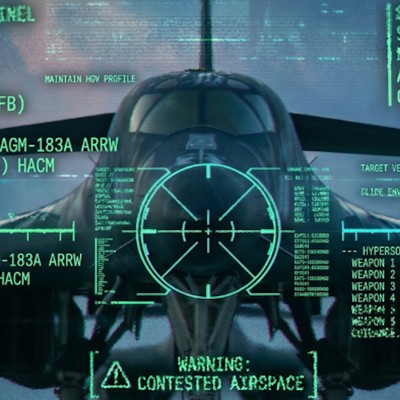
Image: Modified from an original DVIDS U.S. Air Force photo.
Read the full article here

6 Comments
Great insights on Defense. Thanks for sharing!
This is very helpful information. Appreciate the detailed analysis.
Interesting update on Shock wave. Looking forward to seeing how this develops.
I’ve been following this closely. Good to see the latest updates.
Solid analysis. Will be watching this space.
Good point. Watching closely.