Listen to the article
Grip is one of the most common—and most misunderstood—fundamentals in pistol shooting. This article breaks down how proper grip mechanics create a flat-shooting pistol, why the support hand does the real work, and how focused reps build consistency shot after shot.
At Valiance Firearms Training (VFT), the most common issue we correct with new students isn’t gear, stance, or sight alignment.
It’s grip.
Specifically, what we see most often is a low and loose grip that creates unnecessary movement in the gun. A gun that should track predictably instead snaps upward and off target because recoil isn’t managed effectively.
This shows up quickly with students, regardless of experience level.
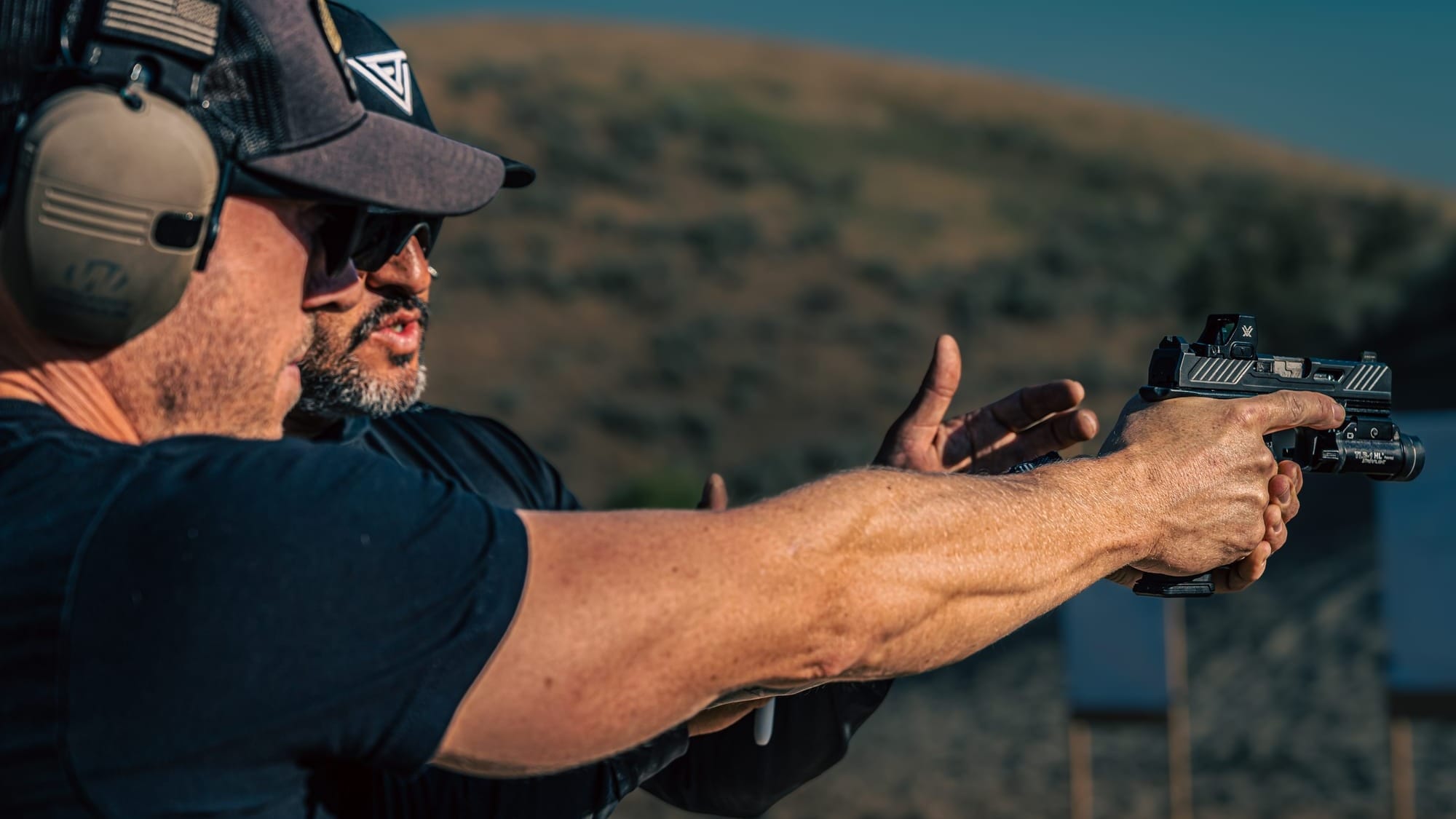
The Problem We Commonly See
Many students build a grip almost entirely with the firing hand, while the support hand contributes little meaningful pressure or frame contact.
The result is consistent:
- The support hand sits too low on the frame
- The support hand barely engages the gun
- Open space is left on the sides and back of the grip
When the shot breaks, recoil escapes through that unused space. The gun snaps upward, sights lift aggressively, and follow-up shots slow down.
The gun often gets blamed—but in reality, the shooter’s grip is creating the problem.
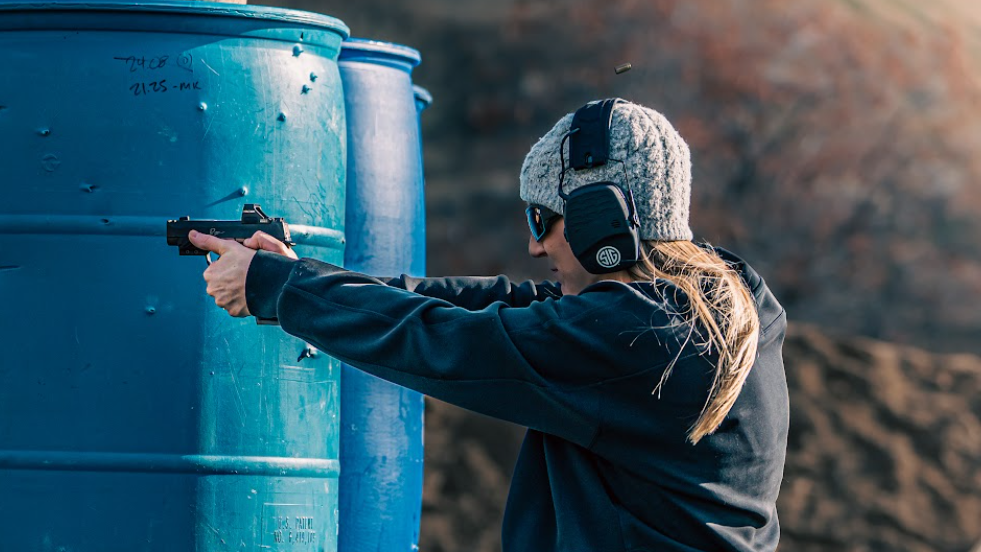
The Tip: Build the Grip From the Support Hand
At VFT, we teach grip with a strong, primary emphasis on the support-hand side.
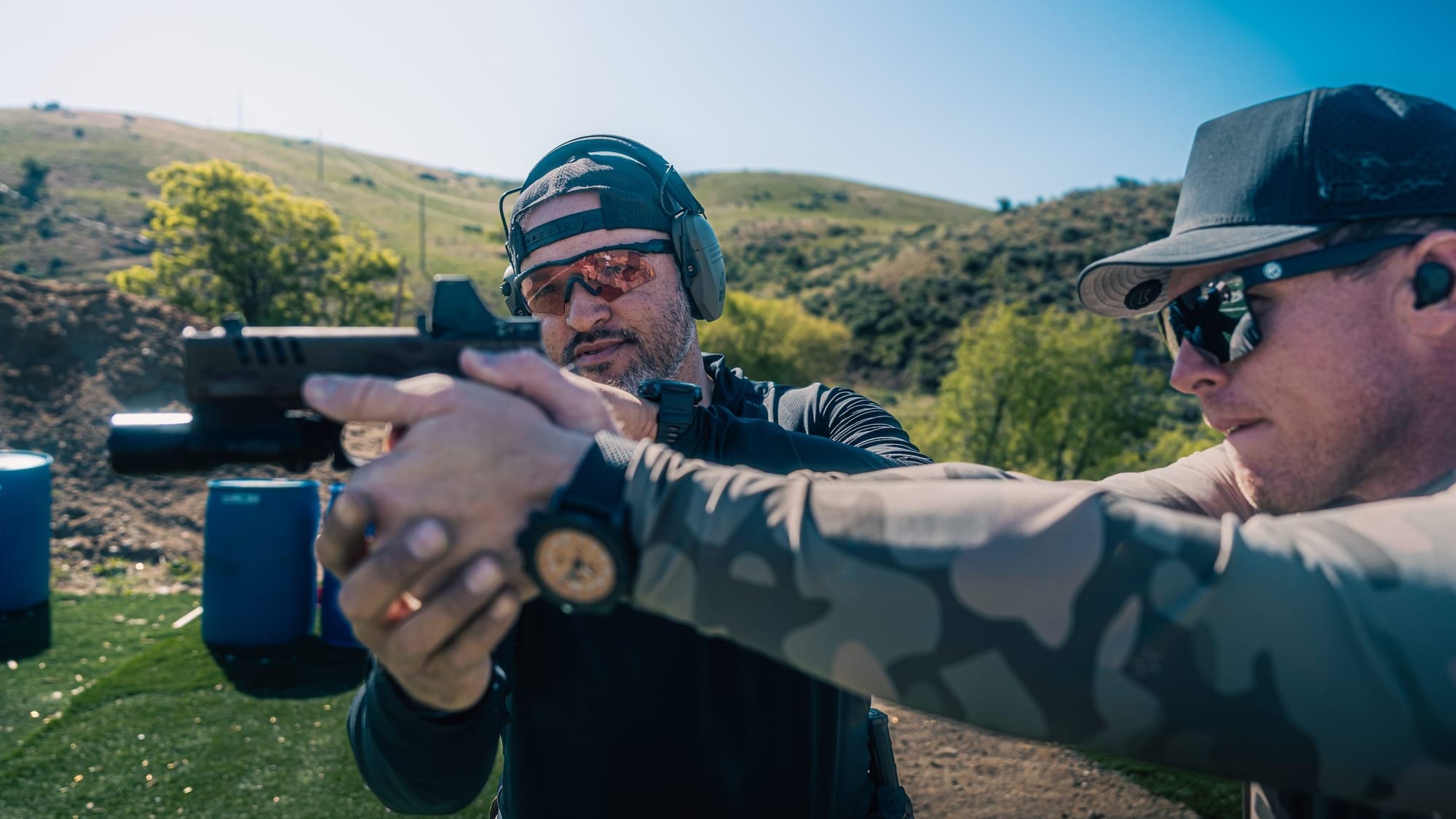
The support hand should be angled downward at roughly a 45-degree angle, forcing the meaty portion of the palm high up into the exposed frame on the support side of the gun. This rotation fills unused space and creates meaningful contact where recoil is best controlled.
From there, the support hand must apply enough strength to maximize frame contact and manage recoil effectively. Proper position comes first, but it must be reinforced with purposeful pressure to keep the gun stable through the firing cycle.
The goal is to take up as much frame surface area as possible so recoil energy is driven straight back into the shooter, not up and away.
The firing hand’s role is simple:
- Maintain alignment
- Press the trigger cleanly
The support hand does the work.
A strong support-hand grip:
- Rotates downward to drive the palm high into the frame
- Locks the heel of the hand into the grip panel
- Applies inward pressure from the sides
- Provides the majority of grip pressure
When this is done correctly, the gun tracks flatter, returns faster, and behaves consistently from shot to shot.
That’s a flat-shooting pistol.
Getting this right takes reps. A lot of them.
Consistency in training matters, and having ammo on hand removes one more barrier between you and productive range time. Ammo Squared makes it easy to stay stocked so your training sessions are ready to execute as you build and reinforce a proper grip.
Don’t let past frustration slow your progress. Get ammo. Get your grip right. Be ready for what comes next.
This article kicks off a fundamentals series focused on the skills that matter most.
-Nate
Read the full article here

15 Comments
I’m skeptical about the claim that the firing hand’s role is simple, as I’ve found that maintaining alignment and pressing the trigger cleanly can be challenging, especially under pressure.
It’s interesting to note that consistency in training matters, and having ammo on hand can make a big difference in productive range time, as it allows shooters to focus on their technique without worrying about running out of ammunition.
The idea that the gun often gets blamed for poor performance, but in reality, the shooter’s grip is creating the problem, is a valuable reminder that proper technique is essential for effective shooting.
The goal of taking up as much frame surface area as possible to drive recoil energy straight back into the shooter makes sense, and I’d like to know more about how this can be achieved with different types of guns and shooting styles.
I’m curious to know more about how VFT’s training methods can help shooters develop a consistent and effective grip, and how this can be applied in different shooting contexts.
The idea that the support hand does the real work in creating a flat-shooting pistol is a game-changer, and I’m curious to see how this technique can be applied in real-world shooting scenarios.
I’ve found that getting the grip right takes a lot of reps, and it’s reassuring to know that this is a normal part of the learning process, even for experienced shooters.
The fact that open space is left on the sides and back of the grip when the support hand barely engages the gun is a common issue that can lead to poor shooting performance, and it’s helpful to know how to address this problem.
The tip to build the grip from the support hand is a valuable one, and I appreciate how VFT emphasizes the importance of proper position and purposeful pressure to keep the gun stable through the firing cycle.
The fact that the support hand should be angled downward at roughly a 45-degree angle to maximize frame contact is a specific detail that I hadn’t considered before, and I’d like to know more about how this affects recoil management.
I’ve noticed that many students at Valiance Firearms Training have a low and loose grip, which creates unnecessary movement in the gun, and it’s interesting to see how this affects the shooting performance.
This is a common issue, even among experienced shooters, and it’s great that VFT is addressing it with their training methods.
I appreciate the emphasis on the importance of proper grip mechanics in creating a flat-shooting pistol, and I’m looking forward to applying these techniques in my own shooting practice.
I’ve experienced the problem of the gun snapping upward and off target due to poor grip mechanics, and it’s reassuring to know that this is a common issue that can be corrected with proper training.
The fact that a strong support-hand grip can rotate downward to drive the palm high into the frame, lock the heel of the hand into the grip panel, and apply inward pressure from the sides is a detailed explanation that helps to clarify the importance of proper grip mechanics.