


Listen to the article
A walk through firearms and ammunition history
This weekend, AmmoSquared is bringing something different to the show floor in Des Moines. In celebration of America’s 250th birthday, we’ve created a museum-style exhibit with eight rifles and their associated rounds of ammunition that span two and a half centuries of American History. We’re calling it: 250 Years of the American Service Rifle, and it showcases the rifles used by our military and its citizenry to protect this great nation over the past 250 years.
If you stop by our booth at GOALS, you’ll see an 18-foot video wall along with eight firearm displays, starting with the “Brown Bess” Revolutionary War-era flintlock spanning all the way into the future with the next-generation service rifle for the US Military – the M7. Each rifle is the civilian variant of the rifle a soldier actually carried, or will carry, on the battlefield.
Why a History Exhibit at an Ammo Company’s Booth?
AmmoSquared exists to make sure gun owners have ammo there when they need it: a personal ammo stockpile that is built consistently, one round at a time. Ammo that is shipped on demand so our customers are never left scrambling if store shelves go empty. We believe gun owners are part of our nation’s backbone, standing ready to protect themselves, their families and their community… no matter what. That mission didn’t start with us. It started over 250 years ago, on April 19th, 1775, when the British citizens of Lexington and Concord refused to let their government confiscate their arms. They saw the importance of a trained, well-armed society, one that is capable of resisting tyranny. We do too.
We wanted an exhibit that showcased our nation’s fighting spirit – both military and civilian. We wanted something that reminded people why we own firearms. The goal was never the rifle itself; that is just a tool. A tool that changes as technology changes. What is more important is the freedom it defends, the rights it helps preserve, and the tyranny, both big and small, it keeps at bay every day.
So we built a walk-through timeline: eight rifles, eight eras, one continuous story about a free people staying ready through grit and sometimes: superior firepower.
The Line-Up
“Brown Bess” (1722–1838)
The exhibit opens with the rifle that armed both sides of the Revolution. The British Land Pattern Musket, nicknamed “Brown Bess” for reasons nobody has ever definitively settled, was a .75-caliber flintlock smoothbore built for one job: put a wall of lead downrange as fast as a soldier could reload. A trained regular could manage about three rounds a minute, and accuracy past 200 yards was questionable at best. It wasn’t a marksman’s weapon. It was a formation weapon, meant to be fired shoulder to shoulder in ranks, which is exactly how 18th-century warfare was fought… usually.
The twist that makes Brown Bess worth opening the exhibit with: many of the muskets colonial militiamen carried at Lexington and Concord had been issued to them by the Crown itself, stockpiled for earlier colonial wars against the French. The first shots of the American Revolution were fired, at least in part, with the Brown Bess flintlock. It remained in production and in colonial and early American use for well over a century.
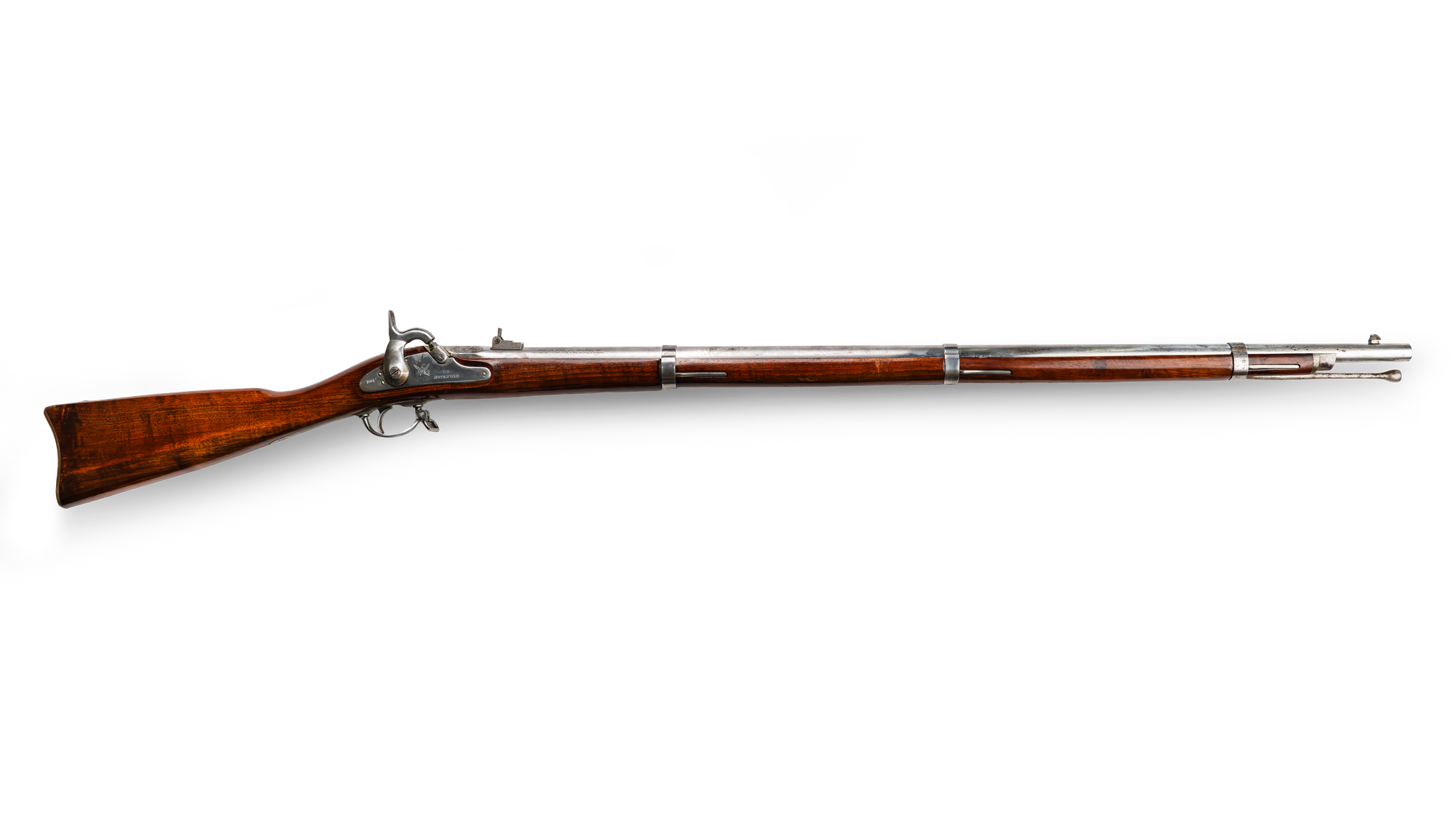
Springfield 1861 (1861–1873)
Jump forward to the Civil War, and the smoothbore has given way to the rifled musket. The Springfield Model 1861 combined a percussion-cap ignition system with a rifled barrel, which meant real accuracy for the time: out to 400 yards in trained hands, a dramatic leap from the Brown Bess’s 200-yard range. Springfield Armory and its network of subcontractors produced more than a million of them, making it by far the most common shoulder arm carried by Union troops.
Soldiers on both sides simply called it “the Springfield,” a naming habit that would repeat itself for the next century of American service rifles. The 1861’s minié-ball ammunition and rifled barrel are also credited with a grim side effect of the Civil War: rifles this accurate, fired at formations still fighting in Napoleonic-style ranks, produced casualty rates that shocked commanders on both sides and helped push infantry tactics toward the trench warfare that would define the next fifty years of conflict.
The Gap: What We Left Out
Between the Springfield Model 1861 and the adoption of the M1903 Springfield, the U.S. Army spent nearly four decades stumbling through a confused succession of conversions, experimental designs, and short-lived service rifles. Rather than moving decisively toward a modern repeating rifle, the War Department became bogged down in bureaucracy, tight budgets, institutional conservatism, and bitter infighting between the Ordnance Department, military officers, inventors, and manufacturers.
The Army clung to single-shot trapdoor Springfields chambered in 45-70 long after repeating rifles had proven their value, then adopted the Krag-Jørgensen only to discover during the Spanish-American War that it was already outclassed by the Spanish Mauser. The result was a costly and meandering process in which promising designs were delayed, rejected, or tested to death, leaving the United States repeatedly behind European powers until the M1903 Springfield finally gave the Army a truly modern service rifle.
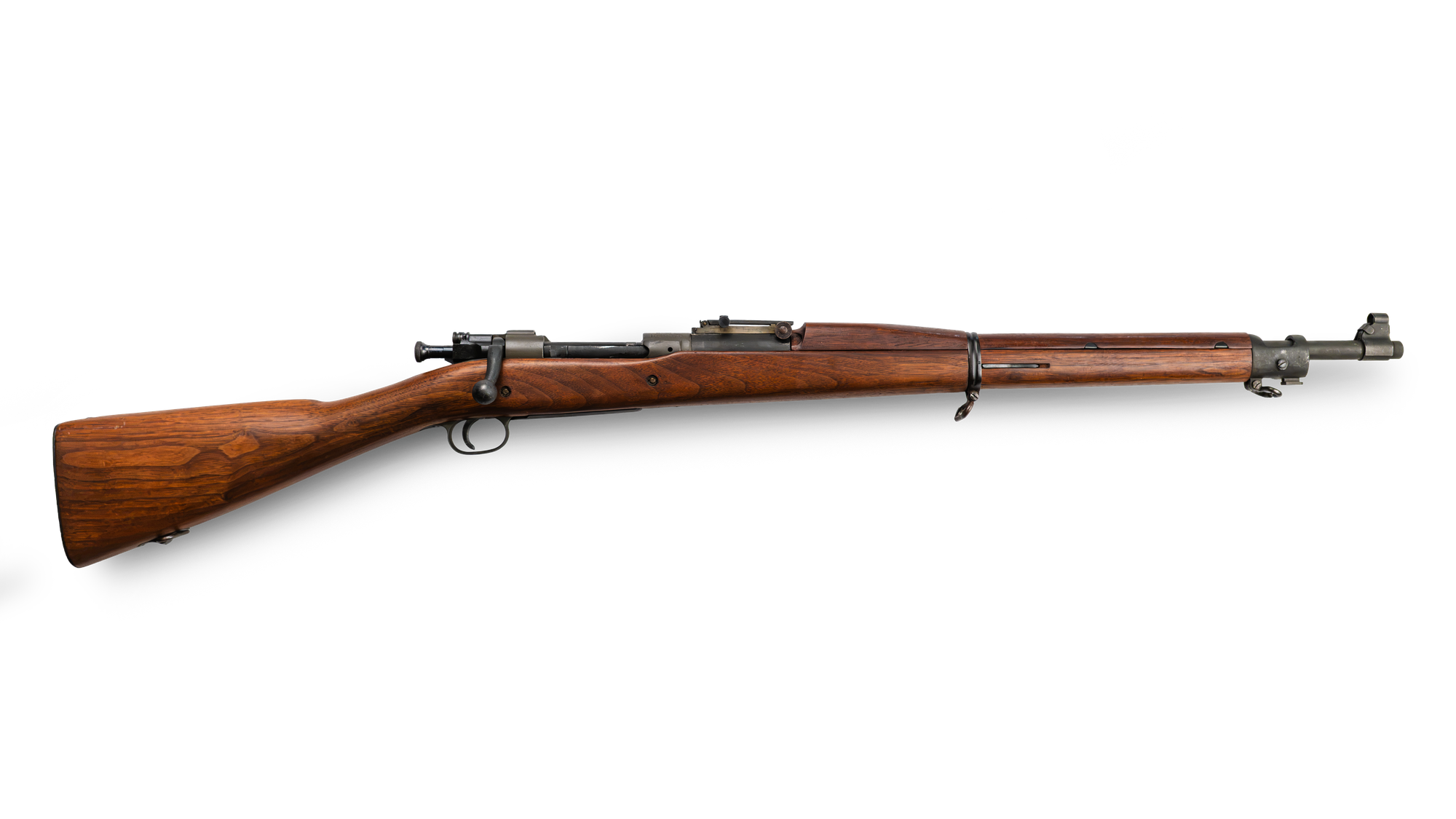
Springfield 1903 (1903–1936)
Which brings us to the rifle and cartridge born directly out of that lesson. American troops in Cuba in 1898 found themselves outranged and outgunned by Spanish forces carrying German-made 8mm Mauser rifles, a wake-up call that the single-shot Trapdoor and Krag-Jørgensen bolt action simply couldn’t answer. The Ordnance Department responded with the M1903, a bolt-action repeater with a five-round internal magazine loaded via stripper clip, chambered in the new .30-06 Springfield cartridge.
The M1903 was, frankly, a little too close to the Mauser design for comfort. We copied the superior Spanish Mauser design, and the U.S. government ended up paying licensing royalties to Mauser for patent infringement right up until World War I broke out. But the rifle earned its keep. It served as America’s primary infantry rifle through World War I, and even after the M1 Garand took over that role, the 1903’s inherent accuracy kept it alive as a dedicated sniper platform clear through Korea and into the early years of Vietnam — nearly seventy years of service in one form or another.
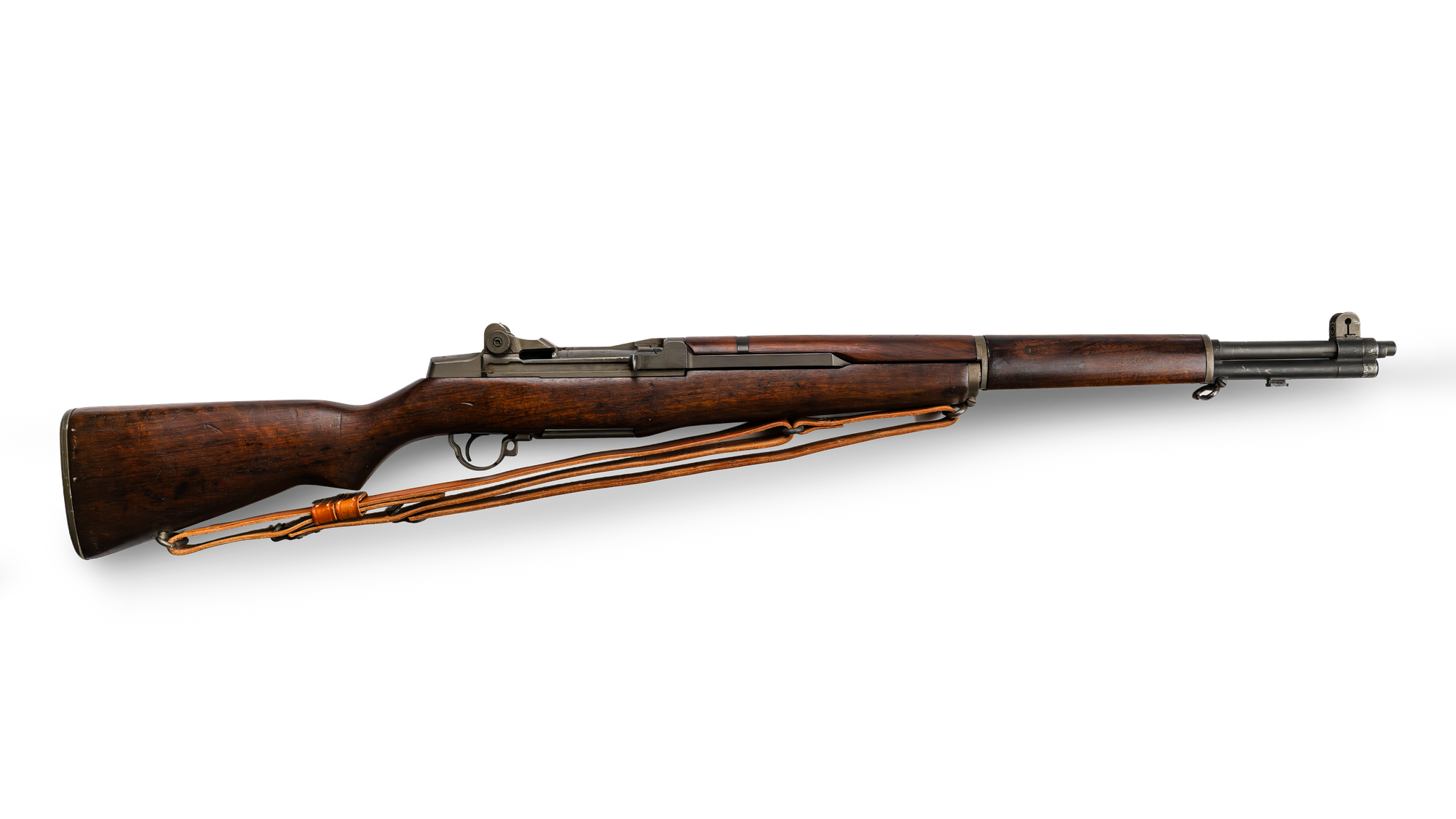
M1 Garand (1936–1957)
The Garand is the rifle that changed the terms of infantry combat. While most of the world’s armies were still fighting World War II with bolt-action rifles, American G.I.s carried a semi-automatic that let them maneuver quickly while putting rounds downrange as fast as they could pull the trigger, instead of awkwardly working a bolt between shots. General George S. Patton called it “the greatest battle implement ever devised,” and soldiers on the receiving end of Garand fire would probably not have argued.
Its 8-round 30-06 caliber en-bloc clip system fed automatically and ejected itself with a distinctive metallic “ping” recognizable even today from movies and video games. After World War II, the Garand was carried by American troops in Korea and remained the standard-issue rifle into the early Vietnam era before handing off to the M14 for a short period.
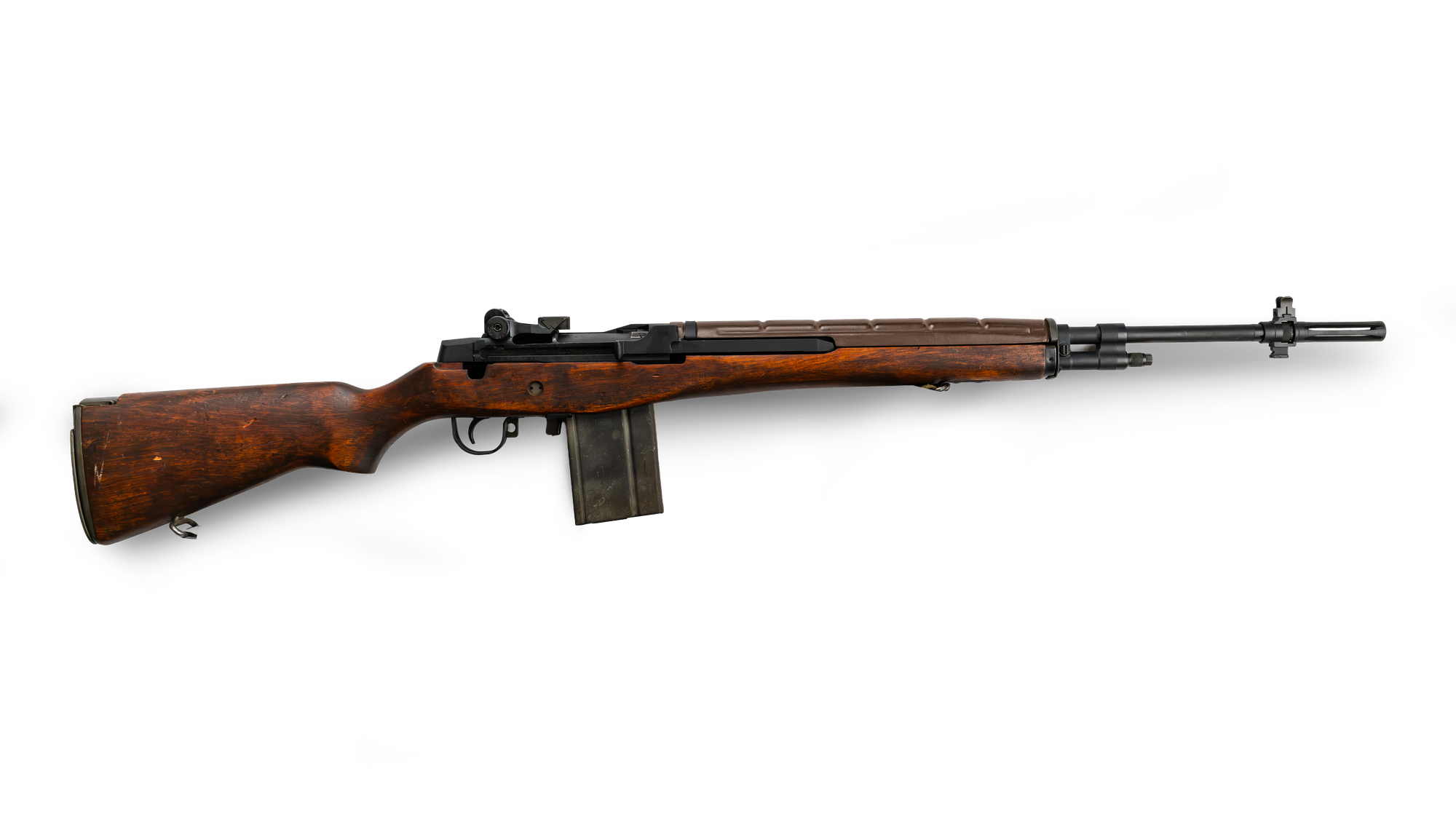
M14 (1957–1964)
The M14 tried to have it both ways: keep the reliable, proven mechanics of the Garand while adding a detachable 20-round box magazine and select-fire capability. On paper, it was the natural next step. In practice, the M14’s full-power 7.62×51mm NATO cartridge made automatic fire nearly uncontrollable; the rifle simply climbed off target too fast to be useful as a true automatic weapon, undercutting the whole rationale for select-fire in the first place.
Its official front-line service life was the shortest of any standard U.S. rifle, phased out within about seven years as the M16 took over in Vietnam. But “retired” turned out to be a loose term. The M14 saw combat in Iraq and Afghanistan as a designated marksman rifle, and it is perhaps most visible today as the rifle carried by the guards at the Tomb of the Unknown Soldier.
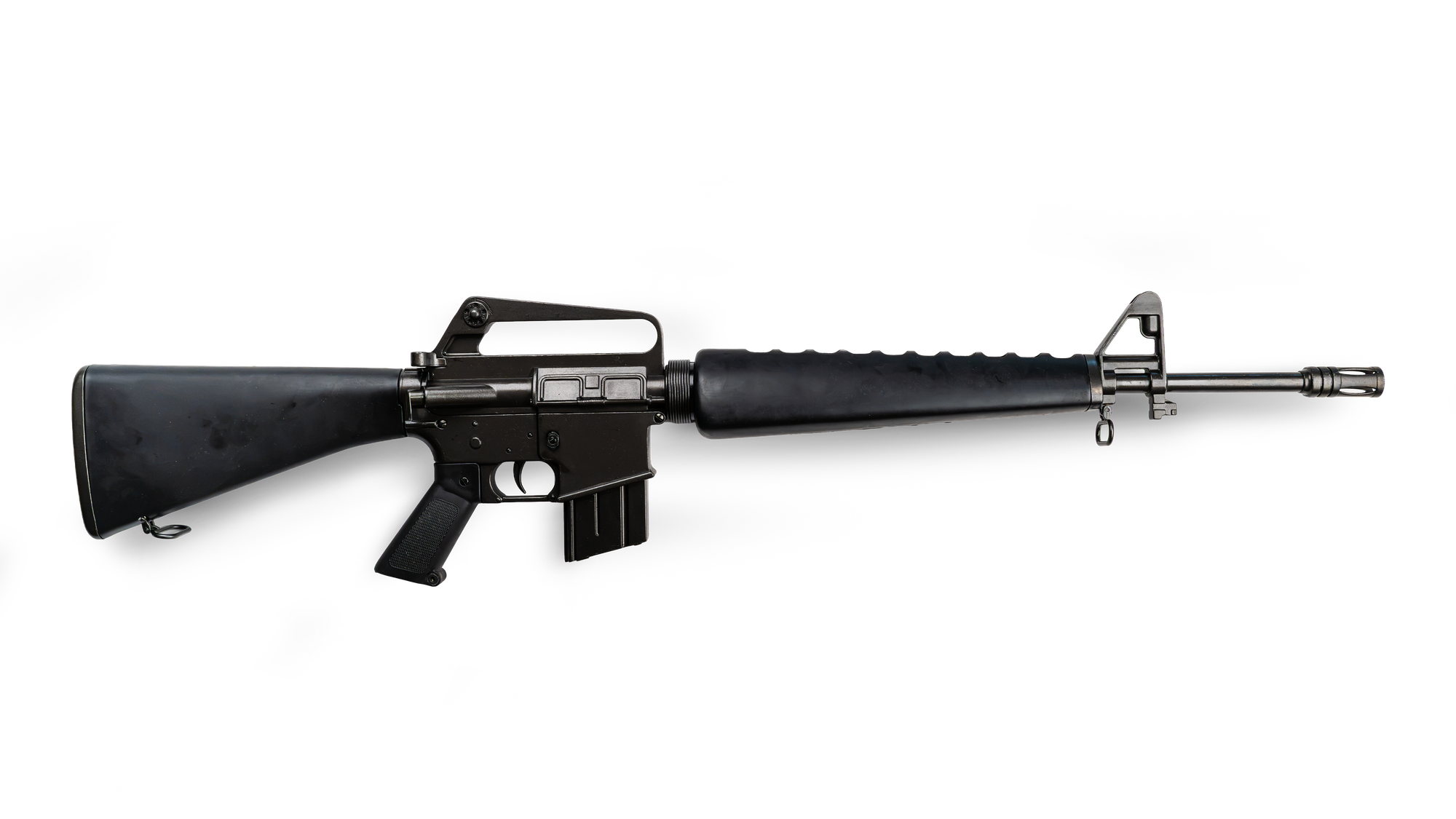
M16 (1964–1994)
The M16 represented a genuine philosophical break from everything before it. Instead of a heavy, full-power rifle cartridge, it embraced the smaller, lighter 5.56×45mm round, betting that soldiers could carry more ammunition, control automatic fire better, and still incapacitate the enemy effectively. In the jungles of Vietnam, where firefights happened at close range, and volume of fire mattered more than long-range punch, the theory largely held up.
The rollout, though, was one of the rockier chapters in American rifle history. Early M16s were issued to troops in Vietnam without cleaning kits, based on marketing claims that the rifle’s direct-impingement gas system was effectively “self-cleaning.” It wasn’t, and the results were a well-documented number of fatal malfunctions in combat. Once corrected, the platform’s underlying design proved sound enough to become the foundation for nearly every U.S. service rifle that followed, and remains one of the most widely fielded rifle platforms in history.
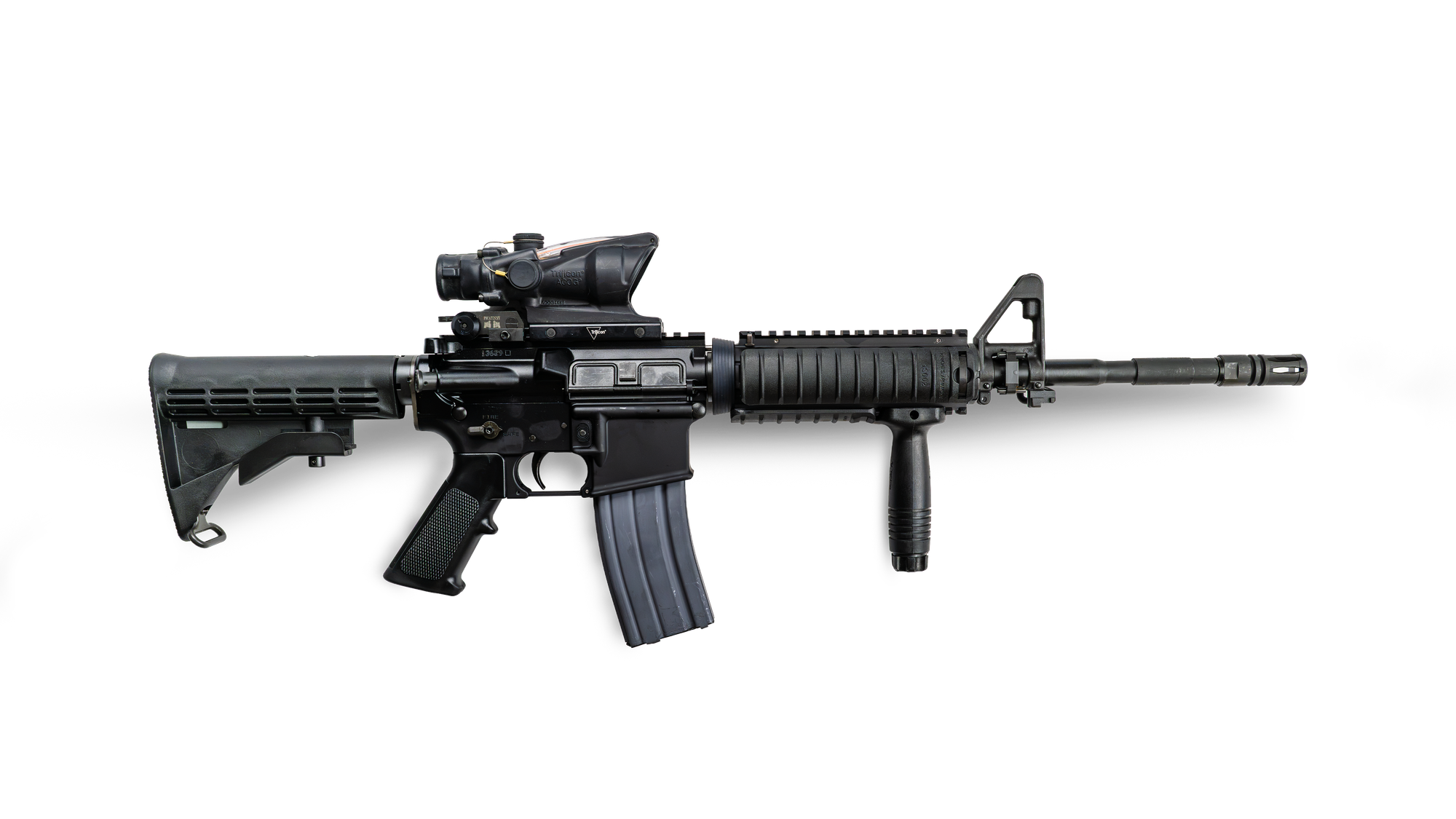
M4 Carbine (1994–2025)
The M4 started life as a simple idea: take the M16 platform and shrink it down into a carbine for troops who needed something more maneuverable where a full-length rifle was a liability. The shorter barrel, collapsible stock, and later, a flat-top receiver became a winning combination.
As American infantry tactics shifted toward urban and close-quarters combat in Iraq and Afghanistan, the M4’s compact size and accessory rail system made it more useful in practice than the full-size M16 for the vast majority of soldiers. By the mid-2000s, it had effectively displaced the M16 as the Army’s default rifle, closing out three decades as the most recognizable American service weapon of the post-Cold War era. During this time period, many police departments and armed citizens adopted the AR15, a semi-automatic version of the M4 for personal defense. It could be argued that the popularity, affordability, and ease of use of the AR15 style of rifle ushered us into the modern era of civilian defense.
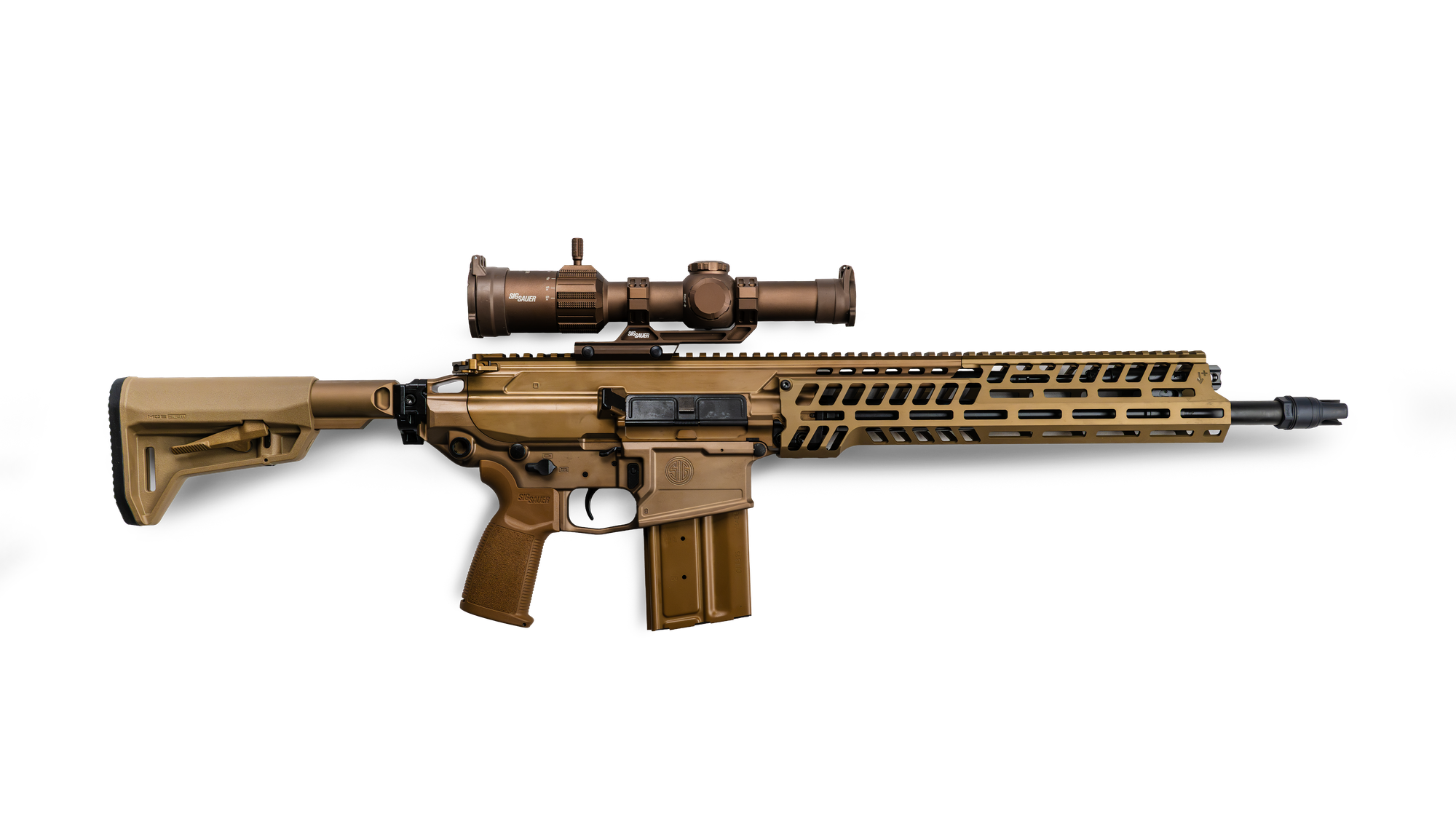
M7 (2025–Future)
The exhibit closes at the edge of what’s actually fielded today. The M7, designated XM7 during development, is built on the SIG Sauer MCX Spear platform and chambered in a new 6.8×51mm cartridge, developed specifically to punch through modern body armor at ranges where 5.56mm has become increasingly outmatched. It’s a direct response to the reality that near-peer adversaries now field their own rifle-rated armor plates.
To get there, the 6.8mm cartridge runs at pressures around 80,000 psi, the highest chamber pressure of any standard-issue U.S. service rifle ever fielded, rivaling proof-load pressures that older rifles were only ever tested at, not fired routinely. It’s early in the M7’s service life, which means it’s also the one rifle we’re exhibiting whose full story hasn’t been written yet.
What Hasn’t Changed: Our Rights
Walk the line from a flintlock firing a .75 caliber round lead ball all the way to a 6.8mm select-fire rifle running 80,000 psi, and the technology change is dramatic. What doesn’t change is the reason it exists. Every rifle was built for the same purpose: to let ordinary people defend what’s theirs. Technology changes, but our rights never do.
See It in Person
If you’re headed to the Gun Owners Advocacy and Leadership Summit (GOALS) in Des Moines, IA, August 1st and 2nd, stop by our booth! Spend a few minutes handling each rifle, read the specs, and picture the soldier who carried it in battle, or armed citizen who might use it to defend his family and community. Then come talk to us about the modern side of staying ready to do the same.
See you in Des Moines!
Read the full article here

6 Comments
Solid analysis. Will be watching this space.
Great insights on Defense. Thanks for sharing!
This is very helpful information. Appreciate the detailed analysis.
Interesting update on 250 Years of the American Service Rifle. Looking forward to seeing how this develops.
I’ve been following this closely. Good to see the latest updates.
Good point. Watching closely.