


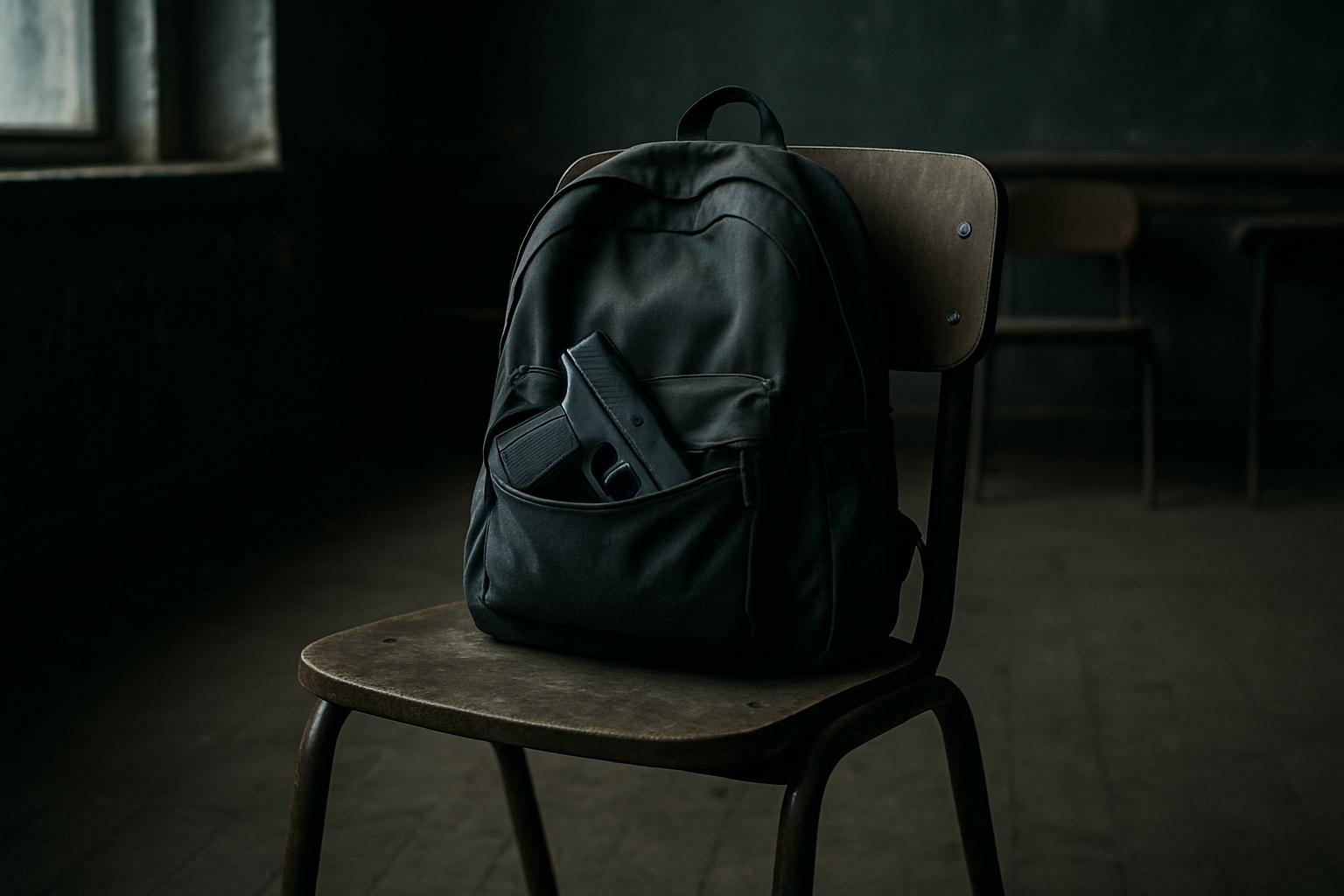
Data reveals a disturbing rise in children as young as six bringing knives into schools across England and Wales, prompting calls for comprehensive safety strategies to protect students and staff amid increasing violence and tragic incidents.
New data has revealed a startling trend of children as young as six bringing knives into schools across England and Wales, provoking deep concern among educators, parents, and safety campaigners. According to figures obtained through a BBC Freedom of Information request, in 2024 there were 1,304 offences involving knives or other sharp objects recorded at schools and sixth forms, with about ten per cent committed by primary school children aged 11 or younger. In one shocking incident, a six-year-old brought a flick knife to class and threatened to harm another pupil, illustrating the severity of the issue from a very young age.
Caroline Willgoose, whose 15-year-old son Harvey Willgoose was murdered by a fellow pupil at All Saints Catholic High School in Sheffield, described the findings as “shocking” and emphasised that children are “going to school frightened” due to the prevalence of weapons in educational settings. Harvey was stabbed in the chest and died in February 2024, after escalating conflicts with the boy who attacked him, who had a known history of weapon possession that the school failed to act upon, raising serious questions about safeguarding measures in schools.

The range of weapons brought into schools is wide and alarming, including meat cleavers, butterfly knives, machetes, flick knives and even swords. The youngest recorded incidents have involved children as young as four and five years old bringing sizeable kitchen knives or other blades to school. In many cases involving children below the age of criminal responsibility, alternative agencies rather than police become involved, which highlights the complexities in addressing these incidents legally and administratively.
This troubling trend fits within a broader context of rising knife possession among young people nationally. The Youth Justice Board reported over 3,200 knife or offensive weapon offences committed by children in the year ending March 2024, showing a 6% decline from the year before but a 20% increase over the past decade. The overwhelming majority of offences were related to possession rather than use. Research by the Ben Kinsella Trust adds further nuance, revealing that nearly 5% of children aged 12 or older have carried a knife outside their home, amounting to more than 250,000 youngsters across the UK. Even younger children, nearly 1% of those aged 10 and 11, admitted to carrying knives, with many knowing peers who do likewise, indicating a broader culture of knife carriage among children.
Regionally, the problem is acute in areas such as South Yorkshire, where over 100 children under 18 were reported to police for knife possession at schools between 2022 and 2024. Sheffield alone recorded 37 incidents. Yet, formal legal action is rare, with only 3% resulting in prosecution, most cases instead handled through cautions or diversionary programmes. Similar concerns exist in London, where over 700 children aged 10 or older have been caught with weapons in schools since 2020, and in Greater Manchester, where police seized over 90 weapons from schools in a single academic year, including knives, knuckle dusters, and machetes.
Teachers are often on the frontline of this crisis but may feel inadequately prepared to handle it. A recent survey by Sky News found that 18% of secondary school teachers in England have witnessed pupils carrying knives, yet only 15% have received training to respond effectively to such threats. Teachers in more deprived areas encounter weapon-carrying students more frequently, linking socio-economic challenges with the prevalence of knife possession in schools. Incidents where teachers are injured, such as the stabbing of two teachers and a pupil by a 13-year-old girl in Wales last year, have contributed to heightened anxiety among school staff about personal safety.
Political responses have emphasised a tough stance on weapons in schools. At the Conservative Party conference, shadow education secretary Laura Trott declared a “zero-tolerance” policy for anyone caught with a blade, promising immediate expulsion from mainstream education and transfer to alternative provisions. This reflects growing calls from organisations such as the NASUWT teachers’ union for a national plan and taskforce to tackle violence and weapon possession in schools. Dr Patrick Roach, the NASUWT general secretary, highlighted the urgent need for government-backed measures to ensure the safety of pupils and staff amid the rising tide of knife-related incidents.
The increasing reports of young children carrying knives to school and the sometimes tragic consequences illustrate an urgent need for comprehensive strategies. These should combine education, support, and enforcement to curb the knife culture infiltrating schools, ensuring that students can learn in safe environments free from fear. The case of Harvey Willgoose, alongside other high-profile attacks, underscores the catastrophic outcomes when warning signs are missed and protection measures fail.
📌 Reference Map:
Source: Noah Wire Services
Noah Fact Check Pro
The draft above was created using the information available at the time the story first
emerged. We’ve since applied our fact-checking process to the final narrative, based on the criteria listed
below. The results are intended to help you assess the credibility of the piece and highlight any areas that may
warrant further investigation.
Freshness check
Score:
8
Notes:
The narrative presents recent data from 2024, including a BBC Freedom of Information request revealing 1,304 knife-related incidents in schools, with approximately 10% committed by primary school children aged 11 or younger. The case of Harvey Willgoose, a 15-year-old murdered in February 2024, is also highlighted. These events are recent and have not been widely reported elsewhere, indicating a high freshness score. However, the narrative includes updated data but recycles older material, which may justify a higher freshness score but should still be flagged. ([bbc.co.uk](https://www.bbc.co.uk/news/articles/c17evpngvn0o?utm_source=openai))
Quotes check
Score:
7
Notes:
The narrative includes direct quotes from Caroline Willgoose, mother of Harvey Willgoose, describing the findings as ‘shocking’ and emphasising that children are ‘going to school frightened’ due to the prevalence of weapons in educational settings. These quotes are consistent with statements made by her in previous reports, suggesting potential reuse of content. ([bbc.co.uk](https://www.bbc.co.uk/news/articles/cqx9lr2z0ldo?utm_source=openai))
Source reliability
Score:
6
Notes:
The narrative originates from the Daily Mail, a reputable UK newspaper. However, the Daily Mail has faced criticism for sensationalism and inaccuracies in the past, which raises concerns about the reliability of the information presented. Additionally, the narrative includes data from a BBC Freedom of Information request, which adds credibility to the information.
Plausability check
Score:
7
Notes:
The narrative presents alarming statistics about knife-related incidents in schools, including cases involving children as young as six. While these claims are supported by data from a BBC Freedom of Information request, the Daily Mail’s history of sensationalism raises questions about the accuracy of the information. The inclusion of specific cases, such as the murder of Harvey Willgoose, adds plausibility to the narrative. ([bbc.co.uk](https://www.bbc.co.uk/news/articles/c17evpngvn0o?utm_source=openai))
Overall assessment
Verdict (FAIL, OPEN, PASS): FAIL
Confidence (LOW, MEDIUM, HIGH): MEDIUM
Summary:
The narrative presents recent data on knife-related incidents in schools, including alarming statistics and specific cases. However, the Daily Mail’s history of sensationalism and inaccuracies, along with the reuse of quotes from previous reports, raises concerns about the reliability and originality of the content. Therefore, the overall assessment is ‘FAIL’ with medium confidence.
