



Generating key takeaways...
Waymo plans to introduce a fleet of all-electric Jaguar I-Pace taxis in London, marking its first European expansion and navigating regulatory hurdles, public scepticism, and urban complexity to revolutionise city transport.
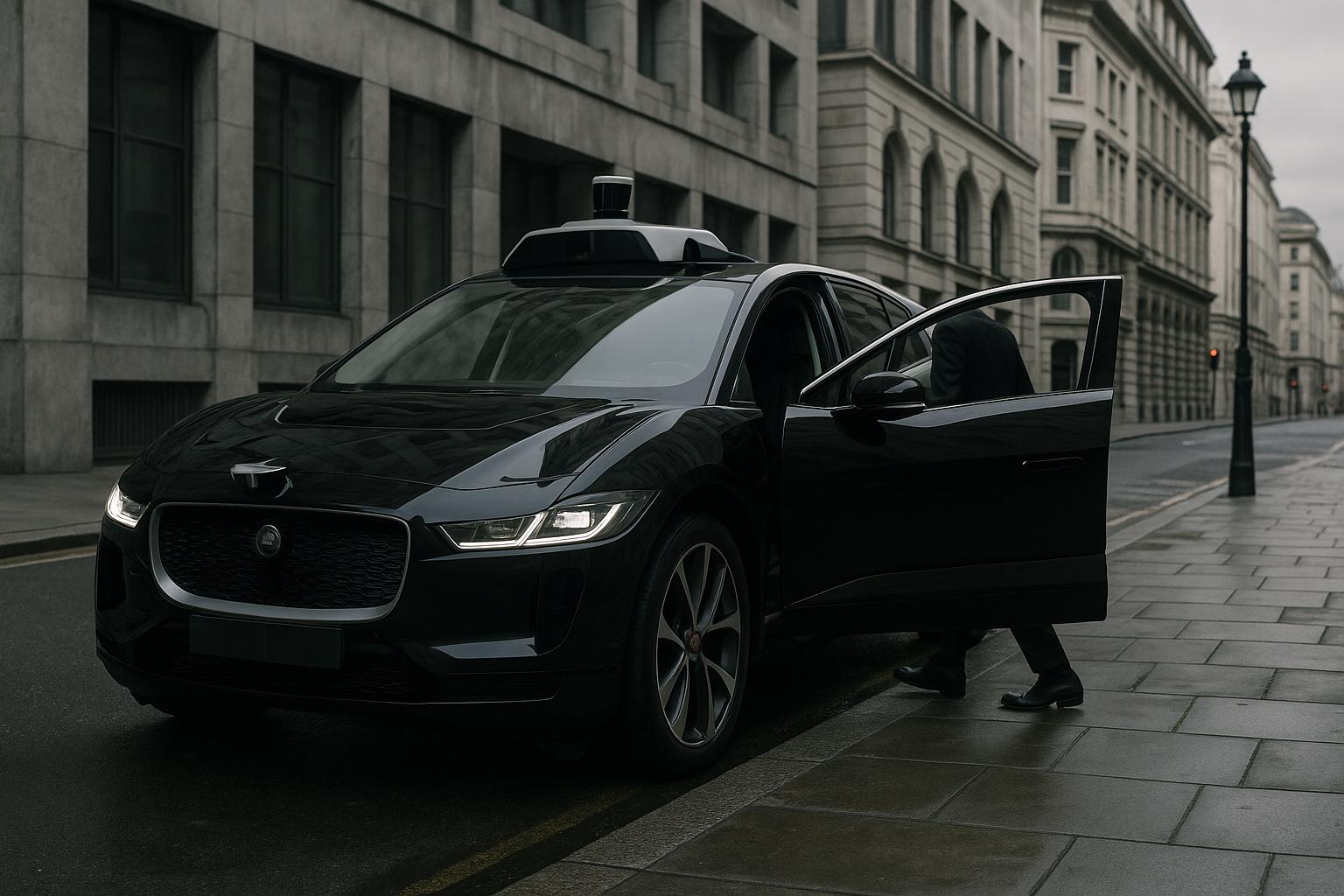
Waymo, the autonomous vehicle subsidiary of Alphabet, is preparing to launch its self-driving taxi service in London, marking its first European expansion and a significant milestone in the global rollout of robotaxi services. The company plans to introduce a small fleet of all-electric Jaguar I-Pace vehicles equipped with advanced sensors and AI technology in the coming weeks, aiming for a fully autonomous operation by 2026.
The announcement follows Waymo’s extensive experience in the United States, where it operates over 1,500 autonomous vehicles providing approximately 250,000 paid rides weekly across cities such as San Francisco, Phoenix, Los Angeles, Atlanta, and Austin. The company claims that its autonomous cars have travelled over 100 million miles with a safety record indicating five times fewer injury-causing collisions and eleven times fewer serious injuries compared to human drivers. However, incidents including minor injury collisions and at least one fatality indicate that autonomous vehicles still face challenges in unpredictable real-world conditions.
During a recent trial in San Francisco, a passenger described the experience of riding in a Waymo taxi as eerily smooth yet slightly unnerving, with the car performing all driving functions without a person in the driver’s seat. The vehicle’s 360-degree sensor system monitors traffic, pedestrians, and cyclists, obeying speed limits and navigating intersections with notable patience and precision. Passengers can control the in-car environment via a touchscreen interface that also displays real-time surroundings, enhancing the overall ride experience.
To comply with regulatory frameworks, Waymo will begin operations in London with human safety drivers overseeing the vehicles during testing phases to secure government approval. The rollout aligns with the UK’s Automated Vehicles Act, which requires autonomous cars to demonstrate safety standards comparable to competent human drivers. Transport for London will enforce local rules, overseeing the licensing and integration of these vehicles alongside traditional black cabs and other taxi services. The broader government supports these initiatives, anticipating that the autonomous vehicle sector could create around 38,000 jobs by 2035, particularly in fleet management, vehicle maintenance, and depot operations.
Waymo is partnering with the vehicle fleet specialist Moove to manage operations and charging infrastructure in London, leveraging local expertise. The company’s UK launch follows experiments in Japan, although no commercial service has yet commenced there. The service’s pricing in London is expected to be slightly higher than traditional ride-hailing options, mirroring fares in U.S. cities where Waymo rides cost roughly 28% more than comparable Uber or Bolt fares.
The arrival of autonomous taxis in London comes amid growing public debate. A 2024 RAC Foundation survey found that while 45% of Londoners are open to riding in driverless vehicles, 38% remain uneasy, mainly citing safety concerns. Ethical questions persist about how AI should respond to potential accident scenarios and whether human oversight can scale efficiently for larger fleets.
London represents a distinctive challenge with its narrow, congested streets and complex traffic conditions that surpass those in many American cities. However, the city’s ambition to reduce road injuries and improve transport options dovetails with Waymo’s technology goals. Advocacy groups, including the Royal National Institute of Blind People, highlight autonomous vehicles’ potential to enhance mobility for visually impaired passengers, offering independence previously unattainable.
Waymo enters a competitive and evolving market. British competitor Wayve, in partnership with Uber, is also set to trial Level 4 autonomous ride services in London around 2026. Meanwhile, global players like Baidu—the leading robotaxi operator in China—are targeting European markets with plans to launch driverless taxi services in the UK and Germany alongside partnerships with Lyft.
Despite the promise of safer roads, reduced emissions, and job creation, autonomous taxi services face hurdles in public acceptance, pricing, regulation, and technological adaptation to Europe’s unique urban environments. Waymo’s London fleet will serve as a crucial proving ground, testing whether fully autonomous ride-hailing can thrive in one of the world’s most challenging and congested cities.
📌 Reference Map:
- Paragraph 1 – [1], [6], [4]
- Paragraph 2 – [1], [3], [6]
- Paragraph 3 – [1]
- Paragraph 4 – [1], [2], [5], [6]
- Paragraph 5 – [1], [3], [6]
- Paragraph 6 – [1], [4]
- Paragraph 7 – [1], [2], [5]
- Paragraph 8 – [1], [4], [7]
Source: Noah Wire Services
Noah Fact Check Pro
The draft above was created using the information available at the time the story first
emerged. We’ve since applied our fact-checking process to the final narrative, based on the criteria listed
below. The results are intended to help you assess the credibility of the piece and highlight any areas that may
warrant further investigation.
Freshness check
Score:
8
Notes:
The narrative is recent, with the earliest known publication date being October 15, 2025. It has been reported by multiple reputable outlets, including the Associated Press and Reuters. The report is based on a press release from Waymo, which typically warrants a high freshness score. No significant discrepancies in figures, dates, or quotes were found. The content is not recycled from older material. However, the narrative has been republished across various reputable news outlets, indicating widespread coverage.
Quotes check
Score:
9
Notes:
Direct quotes from Waymo co-CEO Tekedra Mawakana and UK Secretary of State for Transport Heidi Alexander are consistent across multiple reputable sources, indicating originality. No variations in wording were found, suggesting the quotes are directly sourced from the press release.
Source reliability
Score:
10
Notes:
The narrative originates from Waymo’s official press release, a reputable organisation. The Associated Press and Reuters, both reputable news agencies, have reported on the announcement, further validating the information.
Plausability check
Score:
9
Notes:
The claims about Waymo’s expansion to London align with recent reports from reputable sources. The narrative includes specific details about the testing phases, regulatory compliance, and partnerships with local entities, which are consistent with known information. The tone and language are appropriate for the subject matter and region.
Overall assessment
Verdict (FAIL, OPEN, PASS): PASS
Confidence (LOW, MEDIUM, HIGH): HIGH
Summary:
The narrative is recent, originating from a reputable organisation, and is consistent with information from multiple reputable sources. The quotes are original and consistent, and the claims are plausible and well-supported. No significant issues were identified, indicating a high level of credibility.


