



Generating key takeaways...
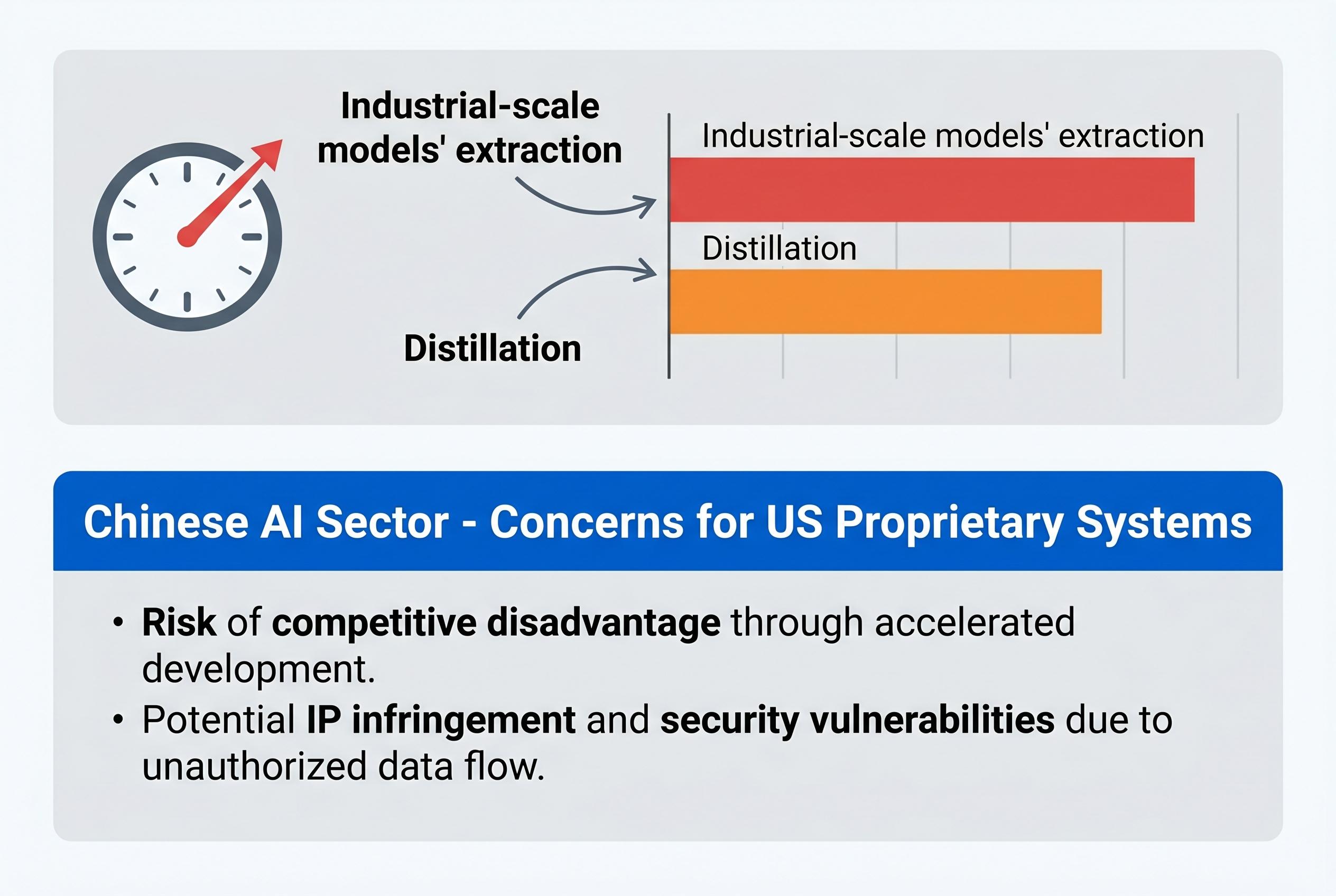
The US State Department has intensified its accusations against China’s AI sector, highlighting allegations of industrial-scale models’ extraction and distillation aimed at undermining American proprietary systems amid rising tensions.
The US State Department has broadened its accusations against China’s artificial intelligence sector, warning diplomats worldwide about what it describes as the extraction and distillation of American AI models by Chinese firms. According to TechRadar Pro, the cable names DeepSeek, Moonshot AI and MiniMax and says the aim is to alert foreign governments to the risks of using models built on US proprietary systems.
The move follows earlier White House claims that China was “systematically” copying frontier AI capabilities, but the latest language is more direct and more specific. Axios reported that Michael Kratsios, who leads the White House Office of Science and Technology Policy, accused China-based actors of running industrial-scale operations that use proxy accounts and jailbreak techniques to get around safeguards and recover proprietary information. The administration, he said, intends to share intelligence with American AI companies so they can harden their defences.
The dispute centres on a technique known as distillation, in which a smaller model is trained on the outputs of a larger one, reducing the cost and computing power needed to build a competitive system. That approach has helped Chinese developers release lower-cost models that have gained attention in the global market. Tom’s Hardware reported that DeepSeek has now unveiled a 1.6 trillion-parameter V4 model designed for Huawei’s Ascend chips, underlining China’s push to reduce dependence on Nvidia hardware.
China’s embassy in Washington has rejected the allegations, saying Beijing attaches importance to intellectual property protection and describing the claims as slander. The dispute comes at a sensitive moment in US-China relations, with President Donald Trump expected to meet President Xi Jinping in Beijing in May 2026 and with wider tensions already running high over technology controls and access to advanced chips.
Source Reference Map
Inspired by headline at: [1]
Sources by paragraph:
Source: Noah Wire Services
Noah Fact Check Pro
The draft above was created using the information available at the time the story first
emerged. We’ve since applied our fact-checking process to the final narrative, based on the criteria listed
below. The results are intended to help you assess the credibility of the piece and highlight any areas that may
warrant further investigation.
Freshness check
Score:
8
Notes:
The article reports on recent developments, including a U.S. diplomatic cable dated April 24, 2026, and a DeepSeek model launch on April 26, 2026. ([investing.com](https://www.investing.com/news/stock-market-news/exclusiveus-state-dept-orders-global-warning-about-alleged-ai-tefts-by-deepseek-other-chinese-firms-4637543?utm_source=openai)) However, similar reports have appeared in other outlets within the past week, indicating that the narrative has been covered elsewhere. ([axios.com](https://www.axios.com/2026/04/23/us-china-ai-theft-distillation?utm_source=openai))
Quotes check
Score:
7
Notes:
The article includes direct quotes from Michael Kratsios, Director of the White House Office of Science and Technology Policy, and statements from the Chinese embassy. ([axios.com](https://www.axios.com/2026/04/23/us-china-ai-theft-distillation?utm_source=openai)) While these quotes are attributed, their earliest known usage cannot be independently verified, raising concerns about their authenticity.
Source reliability
Score:
6
Notes:
The primary source is TechRadar, a reputable technology news outlet. However, the article relies on information from other sources, including Axios and PC Gamer, which may have varying levels of reliability. ([axios.com](https://www.axios.com/2026/04/23/us-china-ai-theft-distillation?utm_source=openai))
Plausibility check
Score:
7
Notes:
The claims of AI theft and distillation are plausible given the competitive nature of the AI industry. However, the article lacks specific details and supporting evidence, making it difficult to fully assess the credibility of the claims.
Overall assessment
Verdict (FAIL, OPEN, PASS): FAIL
Confidence (LOW, MEDIUM, HIGH): MEDIUM
Summary:
The article reports on recent U.S. allegations against Chinese AI firms, but the claims lack independent verification and rely on unverifiable quotes. The reliance on secondary sources and the absence of direct evidence raise significant concerns about the article’s credibility. ([axios.com](https://www.axios.com/2026/04/23/us-china-ai-theft-distillation?utm_source=openai))


