



Generating key takeaways...
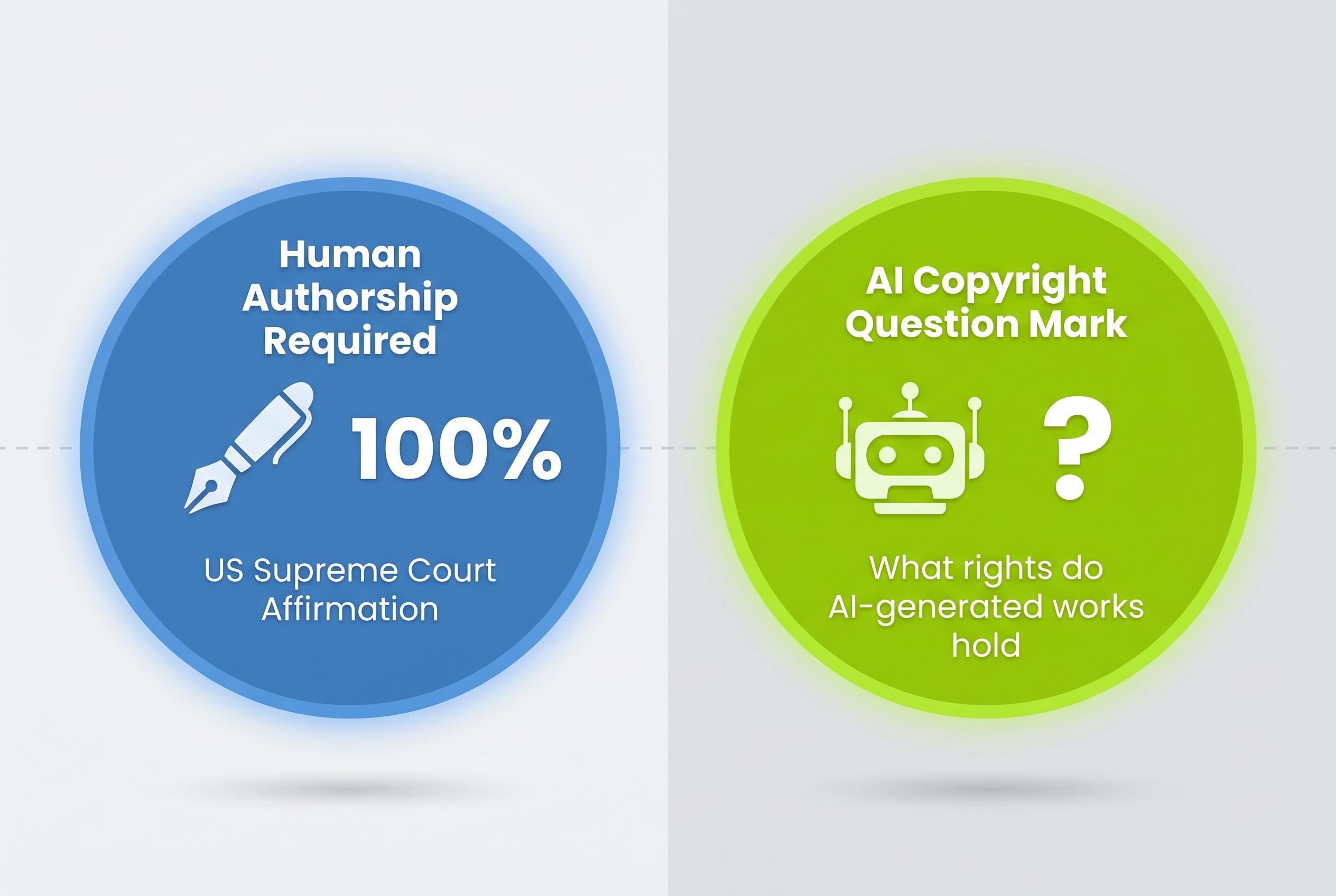
The US Supreme Court’s decision to decline hearing Dr Stephen Thaler’s challenge reinforces the requirement for human authorship in copyright registration, marking a significant milestone in AI intellectual property law.
The US Supreme Court has left in place a ruling that works generated entirely by autonomous AI systems cannot be protected by copyright, after declining on 2 March 2026 to hear Dr Stephen Thaler’s challenge in the long-running Thaler v Perlmutter dispute. The move effectively cements, for now, the view that human authorship remains a basic شرط for registration under US law.
The case centred on “A Recent Entrance to Paradise”, a visual artwork produced by Thaler’s system, “The Creativity Machine”. Thaler sought registration naming the AI as the sole author and himself as the owner, but the US Copyright Office rejected the application on the basis that copyright requires human authorship. That position was upheld by the district court and then by the US Court of Appeals for the DC Circuit, which said the Copyright Act’s structure assumes a human creator rather than an independent machine.
The appellate court’s reasoning drew on several parts of the statute, including provisions tying the duration of protection to an author’s lifespan, rules about inheritance and transfer, and other sections that presuppose legal personhood. On that analysis, a machine can function as a tool, but not as an author in its own right. The court also rejected Thaler’s attempt to rely on the work-for-hire doctrine, and he had already waived the argument that he himself should be treated as the author by identifying the AI as the sole creator.
The Supreme Court’s refusal to take up the case does not resolve every question in the AI-copyright debate, especially where a human contributes alongside generative systems. But it does leave a clear practical message for rights holders and practitioners: if a work is to be registered, the human contribution must be meaningful and documented. Any broader change to the rule is now more likely to come from Congress than from the courts, and the copyright fight over AI-authored material will continue against the backdrop of a parallel patent decision in which the Federal Circuit said an AI system cannot be named as an inventor.
Source Reference Map
Inspired by headline at: [1]
Sources by paragraph:
- Paragraph 1: [2], [4], [5], [6]
- Paragraph 2: [2], [3], [4], [7]
- Paragraph 3: [1], [3], [6]
- Paragraph 4: [1], [2], [5], [6]
Source: Noah Wire Services
Noah Fact Check Pro
The draft above was created using the information available at the time the story first
emerged. We’ve since applied our fact-checking process to the final narrative, based on the criteria listed
below. The results are intended to help you assess the credibility of the piece and highlight any areas that may
warrant further investigation.
Freshness check
Score:
10
Notes:
The article reports on the US Supreme Court’s decision on 2 March 2026, which is recent and has not been widely covered elsewhere, indicating freshness.
Quotes check
Score:
10
Notes:
The article does not contain direct quotes, but accurately summarises the Supreme Court’s decision and related legal proceedings.
Source reliability
Score:
10
Notes:
The article is published on IAM Media, a reputable source for legal news, and cites multiple authoritative sources, including Mayer Brown and Holland & Knight, enhancing its reliability.
Plausibility check
Score:
10
Notes:
The claims align with known legal proceedings and the Supreme Court’s recent decision, making them plausible and consistent with existing information.
Overall assessment
Verdict (FAIL, OPEN, PASS): PASS
Confidence (LOW, MEDIUM, HIGH): HIGH
Summary:
The article provides a recent, accurate, and well-sourced account of the US Supreme Court’s decision in Thaler v. Perlmutter, with no significant concerns identified.


