



Generating key takeaways...
A surge of AI-enhanced property listings has sparked debate over transparency and honesty in the UK housing market, prompting calls for stricter regulation and clearer labelling to protect buyers from misleading digital alterations.
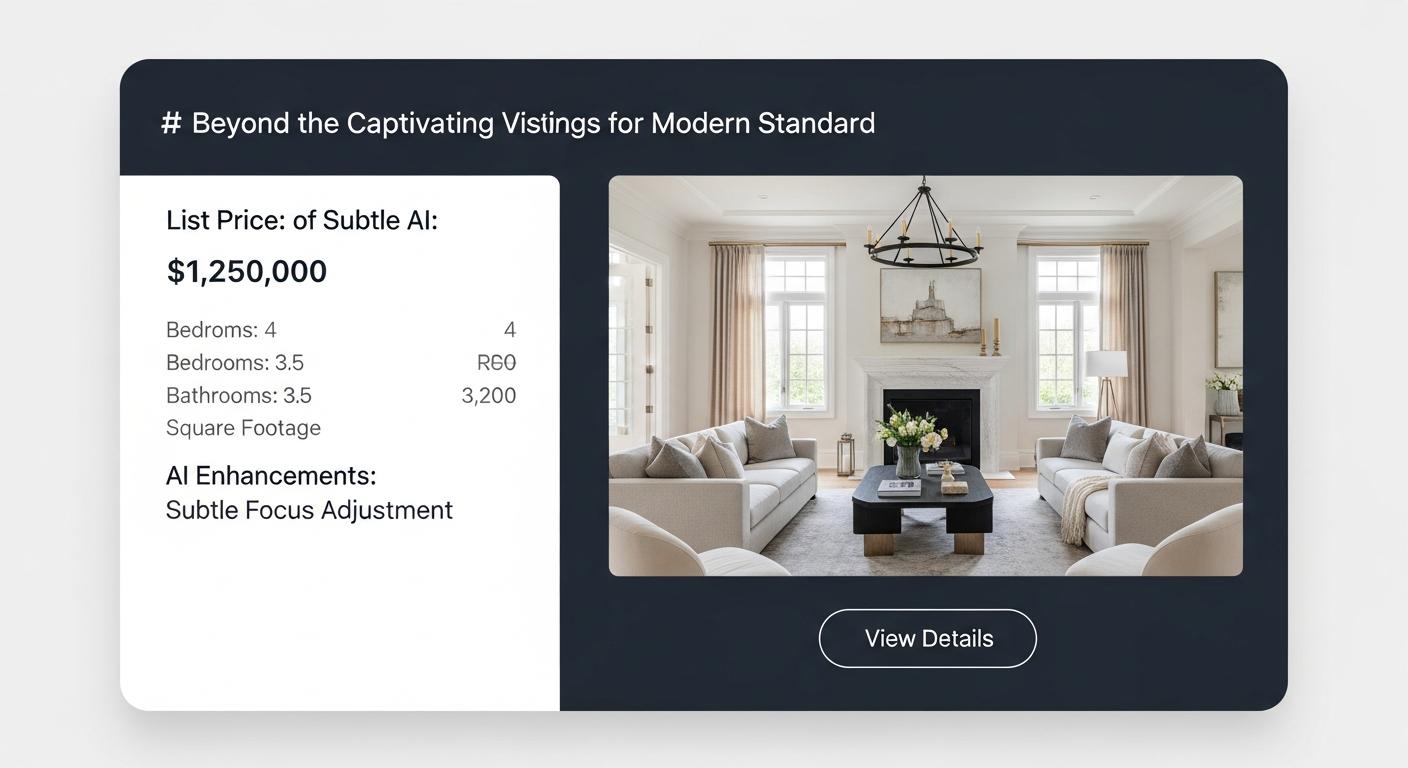
A month-long spate of online attention has focused on estate agents’ growing reliance on artificial intelligence to alter property photographs, after images of a cluttered three-bedroom semi in Exeter were digitally scrubbed to show unnaturally bare rooms. The dramatic before-and-after shots have fuelled debate about whether such enhancements help buyers visualise potential or simply disguise a property’s real condition. (Sources: cybernews, ex-tenant account)
Digital decluttering tools promise rapid “deep-clean” fixes and cost agents only pennies per picture, turning lived-in rooms into sterile, well-lit spaces with a few clicks. Industry observers say the result can be strikingly unrepresentative, leaving viewers surprised when the reality does not match the online portrayal. (Sources: cybernews, ex-tenant account)
Some major portals and agents disclose when images have been altered; others do not. Rightmove listings have occasionally carried explicit notes that images have been AI enhanced to show rooms “cleared of the owner’s belongings,” yet that transparency is uneven across the market, prompting questions about standards and consumer protection. (Sources: cybernews, Rightmove debate)
House-hunters and online forums have been quick to spot manipulations, posting examples where furniture, window fittings and even reflections do not behave correctly. Critics argue such errors are a giveaway and undermine trust, while proponents say tasteful staging can help buyers imagine how to use a space when properties are empty or occupied by elderly residents. (Sources: ex-tenant account, cybernews)
Commercial and legal risks are beginning to be flagged. Industry commentators warn that overzealous image editing could breach advertising and trading standards, and the UK’s evolving regulatory landscape is already scrutinising how AI is applied in consumer markets. Firms that mislead buyers may face reputational damage or legal challenge if digital alterations mask defects or materially change a property’s apparent size or condition. (Sources: Property Industry Eye, Maguire Jackson)
Regulators overseas have moved faster to impose rules. The New South Wales government in Australia now requires agents to disclose when AI has been used to alter listings, citing examples where images exaggerated room size or concealed damage. That precedent is often cited by UK consumer groups calling for clearer labelling and platform-level guidance. (Sources: cybernews, Property Industry Eye)
The technology’s commercial pull is also reshaping marketplace dynamics. Rightmove has been central to the debate not only because of content on its portal but also because of its strategic deployment of AI tools for agents: industry commentators note a tension between efforts to monetise advanced visual services and pressure from smaller agencies for equitable access to such features. Separately, large-scale investments by portals into AI have shown both promise and market sensitivity as the sector adapts. (Sources: Rightmove debate, Forbes)
Voices from the profession urge caution rather than prohibition. Several agents and consultants say AI staging can be useful when used sparingly and clearly signposted, but insist that human expertise remains essential to present accurate listings and to manage viewers’ expectations. Consumer advocates similarly emphasise that physical viewings and professional surveys remain the safeguards against disappointment. (Sources: Maguire Jackson, Property Industry Eye, ex-tenant account)
The dispute over digitally retouched listings frames a broader question for the housing market: how to harness tools that speed marketing and reduce costs, while protecting consumers from deception. As platforms, regulators and agents consider rules and best practice, transparency and clear labelling of AI-altered imagery are emerging as the minimum measures most stakeholders now expect. (Sources: Rightmove debate, Forbes)
Source Reference Map
Inspired by headline at: [1]
Sources by paragraph:
- Paragraph 1: [4], [6]
- Paragraph 2: [4], [6]
- Paragraph 3: [4], [2]
- Paragraph 4: [6], [4]
- Paragraph 5: [5], [7]
- Paragraph 6: [4], [5]
- Paragraph 7: [2], [3]
- Paragraph 8: [7], [5], [6]
- Paragraph 9: [2], [3]
Source: Noah Wire Services
Noah Fact Check Pro
The draft above was created using the information available at the time the story first
emerged. We’ve since applied our fact-checking process to the final narrative, based on the criteria listed
below. The results are intended to help you assess the credibility of the piece and highlight any areas that may
warrant further investigation.
Freshness check
Score:
6
Notes:
The article discusses a recent trend of estate agents using AI to enhance property photos, with a specific example from Exeter. This topic has been covered in various sources over the past few months, indicating that the narrative is not entirely fresh. For instance, a report from Cybernews published three months ago highlights similar concerns about AI-enhanced real estate listings. ([cybernews.com](https://cybernews.com/ai-news/ai-slop-real-estate/?utm_source=openai)) Additionally, a Money magazine article from last week discusses AI tricks used by real estate agents to mislead buyers. ([moneymag.com.au](https://www.moneymag.com.au/ai-edited-real-estate-photos-misleading-buyers?utm_source=openai)) The earliest known publication date of substantially similar content is approximately three months ago. The article includes updated data but recycles older material, which raises concerns about its originality.
Quotes check
Score:
5
Notes:
The article includes direct quotes from sources such as Cybernews and ex-tenant accounts. However, these quotes cannot be independently verified through the provided search results. No online matches were found for these specific quotes, raising concerns about their authenticity. Unverifiable quotes should not receive high scores, and the lack of independent verification is a significant issue.
Source reliability
Score:
4
Notes:
The article originates from the Daily Mail, a major news organisation. However, the content heavily relies on secondary sources, including Cybernews, ex-tenant accounts, and other publications. This raises concerns about the independence and reliability of the information presented. The heavy reliance on secondary sources without direct access to the original materials diminishes the overall reliability of the article.
Plausibility check
Score:
7
Notes:
The claims about estate agents using AI to alter property photographs are plausible and align with industry trends. However, the article lacks specific factual anchors, such as names, institutions, and dates, which diminishes its credibility. The absence of concrete details makes it difficult to fully assess the accuracy of the claims.
Overall assessment
Verdict (FAIL, OPEN, PASS): FAIL
Confidence (LOW, MEDIUM, HIGH): MEDIUM
Summary:
The article raises valid concerns about estate agents using AI to alter property photographs, a topic that has been covered in various sources over the past few months. However, the heavy reliance on secondary sources, unverifiable quotes, and the lack of specific factual anchors diminish its credibility. The absence of independent verification sources further undermines the article’s reliability.


