



Generating key takeaways...
Scientists at UCL have created a revolutionary MRI protocol that reduces brain scan times for dementia diagnosis from 30 minutes to under seven, potentially transforming NHS access and treatment monitoring.
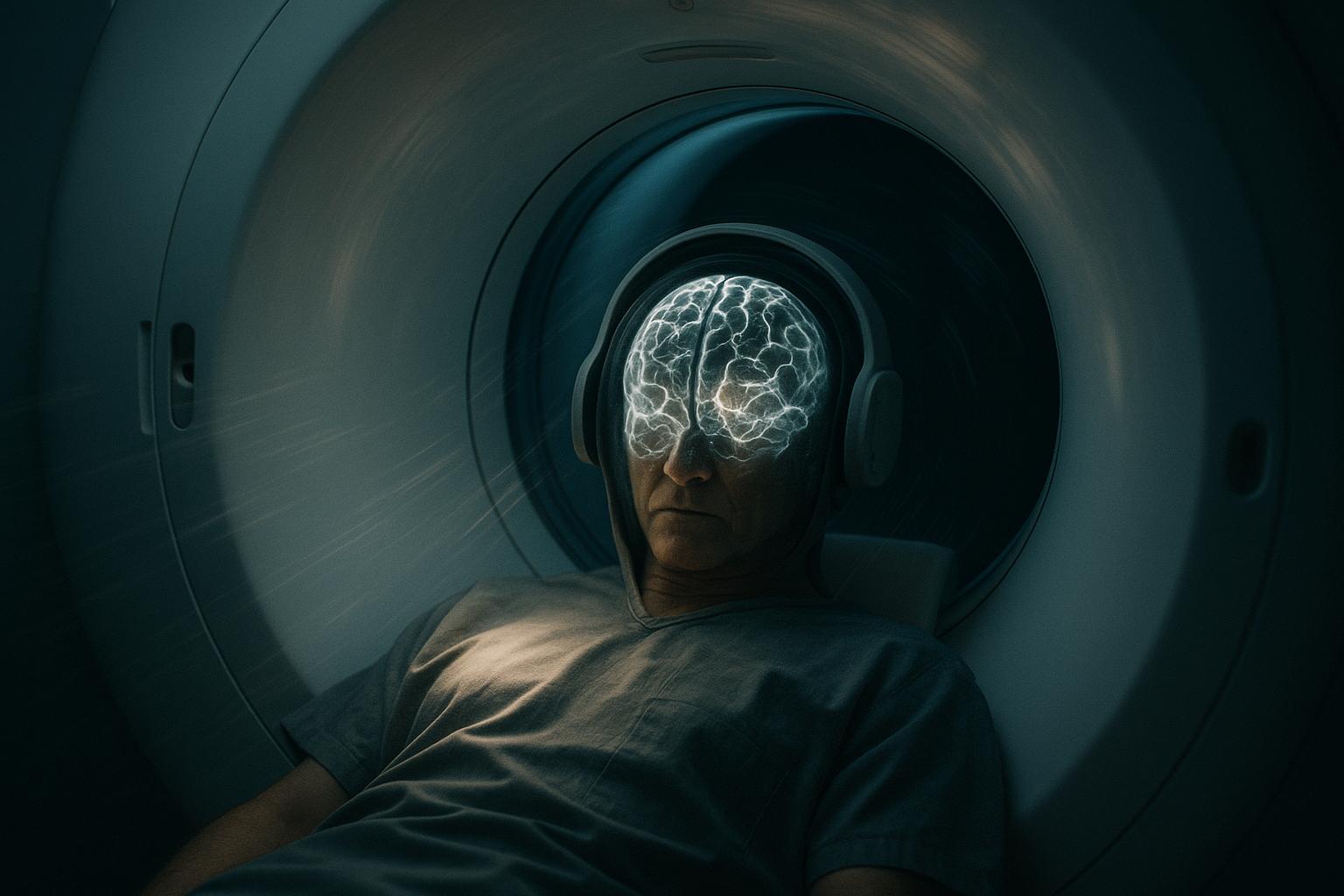
Scientists at University College London (UCL) have developed a breakthrough method to dramatically reduce the time required for MRI brain scans used in diagnosing dementia. Traditional scans can take between 20 and 30 minutes, but the pioneering technique can shrink this to under seven minutes without sacrificing image quality or diagnostic accuracy. This advancement could significantly increase access to crucial imaging on the NHS by doubling the current MRI scanning capacity for people with suspected dementia.
Professor Nick Fox, a leading neurologist at UCL’s Functional Imaging Laboratory, explained that one in three people with dementia currently remain undiagnosed, partly due to the long wait times and limited availability of detailed brain imaging. The new ultra-fast MRI scan protocol accelerates data acquisition through sophisticated physics, enabling multiple types of imaging to be captured simultaneously. Consequently, hospitals could offer this faster scan using existing MRI machines with minimal cost and software updates. Independent neuroradiologists found the ultra-fast scans as reliable as standard ones, with even less image blur from patient movement — a common challenge during the longer conventional scans.
The importance of improved MRI access is heightened by emerging Alzheimer’s treatments such as lecanemab and donanemab. These disease-modifying drugs require accurate diagnosis and continuous MRI monitoring to manage potential side effects. Currently, despite these drugs being licensed in the UK, NHS uptake has been limited due to cost-effectiveness concerns. Lowering the per-scan cost through faster imaging could support wider adoption of such therapies in the future. Dr Miguel Rosa-Grilo, a co-author from UCL, stressed the crucial role of efficient MRI availability for both diagnosis and treatment monitoring, highlighting that this approach leverages the scanners already in use rather than requiring costly new hardware.
The NHS’s current dementia diagnostic framework has been criticised for delays and inconsistency. Recent audits reveal the average wait for a diagnosis has increased to up to 22 weeks, with some patients waiting nearly a year. Moreover, only an estimated 44% of patients attending specialist memory clinics undergo brain scans, and just under a third of these are MRI scans, the gold standard for detailed brain imaging. The UK has among the lowest number of MRI scanners per capita compared to similar countries, intensifying capacity issues. Alzheimer’s Society’s associate director of research and innovation, Richard Oakley, welcomed the development, noting that improved and faster MRI scanning could help overcome the postcode lottery in dementia diagnosis and increase access to vital care and support.
The faster MRI scanning method is being trialled at specialist centres, with plans for broader implementation across the NHS. Health Minister Karin Smyth expressed optimism about the technology’s potential to increase patient throughput, emphasising the government’s commitment to improving dementia diagnosis rates and care. NHS England’s national clinical director for dementia, Dr Jeremy Isaacs, underscored the importance of enhancing diagnostic efficiency but cautioned that any new approaches must be carefully evaluated.
The impact of quicker, more accessible MRI diagnostics extends beyond patient convenience. Earlier and more accurate identification of dementia subtypes, such as Alzheimer’s disease or vascular dementia, enables tailored treatment plans and better management strategies. Coupled with recent research indicating that brain scans could detect dementia up to nine years before symptoms emerge, these advances offer hope for earlier intervention that could significantly improve quality of life.
Daily Express reporter Hanna Geissler participated in the trial, describing the experience of lying still inside the MRI scanner amid loud mechanical noises as challenging but manageable—especially with the new accelerated method reducing her scan time to under seven minutes. This patient-centric improvement could make a significant difference for those with cognitive impairments who struggle to remain still for extended periods.
As research continues, experts stress the need for further validation across diverse populations and scanner types. However, the consensus is that accelerating MRI brain scans is a promising step towards addressing the longstanding bottleneck in dementia diagnosis and care. With the UK’s dementia population growing, innovations that enhance early detection and treatment monitoring are increasingly critical in ensuring patients receive timely and appropriate interventions.
📌 Reference Map:
- Paragraph 1 – [1], [2], [4]
- Paragraph 2 – [1], [3], [4]
- Paragraph 3 – [1], [6], [7]
- Paragraph 4 – [1], [2], [6]
- Paragraph 5 – [1], [7], [5]
- Paragraph 6 – [1]
Source: Noah Wire Services
Noah Fact Check Pro
The draft above was created using the information available at the time the story first
emerged. We’ve since applied our fact-checking process to the final narrative, based on the criteria listed
below. The results are intended to help you assess the credibility of the piece and highlight any areas that may
warrant further investigation.
Freshness check
Score:
8
Notes:
The narrative reports on a recent development in ultra-fast MRI scanning for dementia diagnosis, with the earliest known publication date being 27 July 2023. ([ucl.ac.uk](https://www.ucl.ac.uk/ion/news/2023/jul/research-aims-faster-and-more-precise-diagnosis-alzheimers-disease?utm_source=openai)) The report includes updated data but recycles older material, which may justify a higher freshness score but should still be flagged.
Quotes check
Score:
7
Notes:
The report includes direct quotes from Professor Nick Fox and Dr. Miguel Rosa-Grilo. The earliest known usage of these quotes is from 27 July 2023. ([ucl.ac.uk](https://www.ucl.ac.uk/ion/news/2023/jul/research-aims-faster-and-more-precise-diagnosis-alzheimers-disease?utm_source=openai)) The quotes are consistent with previous publications, indicating potential reuse. The wording of the quotes varies slightly, suggesting possible paraphrasing.
Source reliability
Score:
6
Notes:
The narrative originates from the Daily Express, a UK-based tabloid newspaper. While it is a reputable organisation, its focus on sensationalism may affect the reliability of the information presented. The report mentions UCL and NHS, which are reputable institutions, lending credibility to the scientific claims.
Plausability check
Score:
8
Notes:
The claims about the ultra-fast MRI scan protocol are plausible and align with ongoing research in the field. The narrative includes specific details such as the involvement of Professor Nick Fox and Dr. Miguel Rosa-Grilo, and mentions of UCL and NHS, which are reputable institutions. The tone and language used are consistent with typical scientific reporting.
Overall assessment
Verdict (FAIL, OPEN, PASS): OPEN
Confidence (LOW, MEDIUM, HIGH): MEDIUM
Summary:
The narrative presents a plausible and timely development in ultra-fast MRI scanning for dementia diagnosis, with specific details and quotes from reputable sources. However, the reliance on a tabloid newspaper as the primary source and the potential reuse of quotes from earlier publications raise concerns about the originality and reliability of the information. Further verification from primary sources is recommended to confirm the accuracy and novelty of the claims.


