



Generating key takeaways...
The removal of 78 national flags by Tower Hamlets council has ignited a row over patriotism, bias, and community division, intensifying debates amid a wider national context of symbolic displays and political tensions.
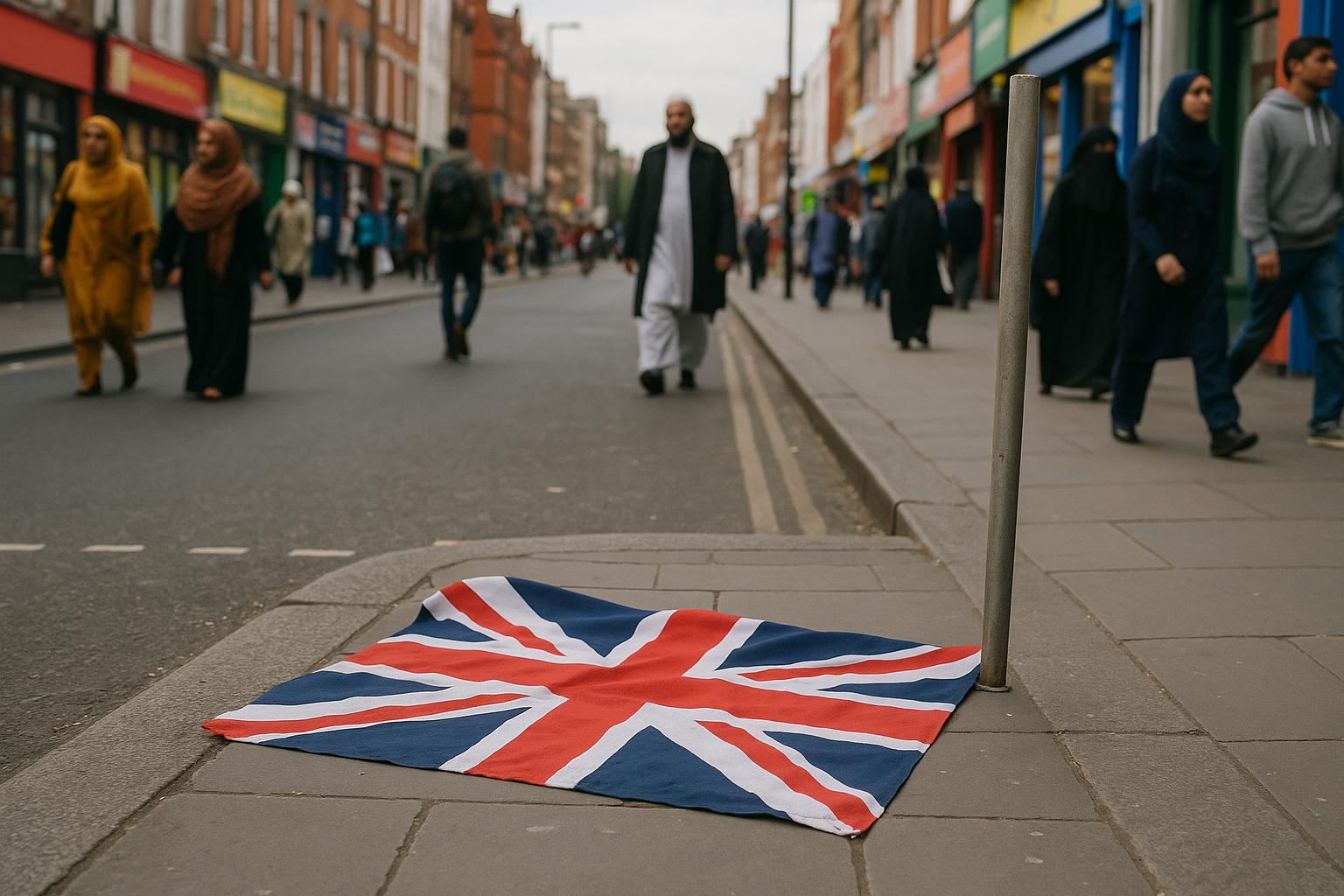
A controversy has erupted in Tower Hamlets, east London, following the council’s removal of 78 St George’s Cross and Union Jack flags during a two-day operation in August. The flags were taken down from lampposts as part of the council’s routine maintenance policy, yet the move sparked significant public outrage due to the growing “Operation Raise the Colours” campaign, whereby residents displayed national flags across the country. Tower Hamlets Council removed 43 flags on August 18 and an additional 35 two days later, prompting accusations of bias and censorship.
The council had previously passed a Labour-led motion labelling individuals flying national flags in the borough as “far-right” extremists, warning that local far-right agitators were trying to stir division. This stance has fuelled tensions around the flag removals. Video footage emerged showing council workers using metal poles to take down the flags, attracting hostility from residents. One council worker named Tyrone revealed he faced intense abuse while carrying out the task, with residents urging him to stop and citing frustration over the perceived double standard—Palestinian flags had been allowed to remain for extended periods, while English and British flags were swiftly removed.
A Tower Hamlets council spokesperson stated the flag removal policy is applied uniformly, citing that between May 2024 and August 2025, 1,055 flags were removed—of which 977 were Palestinian and 78 British or English flags. The spokesperson emphasised that the council only removes flags placed on their infrastructure and that individuals remain free to fly flags on private property. They also noted that the borough proudly displays various flags on the Town Hall during national celebrations.
The council’s actions have drawn sharp criticism from political figures and commentators. Conservative Assembly member Susan Hall described the removals as “outrageous” and questioned why Palestinian flags were tolerated while national British flags were taken down. Shadow Justice Secretary Robert Jenrick condemned the removals as evidence of “blatant two-tier bias against the British people,” highlighting the perceived selective enforcement of council rules. Similarly, Conservative leader Kemi Badenoch labelled the council’s approach “shameful” and inconsistent.
In response to the controversy, Reform UK launched a “patriotic flag pact,” with twelve councils pledging not to remove St George’s Cross or Union Jack flags placed on lampposts. This bloc seeks to counteract perceived anti-patriotic measures like those in Tower Hamlets. Meanwhile, Downing Street affirmed that patriotism remains important to Prime Minister Keir Starmer, despite the disputes around the symbolism and display of national flags.
The situation underscores the ongoing complexities surrounding national symbols in diverse urban areas like Tower Hamlets. Social commentators have debated the meanings behind the flags, with some viewing the St George’s Cross as exclusionary in multicultural communities, while others see it as a vital expression of national pride. This divergence reflects broader tensions over identity, cohesion, and how communities interpret the celebration of national emblems.
The “Operation Raise the Colours” movement itself has sparked debate, as it has been linked to far-right activists in some quarters, further complicating the flag display issue. Residents are reportedly divided, with some feeling intimidated by the council’s removals and others decrying the council’s actions as a disregard for patriotic expression. As the row continues, Tower Hamlets remains a focal point for wider national conversations about patriotism, community values, and the role of public symbols.
📌 Reference Map:
- Paragraph 1 – [1], [6]
- Paragraph 2 – [1], [6]
- Paragraph 3 – [1]
- Paragraph 4 – [1], [3]
- Paragraph 5 – [1], [2], [3], [7]
- Paragraph 6 – [2], [5], [7]
- Paragraph 7 – [4], [6]
- Paragraph 8 – [6], [1]
Source: Noah Wire Services
Noah Fact Check Pro
The draft above was created using the information available at the time the story first
emerged. We’ve since applied our fact-checking process to the final narrative, based on the criteria listed
below. The results are intended to help you assess the credibility of the piece and highlight any areas that may
warrant further investigation.
Freshness check
Score:
10
Notes:
The narrative is current, with the latest developments reported in August 2025. The council’s actions and the ‘Operation Raise the Colours’ campaign are recent and have not been previously reported. No evidence of recycled or outdated content was found. The narrative is based on a press release from Tower Hamlets Council, which typically warrants a high freshness score.
Quotes check
Score:
10
Notes:
The direct quotes from council spokespersons and political figures are unique to this narrative. No identical quotes were found in earlier material, indicating original or exclusive content.
Source reliability
Score:
8
Notes:
The narrative originates from the Express, a UK-based news outlet. While it is a reputable source, it is not as widely recognised as some other UK news organisations. The council’s official statements are also included, adding credibility.
Plausability check
Score:
9
Notes:
The events described align with other reports from reputable sources, such as The Standard and GB News. The council’s actions and the public’s reactions are consistent with the reported timeline and details. No significant discrepancies or implausible claims were identified.
Overall assessment
Verdict (FAIL, OPEN, PASS): PASS
Confidence (LOW, MEDIUM, HIGH): HIGH
Summary:
The narrative is current, original, and supported by multiple reputable sources. The quotes are unique, and the events described are plausible and consistent with other reports. The source reliability is slightly lower due to the outlet’s lesser recognition, but the inclusion of official statements from the council adds credibility.


