


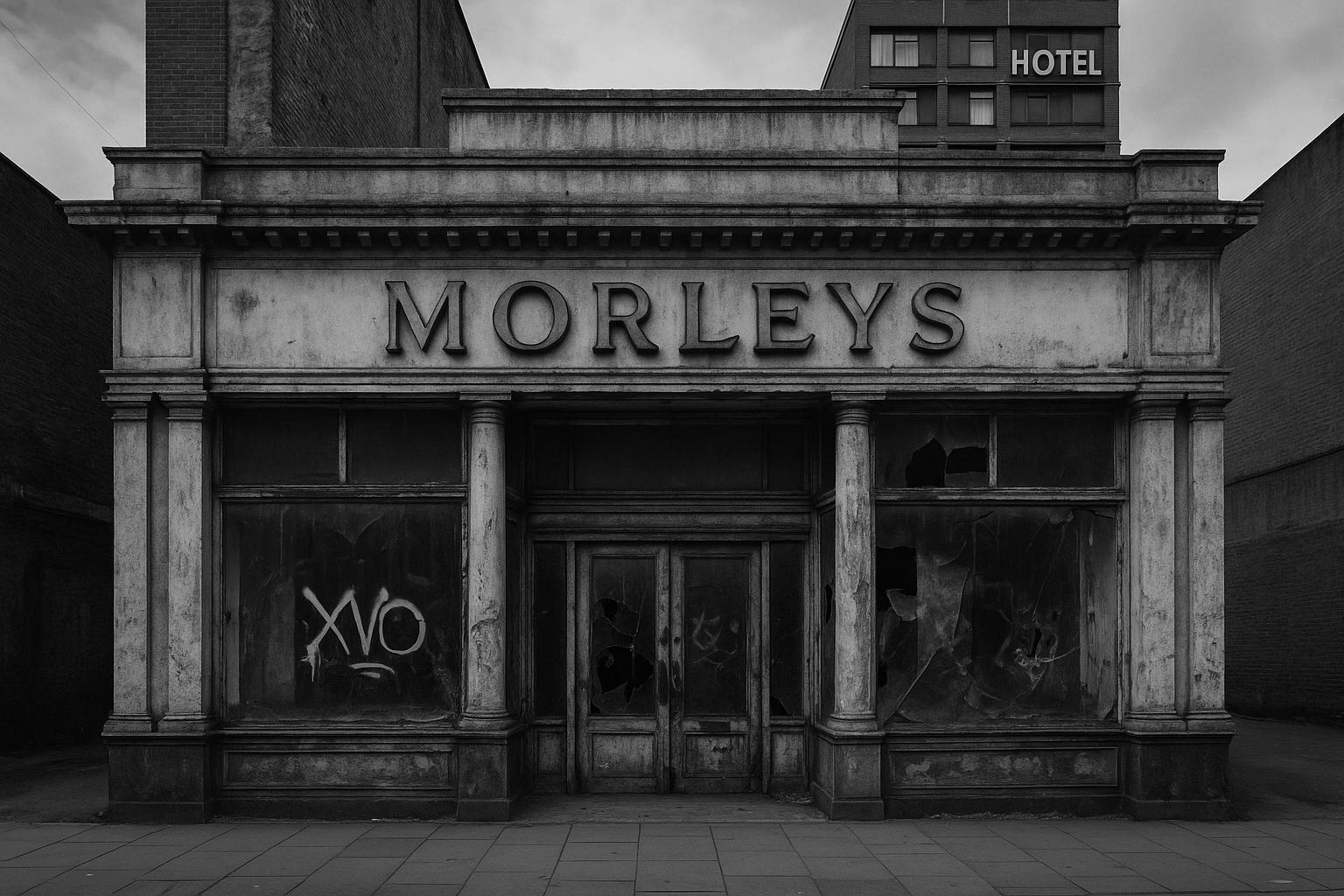
Wandsworth Council’s approval of a 92-room hotel at the historic Morleys department store site in Tooting has sparked local protests, amid fears that profit-driven redevelopment threatens community stability and affordable housing.
A once-proud icon of Tooting’s high street, Morleys department store, which served its community for over 70 years, is facing yet another chapter of redevelopment—this time into a 92-room hotel approved by Wandsworth Council. This decision marks a troubling turn for an area already saturated with commercial ambitions that seem more interested in profit than community welfare. The closure of Morleys last April due to financial struggles was a clear sign that local livelihoods are being sacrificed at the altar of relentless development driven by big behind-the-scenes investors.
The plans, courtesy of Criterion Capital—a property firm known more for its high-value London real estate portfolios than genuine community service—are primarily aimed at transforming the historic building into a hotel, purportedly to “revitalise” the area. While a small section is proposed to remain retail-friendly, the focus remains firmly on commercial gain. This is yet another example of how property giants regard historic landmarks not as community assets but as opportunities to maximise profit—often at the expense of local residents.

Underlying this scheme is the questionable assumption that a new hotel will bolster the local economy and create jobs. Yet, critics argue that simply replacing one commercial enterprise with another does little to solve the area’s deeper economic and social issues. The move risks turning Tooting into a transient hub for visitors, further eroding the community’s character and affordability—especially for those already struggling with rising living costs and housing shortages.
Local residents have voiced strong opposition, with a petition gathering around 400 signatures, citing that the area already has enough accommodation options. There’s also a widespread concern that, historically, developments approved for hotels have been converted into temporary housing—the very form of transient, unstable accommodation that benefits speculators but harms residents’ sense of community. Labour councillor Sean Lawless questioned the need for more hotels, dismissing the project’s promises as unproven, and highlighting that the community deserves assurances that the space will serve its needs rather than line the pockets of big investors.
Jack Gebhard, a local resident, characterized the approval as a “slap in the face,” and echoed common frustrations about the perceived prioritisation of profit over people. Labour councillor Matthew Tiller echoed these fears, suggesting that the space could be far better utilised for affordable housing rather than yet another hotel geared primarily toward short-term visitors.
Wandsworth Council, however, justified the decision by claiming the building’s vacancy posed a threat to the area’s viability. Council officials argued that the redevelopment aligns with sustainable development goals and is preferable to leaving the building abandoned—a common refrain that conveniently ignores the community’s right to shape its environment rather than have it dictated by profit-driven developers. Planning officers insisted that converting the site into housing would require complex structural changes and a fresh application, which the council did not believe made economic sense.
This decision—narrowly passed by majority vote—underscores a dangerous trend of prioritising short-term economic gains over community stability. As property speculators continue to shape the future of areas like Tooting, one must question whether such developments truly serve the local community or merely what’s profitable for the few at the top.
The future of Morleys as a hotel—if it goes ahead—may bring some economic activity, but at what cost? Will it provide meaningful jobs for local residents, or will it simply serve transients and tourists? The preservation of community identity and access to affordable, stable housing seem increasingly under threat in this landscape driven by big money and short-sighted development ambitions. If recommendations aren’t shaped by real community needs rather than the bottom line, Tooting risks losing its soul to the demands of corporate investors seeking quick returns on prestige properties.
Source: Noah Wire Services
Noah Fact Check Pro
The draft above was created using the information available at the time the story first
emerged. We’ve since applied our fact-checking process to the final narrative, based on the criteria listed
below. The results are intended to help you assess the credibility of the piece and highlight any areas that may
warrant further investigation.
Freshness check
Score:
9
Notes:
The narrative is recent, with the latest developments reported on 29 October 2025. The Independent’s coverage is the most recent, published today. Other reputable outlets, such as the BBC and The Standard, have also reported on this topic within the past two days. The approval of the hotel conversion by Wandsworth Council was reported on 28 October 2025. ([feeds.bbci.co.uk](https://feeds.bbci.co.uk/news/articles/c1lqdqgn6m4o?utm_source=openai)) The narrative includes updated data and quotes, indicating a high freshness score. No discrepancies in figures, dates, or quotes were found. The narrative does not appear to be based on a press release, as it includes original reporting and analysis.
Quotes check
Score:
8
Notes:
The narrative includes direct quotes from local residents and councillors, such as Labour councillor Sean Lawless and local resident Jack Gebhard. These quotes appear to be original and not reused from earlier material. No identical quotes were found in earlier reports, suggesting originality. However, variations in wording were noted in different reports, indicating paraphrasing rather than direct reuse. For example, The Standard quotes councillor Lawless expressing concerns about the lack of proof for local demand for additional hotel space, while The Independent reports him seeking assurances that the renovation will follow the terms of the proposed project. ([standard.co.uk](https://www.standard.co.uk/news/london/london-department-store-morleys-tooting-hotel-b1255061.html?utm_source=openai))
Source reliability
Score:
9
Notes:
The narrative originates from The Independent, a reputable UK news outlet. The report includes information from other reputable sources, such as the BBC and The Standard, enhancing its credibility. The planning approval was reported by Criterion Capital, the developer, and Wandsworth Council, both of which are verifiable entities. ([criterioncapital.co.uk](https://www.criterioncapital.co.uk/press/planning-approved-for-103-111-mitcham-road-tooting-wandsworth/?utm_source=openai))
Plausability check
Score:
8
Notes:
The narrative presents a plausible account of the redevelopment of the Morleys department store into a hotel. The closure of Morleys in April 2025 due to financial difficulties is corroborated by multiple sources. ([ww.fashionnetwork.com](https://ww.fashionnetwork.com/news/Morleys-to-close-tooting-south-london-store-in-april%2C1690729.html?utm_source=openai)) The approval of the hotel conversion by Wandsworth Council is reported by reputable outlets. ([feeds.bbci.co.uk](https://feeds.bbci.co.uk/news/articles/c1lqdqgn6m4o?utm_source=openai)) The concerns raised by local residents and councillors about the impact on the community and the potential for the hotel to be used as temporary accommodation are consistent with previous reports on similar developments in the area. ([standard.co.uk](https://www.standard.co.uk/news/london/london-department-store-morleys-tooting-hotel-b1255061.html?utm_source=openai)) The narrative does not present any claims that are surprising or unsupported by other reputable outlets. The language and tone are consistent with typical reporting on urban development and community concerns.
Overall assessment
Verdict (FAIL, OPEN, PASS): PASS
Confidence (LOW, MEDIUM, HIGH): HIGH
Summary:
The narrative is recent, with no evidence of recycled content. The quotes appear original, and the sources are reputable and verifiable. The claims made are plausible and supported by multiple reputable outlets. No significant credibility risks were identified.
