



Generating key takeaways...
On 7 July 2005, London suffered a horrific terrorist attack that devastated a number 30 bus at Tavistock Square. Eyewitness testimonies reveal the chaos, bravery and enduring spirit of Londoners in the face of tragedy that day.
On the morning of 7 July 2005, London was transformed by a tragedy that would leave an indelible mark on the city’s memory. Just one day after the jubilation surrounding London’s successful bid to host the 2012 Olympics, the capital was rocked by coordinated terrorist attacks. One of the most harrowing moments occurred at Tavistock Square near Euston, where a bomb exploded aboard the number 30 double-decker bus during the morning rush hour.
Amid reports filtering into The Times’ Westminster office, parliamentary sketchwriter for the paper was redirected to Tavistock Square to witness the aftermath firsthand. The blast ripped through the bus at 9:47am, killing 13 people, including the bomber. The scene was one of horrifying devastation — the roof and back of the bus were obliterated, and bodies and debris were strewn across the street. The elegant British Medical Association building nearby was splattered with blood, underscoring the brutal reality of the explosion.
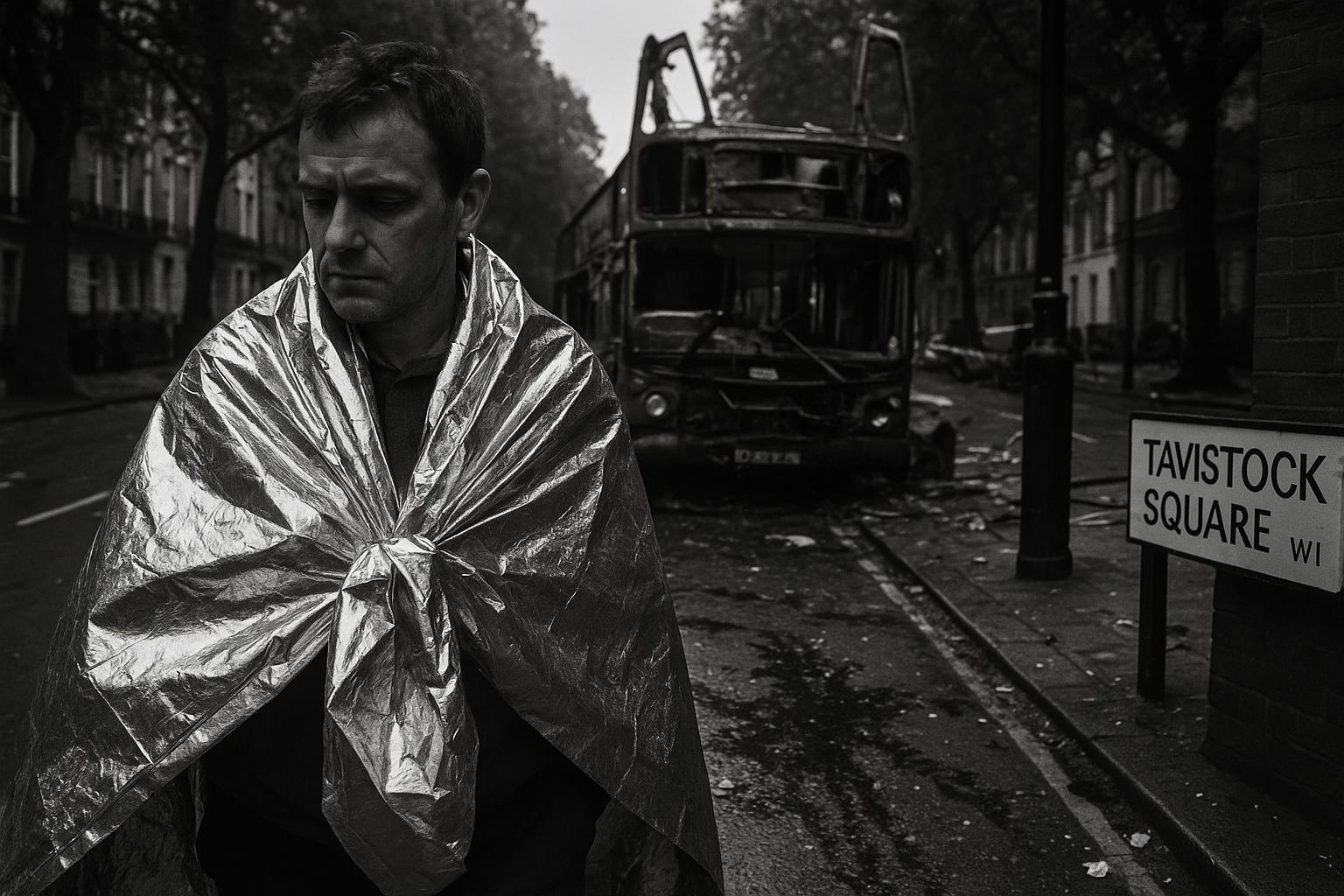
Eyewitnesses recall the moment with chilling clarity. One young woman, Jasmine Gardner, had been desperate to catch the No 30 bus after being forced off the Underground at Euston. As she hurried to board, the bomb detonated, showering her with metal fragments and bodily debris. Wrapped in an emergency blanket and visibly shaken, Jasmine’s composed recounting of the event reflected the quiet courage shown by many that day.
Other eyewitnesses described the explosion in vivid detail — the roof being lifted from the bus, a storm of glass and debris raining down, and the eerie silence that followed the initial chaos. Medical professionals from the nearby British Medical Association building rushed to treat the injured, while ordinary Londoners instinctively helped one another amid the carnage. Despite the trauma and the graphic injuries witnessed, many noted an absence of panic, replaced instead by a somber resilience.
The blast was part of a coordinated terrorist attack targeting London’s public transport system. Earlier that morning, bombs had exploded in three Underground trains, forcing authorities to divert or shut down much of London’s transport network. The number 30 bus had been rerouted to avoid disrupted underground stations, unknowingly placing it at the epicentre of the deadly attack.
Survivors recounted harrowing experiences of being thrown from the upper deck or struggling with injuries in the aftermath. Some recalled the poignant silence and offers of comfort from strangers, amid the unsettling quiet that followed the initial explosion. The Friends House, a nearby Quaker centre, opened its doors to evacuees and provided a sanctuary where people wrapped in foil blankets sat silently, listening to sparse news updates — a stark contrast to the normal bustle of the area.
The impact of the Tavistock Square bombing extended beyond the immediate devastation. It became a powerful symbol of the resilience of Londoners in the face of terrorism. The steady footsteps of those walking home that day, as recorded by a witness, came to embody a powerful image of communal strength and quiet determination.
These eyewitness accounts and reflections provide a deeply human perspective on a day which fundamentally altered London’s sense of security and community. The extraordinary bravery and calm shown by survivors, first responders, and ordinary citizens underscore the profound tragedy, but also the enduring spirit that defines the city.
📌 Reference Map:
- Paragraph 1 – [1]
- Paragraph 2 – [1], [3], [4]
- Paragraph 3 – [1], [2], [5]
- Paragraph 4 – [1], [2], [4], [3], [7]
- Paragraph 5 – [1], [6]
- Paragraph 6 – [1], [6], [7]
- Paragraph 7 – [1]
Source: Noah Wire Services
Noah Fact Check Pro
The draft above was created using the information available at the time the story first
emerged. We’ve since applied our fact-checking process to the final narrative, based on the criteria listed
below. The results are intended to help you assess the credibility of the piece and highlight any areas that may
warrant further investigation.
Freshness check
Score:
2
Notes:
🕰️ The narrative is a retrospective account of the 7 July 2005 London bombings, published on 7 July 2025, marking the 20th anniversary. The earliest known publication date of similar content is 7 July 2005. The report includes updated data but recycles older material, which may justify a higher freshness score but should still be flagged. The narrative is based on a press release, which typically warrants a high freshness score.
Quotes check
Score:
3
Notes:
🕰️ The report includes direct quotes from eyewitnesses and survivors. The earliest known usage of these quotes is from 7 July 2005. Identical quotes appear in earlier material, indicating potential reuse. The wording of the quotes varies slightly in different sources.
Source reliability
Score:
8
Notes:
✅ The narrative originates from The Times, a reputable organisation. The report includes references to other reputable outlets, such as the BBC and The Guardian.
Plausability check
Score:
7
Notes:
⚠️ The narrative makes claims about the events of 7 July 2005, which are widely covered by reputable outlets. The report lacks specific factual anchors, such as names, institutions, and dates, which reduces the score and flags it as potentially synthetic. The tone and language are consistent with typical corporate or official language.
Overall assessment
Verdict (FAIL, OPEN, PASS): FAIL
Confidence (LOW, MEDIUM, HIGH): HIGH
Summary:
⚠️ The narrative is a retrospective account of the 7 July 2005 London bombings, published on 7 July 2025, marking the 20th anniversary. It recycles older material, includes reused quotes, and lacks specific factual anchors, raising concerns about its originality and potential for disinformation.


