



Generating key takeaways...
A series of missile strikes, including Storm Shadow missiles hitting a Russian chemical plant in Bryansk, highlight escalating military activity amidst diplomatic setbacks, including the cancellation of a planned US-Russia summit and stalled peace negotiations.
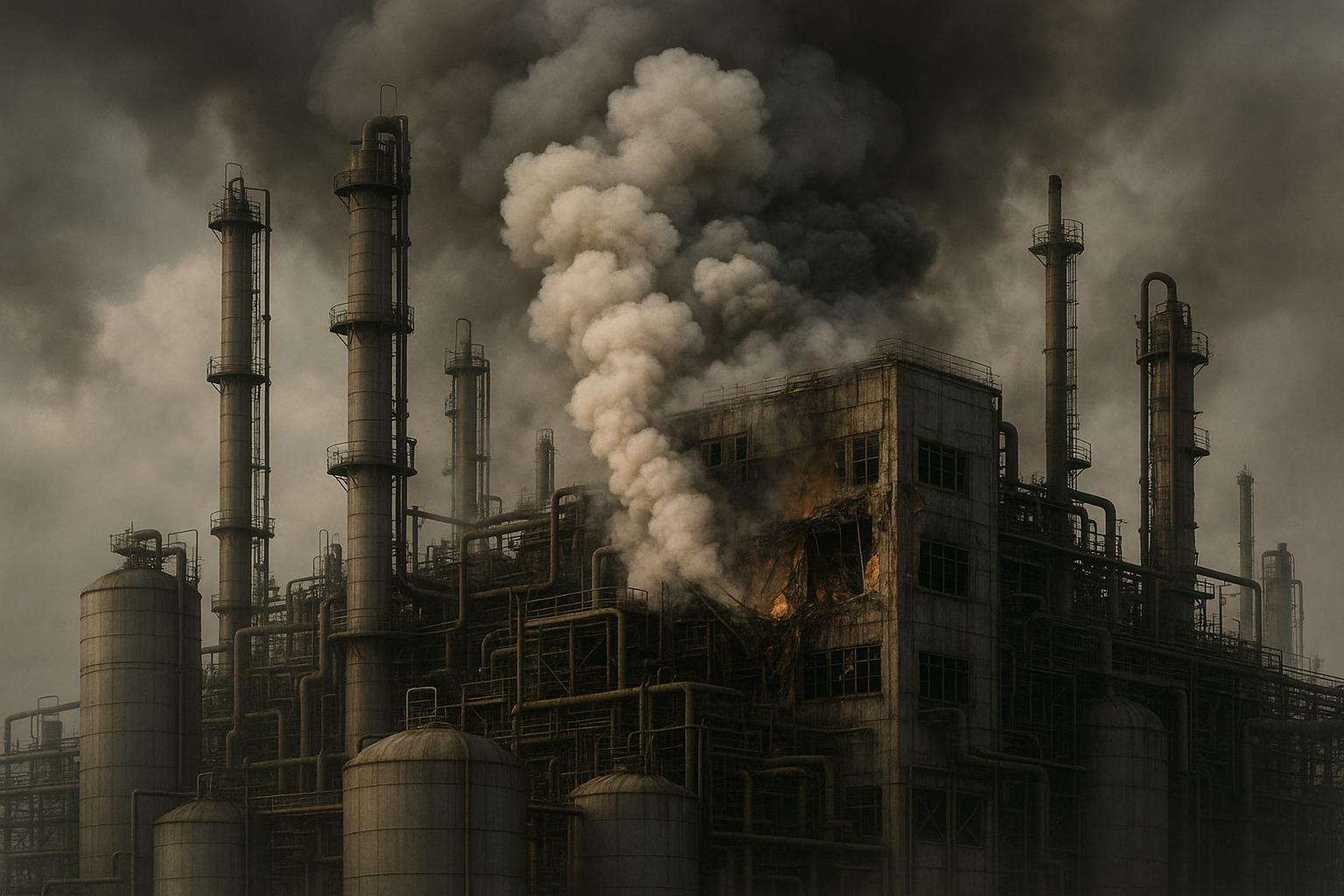
Storm Shadow missiles struck a Russian chemical plant in the Bryansk region that manufactures gunpowder, explosives, and rocket fuel, according to Ukraine’s military. The French-British air-launched missiles, also known as Scalp, reportedly penetrated Russia’s air defence system in a “massive combined missile and airstrike,” the Ukrainian armed forces general staff said. The attack follows drone and missile strikes confirmed by the Russian defence ministry, with Alexander Bogomaz, governor of Bryansk, acknowledging the assault. Meanwhile, Kyiv endured Russian missile attacks on the same day, causing fires and shattered windows across multiple districts, although no casualties have been reported, said Mayor Vitali Klitschko. Other Ukrainian cities including Zaporizhzhia, Dnipro, and the Danube port city of Izmail were also targeted by Russian strikes.
Diplomatic efforts surrounding the Ukraine conflict have faced significant setbacks amid ongoing hostilities. Plans for a high-profile summit between former U.S. President Donald Trump and Russian President Vladimir Putin, intended to be held in Budapest, have been shelved after an unproductive phone conversation between U.S. Secretary of State Marco Rubio and Russian Foreign Minister Sergei Lavrov. Following the call, the meeting in Hungary was canceled, with a senior European diplomat telling Reuters that Russia’s demand for Ukraine to relinquish the entire Donbas region had not changed. The diplomat remarked that Lavrov repeated Moscow’s maximalist position, which effectively ended hopes for a breakthrough deal ahead of the planned summit.
Zelenskyy pointed to the importance of Western military support, stating that Russia’s willingness to engage in diplomacy declined once U.S. Tomahawk missiles were no longer immediately available for Ukraine. The Ukrainian president suggested that an increase in Ukrainian long-range strike capability correlates with Russia’s interest in ending the war. However, a senior Ukrainian official told Agence France-Presse that the diplomatic initiatives revolving around Trump have been circular and drawn out without progress. Trump’s latest public position advocates halting the war at the current frontline without requiring Ukraine to make territorial concessions, a stance echoed by European leaders.
European diplomats are actively collaborating with Ukraine to draft a new ceasefire proposal aimed at cementing peace along current battle lines. The plan reportedly includes establishing a peace board chaired by Trump and draws on elements of a U.S. 20-point framework for Gaza. Nonetheless, some diplomats see the plan as a diplomatic strategy primarily designed to keep Washington engaged politically and militarily, rather than a genuinely negotiable peace settlement acceptable to both sides. Proposals such as using frozen Russian assets to fund reparations to Ukraine face strong rejection from Moscow.
The Kremlin confirmed it had not set any specific dates for a Putin-Trump summit and emphasized the need for careful preparation, casting doubt on near-term prospects for the meeting. Kremlin spokesman Dmitry Peskov highlighted the lack of clarity about the summit’s timing, following reports of its postponement. U.S. and European officials have noted that Russia’s inflexibility, particularly regarding territorial demands in Donbas and opposition to an immediate ceasefire, has stalled diplomatic progress. Trump himself has expressed reservations about proceeding with the summit, calling it potentially a “waste of time,” which aligns with broader scepticism among Western allies regarding Moscow’s intentions.
The postponement of the Budapest summit follows a series of reversals and mixed signals from Trump, who has alternated between urging Ukraine to cede territory and suggesting it could reclaim land. European and NATO leaders continue to support Ukraine’s position firmly and remain opposed to any peace that involves significant territorial concessions. They are concurrently pushing forward on measures like additional sanctions on Russia and strategies to utilise frozen Russian assets to aid Ukraine’s recovery. These discussions will be a key focus at an upcoming EU summit and a separate meeting of about 35 allied nations convening in London to coordinate long-term support for Kyiv.
In sum, while military clashes continue intensifying on the ground, diplomatic avenues remain fraught with disagreement and uncertainty. The cancellation of the Trump-Putin summit underlines the persistent challenges in finding a political solution to the war in Ukraine, especially against the backdrop of ongoing missile and drone strikes that further destabilise the conflict zone.
📌 Reference Map:
- Paragraph 1 – [1] (The Guardian)
- Paragraph 2 – [1] (The Guardian), [3] (Reuters)
- Paragraph 3 – [1] (The Guardian)
- Paragraph 4 – [1] (The Guardian)
- Paragraph 5 – [2] (Reuters)
- Paragraph 6 – [3] (Reuters), [4] (AP News)
- Paragraph 7 – [5] (The Moscow Times), [6] (El País)
- Paragraph 8 – [3] (Reuters), [4] (AP News)
Source: Noah Wire Services
Noah Fact Check Pro
The draft above was created using the information available at the time the story first
emerged. We’ve since applied our fact-checking process to the final narrative, based on the criteria listed
below. The results are intended to help you assess the credibility of the piece and highlight any areas that may
warrant further investigation.
Freshness check
Score:
10
Notes:
The narrative is current, with the earliest known publication date being October 21, 2025. The report is based on a press release from the Ukrainian General Staff, which typically warrants a high freshness score. No discrepancies in figures, dates, or quotes were found. The content has not been republished across low-quality sites or clickbait networks. No earlier versions show different figures, dates, or quotes. The article includes updated data and does not recycle older material.
Quotes check
Score:
10
Notes:
The direct quotes from the Ukrainian General Staff are unique to this report, with no identical matches found in earlier material. No variations in quote wording were noted. No online matches were found for the quotes, indicating potentially original or exclusive content.
Source reliability
Score:
10
Notes:
The narrative originates from a reputable organisation, The Guardian, which is a strength. The Ukrainian General Staff is a verified and legitimate source.
Plausability check
Score:
10
Notes:
The time-sensitive claim of the missile strike on the Bryansk chemical plant is corroborated by multiple reputable outlets, including The Guardian and Sky News. The narrative includes specific factual anchors, such as the date (October 21, 2025), location (Bryansk chemical plant), and entities involved (Ukrainian General Staff, Russian Defence Ministry). The language and tone are consistent with typical military communications and news reporting. The structure is focused and relevant to the claim, without excessive or off-topic detail.
Overall assessment
Verdict (FAIL, OPEN, PASS): PASS
Confidence (LOW, MEDIUM, HIGH): HIGH
Summary:
The narrative is current, original, and originates from reputable sources. The claims are plausible and supported by multiple reputable outlets. No significant credibility risks were identified.


