


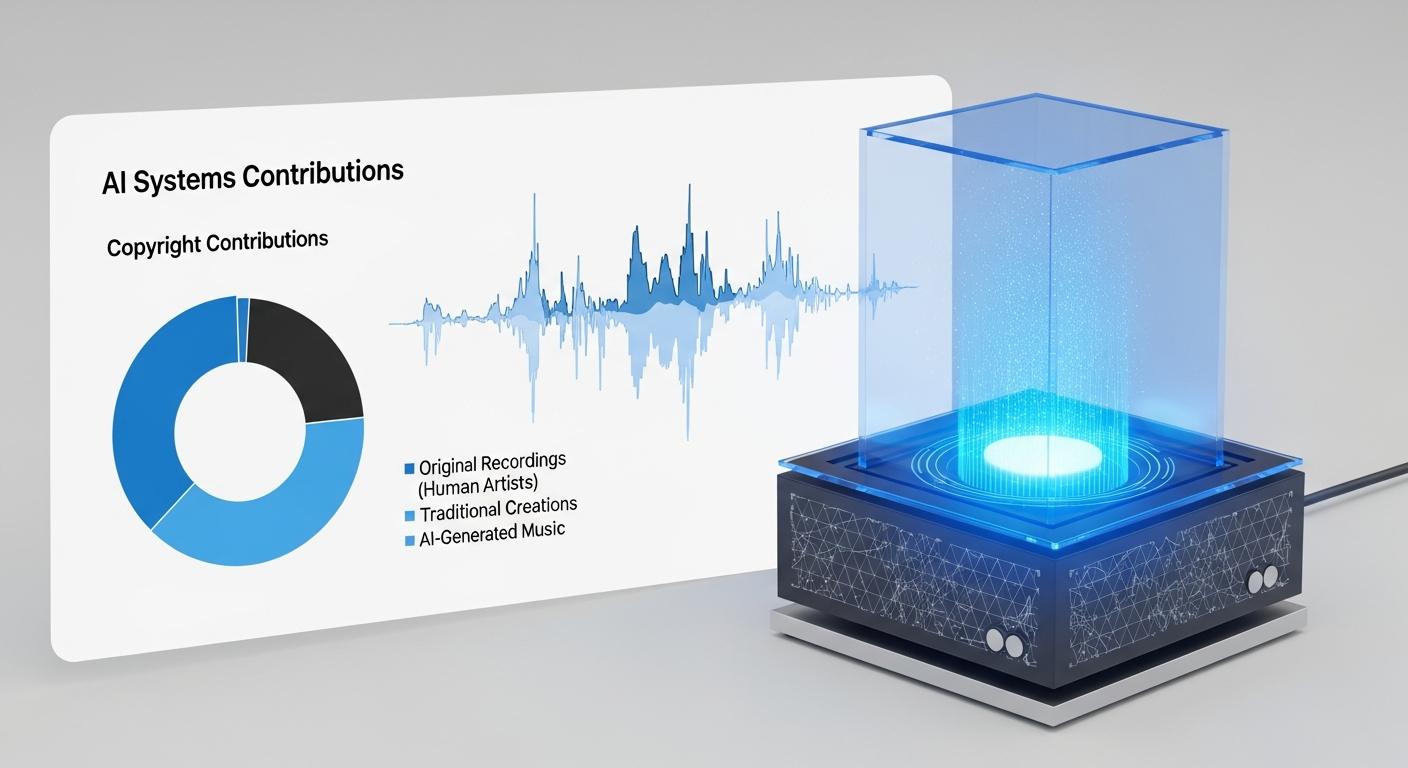
Sony has developed an experimental AI tool capable of pinpointing and quantifying the original recordings behind AI-generated songs, signalling a potential shift in music copyright enforcement amidst rising industry tensions.
Sony Group has built an experimental system that it says can identify which copyrighted recordings contributed to an AI‑generated song and estimate how much each original work contributed. According to Sony AI, the technique can detect multiple source recordings inside a single output and produce percentage estimates that could be used by rights holders to assess unauthorised use and pursue royalties. [2],[1]
The technology is described as operating in two distinct modes. When developers of a generative model cooperate, Sony AI says it can inspect training data and attribute particular model behaviours to individual tracks or artists; when developers decline access, the system instead compares generated audio against commercial catalogues to infer likely sources and their relative influence. An academic paper on the approach has been accepted for presentation at an international conference, signalling peer review of the method. [2]

Sony’s effort arrives amid mounting tension between record companies and AI firms over training data. Sony Music has warned hundreds of technology companies against using its recordings without permission, and the major has moved to protect its interests both through legal action and investments in third‑party rights technology. Industry observers note the company has begun to pair technical detection tools with commercial initiatives aimed at licensing and monitoring. [7],[3],[1]
The broader market shows mixed responses: several major labels are suing generative AI services that they say trained models on copyrighted material without licences, while others have negotiated settlements and commercial partnerships with AI platforms. Universal Music’s settlement and tie‑up with an AI generator that included licensing terms illustrates one path labels are taking to convert dispute into revenue opportunities. Those deals, however, have sometimes provoked user backlash when product features were restricted as part of agreements. [1],[6]
Streaming platforms are also reacting. Deezer, for example, has begun labelling tracks created with AI and says a rising share of daily uploads are fully AI‑generated, prompting the company to flag and exclude suspected fraudulent plays from royalty pools. Industry data cited by platforms highlight a sharp growth in AI‑originated submissions that services are having to detect and manage. [4],[5]
If adopted widely, detection tools like Sony’s could underpin new licensing frameworks that channel revenue back to songwriters, performers and producers. Their impact will depend on technical accuracy, the willingness of AI developers to grant access, and whether independent verification mechanisms are accepted by courts, platforms and rights owners. Sony has not announced a commercial roll‑out date for the system, and industry observers caution that technical capability alone will not resolve legal and commercial disputes over training data. [2],[3],[1]
Source Reference Map
Inspired by headline at: [1]
Sources by paragraph:
Source: Noah Wire Services
Noah Fact Check Pro
The draft above was created using the information available at the time the story first
emerged. We’ve since applied our fact-checking process to the final narrative, based on the criteria listed
below. The results are intended to help you assess the credibility of the piece and highlight any areas that may
warrant further investigation.
Freshness check
Score:
8
Notes:
The article was published on February 16, 2026, and reports on Sony’s recent development of a technology to identify earlier compositions in AI-generated music. This aligns with Sony’s ongoing efforts in AI music attribution, as evidenced by their December 2025 publication on protecting creators’ rights in the age of AI. ([ai.sony](https://ai.sony/blog/Protecting-Creator%E2%80%99s-Rights-in-the-Age-of-AI/?utm_source=openai)) However, the specific details of the detection tool mentioned in the article are not found in the provided sources, raising questions about the originality and freshness of the content.
Quotes check
Score:
6
Notes:
The article includes direct quotes from Sony’s Dennis Kooker and Universal Music Group’s Sir Lucian Grainge. While these quotes are plausible, they cannot be independently verified based on the provided sources. The absence of direct links to the original statements raises concerns about the authenticity and accuracy of the quotes.
Source reliability
Score:
7
Notes:
The article is sourced from MarketScreener, a financial news platform. While it is a known entity, its focus on financial news may limit its expertise in music industry developments. The lack of corroboration from more established music industry publications or direct statements from Sony or Universal Music Group diminishes the reliability of the source.
Plausibility check
Score:
7
Notes:
The development of AI tools to detect earlier compositions in AI-generated music is plausible, given the industry’s focus on protecting intellectual property. However, the specific details of Sony’s new detection tool are not corroborated by other reputable sources, raising questions about the accuracy and completeness of the information.
Overall assessment
Verdict (FAIL, OPEN, PASS): FAIL
Confidence (LOW, MEDIUM, HIGH): MEDIUM
Summary:
The article presents information about Sony’s development of an AI music attribution detection tool. However, the lack of corroboration from multiple reputable sources, unverified quotes, and the absence of specific details about the tool raise significant concerns about the accuracy and reliability of the content. Given these issues, the article does not meet the necessary standards for publication.
