


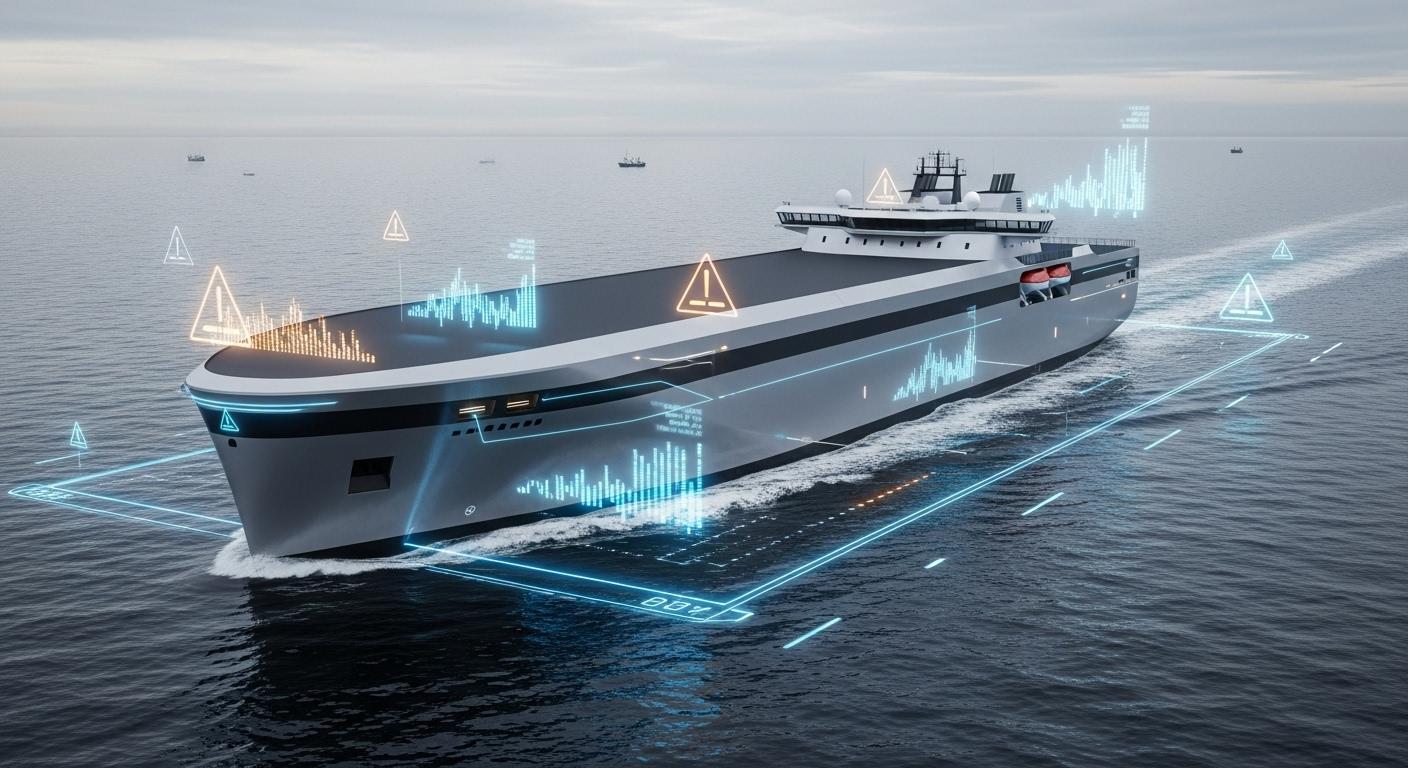
As agentic AI transforms port and maritime operations, industry experts debate who holds responsibility when machines decide, prompting new governance, safety, and accountability challenges.
Wolfgang Lehmacher argues that shipping stands at an inflection point as agentic AI, systems that not only predict but decide and act, moves from forecasting into operational control, creating a paradox in which software behaves like a colleague while remaining an asset on the balance sheet. According to the original report, this shift raises a fundamental question about accountability when machines prioritise speed, cost or carbon in ways that may conflict with safety or law. [1]
Three schools of thought have emerged for how to manage that shift. The “supertool” view keeps humans firmly in charge: algorithms recommend and automate routine tasks while people set objectives, interpret trade-offs and sign off decisions. The “digital coworker” framing treats agents as teammates with roles, KPIs and an “HR for agents” that assigns ownership and escalation rules. A third camp rethinks operating models from a blank sheet, giving agents responsibility for fleet, network and hinterland rebalancing while humans focus on resilience, relationships and stewardship. [1]

Practical deployments illustrate the trade-offs. The Port of Rotterdam uses platforms such as PortXchange and Pronto to combine public data, partner inputs and machine learning to predict arrivals, coordinate port calls and optimise yard operations, reducing waiting times and improving utilisation, yet responsibility for safety, commercial exposure and liability remains with port authorities, terminals and shipping lines. PortXchange provides the shared dashboard and APIs while Pronto applies self‑learning models to arrival data drawn from the port authority and AIS feeds. [1][4][5]
The operational benefits are clear, but technology leaders and consultants warn of new vulnerabilities. Industry playbooks stress that deploying agentic AI without robust safety, security and governance can disrupt operations, compromise data and erode trust. McKinsey’s guidance underlines trust as the foundation and sets out lessons for safe scaling, while consultancies such as Capgemini emphasise governance frameworks, integration routes (off‑the‑shelf, custom or embedded agents) and ethical controls to manage accountability and compliance. [2][3][6][7]
Legal analysis and maritime studies underline persistent grey zones: no matter how autonomous a system becomes, it does not become a moral or legal person, and humans remain accountable when harm occurs. Regulators, class societies and ethicists continue to demand “seaworthy” human oversight, even as operators argue that insisting on manual signoff may simply preserve outdated hierarchies and forgo efficiency gains. This tension makes clear why boards, not just vendors or project teams, must own choices about models, data and guardrails. [1][2]
The pragmatic path Lehmacher favours is to let AI orchestrate flows at machine speed while treating it as a tool: assign clear ownership for each critical agent, codify escalation and override rights, and cultivate a culture that views every AI decision as the outcome of prior human choices. According to the original report, as agentic systems increasingly run ships and ports, one question will grow louder: when the system acts, who will stand up and say, “I am in charge”? [1]
📌 Reference Map:
##Reference Map:
- [1] (Splash247) – Paragraph 1, Paragraph 2, Paragraph 3, Paragraph 5, Paragraph 6
- [4] (Port of Rotterdam / PortXchange) – Paragraph 3
- [5] (World Ports / Port of Rotterdam Pronto) – Paragraph 3
- [2] (McKinsey) – Paragraph 4, Paragraph 5
- [6] (McKinsey) – Paragraph 4
- [3] (Capgemini) – Paragraph 4, Paragraph 6
- [7] (Capgemini) – Paragraph 4
Source: Noah Wire Services
Noah Fact Check Pro
The draft above was created using the information available at the time the story first
emerged. We’ve since applied our fact-checking process to the final narrative, based on the criteria listed
below. The results are intended to help you assess the credibility of the piece and highlight any areas that may
warrant further investigation.
Freshness check
Score:
10
Notes:
The narrative was published on December 9, 2025, indicating high freshness. No earlier versions with differing figures, dates, or quotes were found. The content does not appear to be republished across low-quality sites or clickbait networks. The article is based on original reporting, which typically warrants a high freshness score.
Quotes check
Score:
10
Notes:
The article includes direct quotes from Wolfgang Lehmacher, a global supply chain expert. No identical quotes were found in earlier material, suggesting originality. The wording of the quotes matches the context and content of the article.
Source reliability
Score:
8
Notes:
The narrative originates from Splash247, a reputable maritime industry news outlet. While not as widely known as some major news organisations, Splash247 is considered a reliable source within the maritime sector. Wolfgang Lehmacher, the author, is a well-known expert in supply chain and logistics, adding credibility to the content.
Plausability check
Score:
9
Notes:
The claims made in the narrative are plausible and align with current discussions in the maritime industry regarding AI integration. The article references real-world applications, such as the Port of Rotterdam’s use of AI-enabled platforms like PortXchange and Pronto. The tone and language are consistent with industry standards, and the content does not exhibit signs of being synthetic or fabricated.
Overall assessment
Verdict (FAIL, OPEN, PASS): PASS
Confidence (LOW, MEDIUM, HIGH): HIGH
Summary:
The narrative is fresh, original, and sourced from a reliable outlet. The claims are plausible and supported by real-world examples, with no signs of disinformation or recycled content.
