


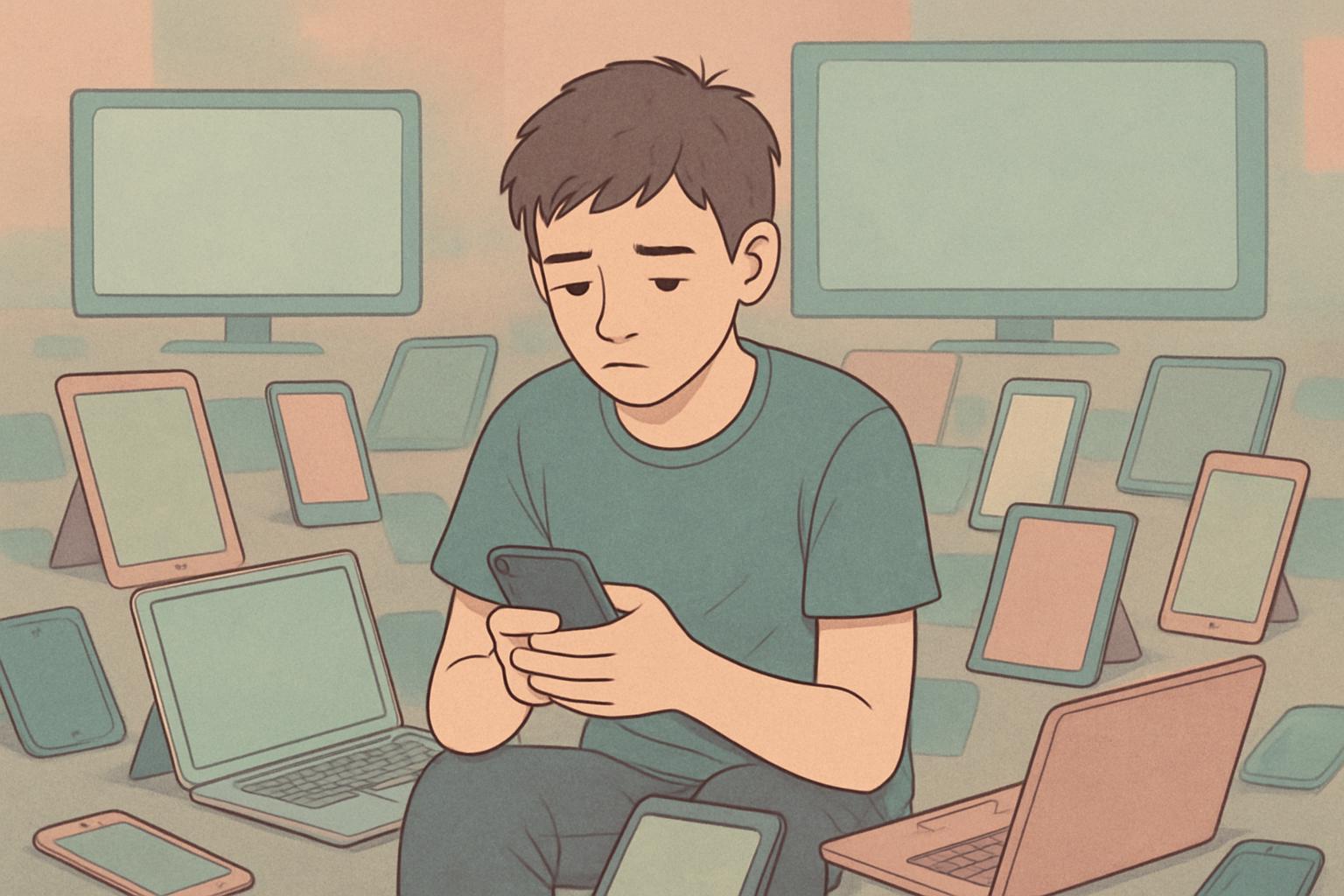
Watching television with a phone in hand is no longer a sideshow to media consumption – it is the default setting. A new report from consultancy Flux Trends argues that simultaneous engagement across devices has become an organising principle of entertainment. For news organisations, that shift is not a behavioural footnote but a product challenge.
The study, The State We’re In 2026, says second-screening now shapes audience behaviour, advertising models and creative decisions across global markets. Citing Netflix research, Flux Trends reports that more than 94% of viewers use another device while watching television, with the pattern, unsurprisingly, strongest among younger users. Live commenting, social shopping, fact-checking and unrelated scrolling now accompany almost every programme.
For publishers, it is clear that the “captive audience” is a thing of the past. News products can no longer assume sustained, linear attention. Instead, they must compete in an environment where articles are consumed in fragments, headlines are cross-checked in real time and social feeds sit one swipe away.

Homepage hierarchies, article length, push alerts and live blogs must now be built for interrupted consumption. Stories need to function at multiple depths – delivering immediate clarity for distracted readers while rewarding those who choose to stay. The nut graf has to work harder. The top of the story has to stand alone.
Newsrooms can treat second-screen behaviour as leakage, or design products that harness it. Live explainers that anticipate reader questions, interactive fact boxes, integrated social context and structured updates are ways of turning distraction into engagement. The task is not to demand focus but to earn it in bursts.
The danger of course is that second screening leads to ephemeral engagement and thus understanding of news content. In some areas of entertainment that has already led to a shift in how their content has been made, a move that many argue has not been for the best.
“The concept of ‘second-screen entertainment’ has led to filmmakers and entertainment companies like Netflix intentionally dumbing down their content for audiences who are busy on their phones and watching ‘ambient TV’, just so that they can still follow the plot while being distracted,” said Dion Chang, founder of Flux Trends. “This must surely mark a new low in human evolution.”
Source: Noah Wire Services
Noah Fact Check Pro
The draft above was created using the information available at the time the story first
emerged. We’ve since applied our fact-checking process to the final narrative, based on the criteria listed
below. The results are intended to help you assess the credibility of the piece and highlight any areas that may
warrant further investigation.
Freshness check
Score:
8
Notes:
The article was published on 18 February 2026, which is recent. The Flux Trends report titled “The State We’re In 2026” was presented on 11 February 2026. ([fluxtrends.com](https://fluxtrends.com/salon/the-state-were-in-2026/?utm_source=openai)) The ITWeb article references this report, indicating timely reporting. However, the article’s content closely mirrors the Flux Trends report, suggesting it may be based on the report’s findings. This raises concerns about originality and potential recycling of content.
Quotes check
Score:
7
Notes:
The article includes direct quotes from Dion Chang, founder of Flux Trends. These quotes are consistent with those found in the Flux Trends report. However, the absence of independent verification of these quotes raises concerns about their authenticity. The reliance on a single source for these quotes diminishes their credibility.
Source reliability
Score:
6
Notes:
ITWeb is a South African news outlet that appears to be summarising the Flux Trends report. While ITWeb is a known publication, its reliance on a single source for this article reduces the reliability of the information presented. The lack of additional independent sources to corroborate the claims further diminishes the article’s credibility.
Plausibility check
Score:
7
Notes:
The claims about the rise of second-screen viewing and its impact on the attention economy are plausible and align with existing research. However, the article’s heavy reliance on a single source without additional corroboration raises questions about the accuracy and depth of the reporting.
Overall assessment
Verdict (FAIL, OPEN, PASS): FAIL
Confidence (LOW, MEDIUM, HIGH): HIGH
Summary:
The article closely mirrors the content of the Flux Trends report, raising concerns about originality and potential recycling of content. The reliance on a single source for quotes and information diminishes the article’s credibility. The absence of independent verification and corroboration further undermines the article’s reliability. Given these issues, the article fails to meet the necessary standards for publication.
