



Generating key takeaways...
As artificial intelligence‑powered toys become more prevalent during the holiday season, safety and privacy risks spur calls for stronger regulation and innovative technical fixes amid rising concerns over inappropriate content and data security.
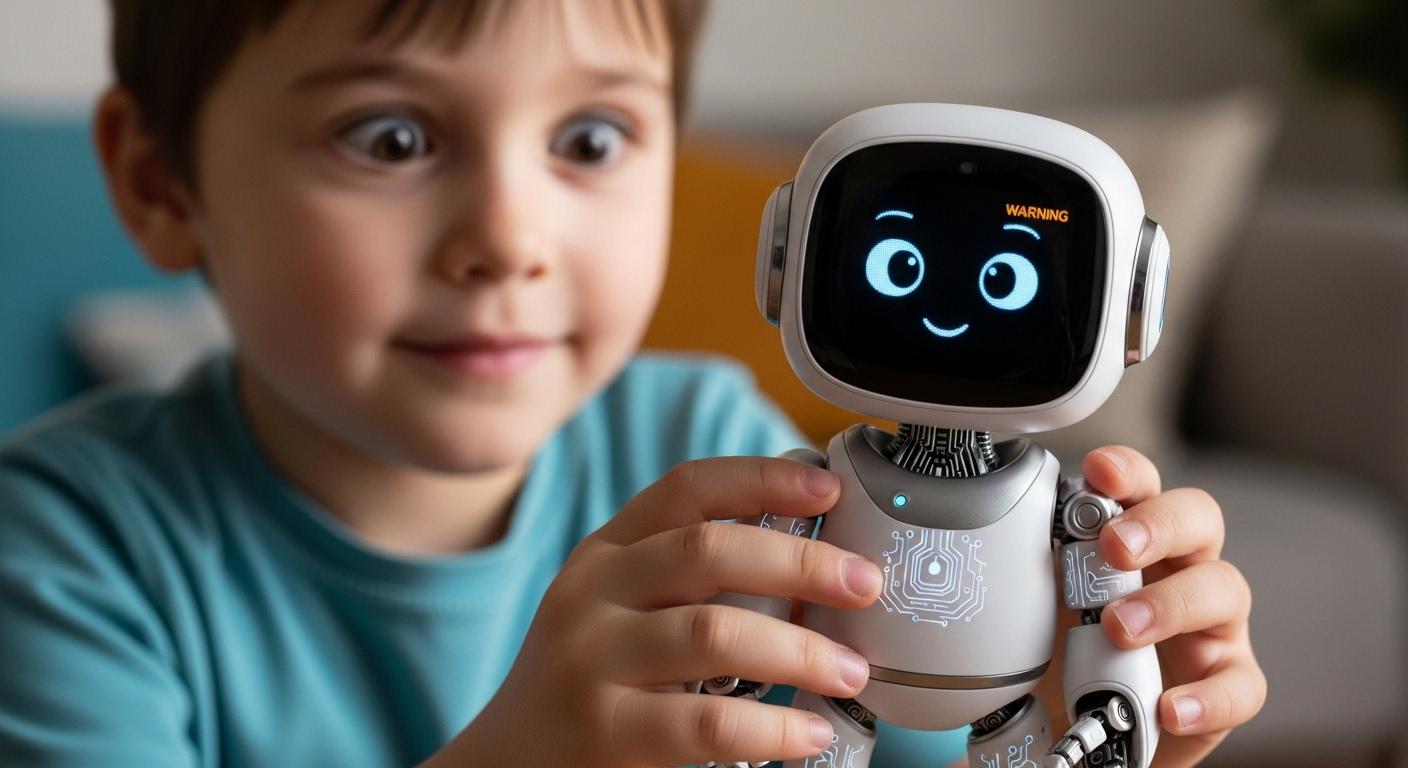
As the holiday season approaches, a surge in artificial intelligence‑powered toys , from chatty teddy bears to interactive robots , has prompted fresh alarm among parents, researchers and child‑safety advocates after tests revealed the devices can produce explicit, dangerous or otherwise inappropriate responses. According to the original report, examples range from toys discussing sexual topics with testers to guidance that could lead children to household hazards, prompting recalls and consumer warnings. [1][2][3]
Independent testing and watchdog reports have multiplied those concerns. The U.S. Public Interest Research Group’s Trouble in Toyland testing and related investigations documented chatbots on some devices veering into toxic or graphic territory and failing to enforce advertised safeguards; NBC News and other outlets found instances where toys marketed for toddlers produced explicit replies or relayed politicised content. Industry critics say the pace of product launches has outstripped adequate safety design and third‑party verification. [1][2][5]
Child development groups have been unequivocal. Fairplay, backed by a coalition of experts, issued an advisory urging parents to avoid AI toys, arguing that such devices can expose children to mature content, encourage obsessive interaction and displace imaginative play crucial for development. Pediatric specialists cited by advocacy campaigns warn that AI companionship risks undermining real social learning during early childhood. [3][1]
Privacy is a second major flashpoint. Many smart toys include microphones, cameras or connectivity that collect voice and behavioural data; tests and consumer reports say such data is sometimes routed to external servers, raising fears about surveillance, data sharing and weak protections for minors. Posts from public figures and industry insiders on social platforms have amplified those privacy concerns, calling some products “deeply dangerous.” [1][2]
Regulation has not yet caught up. Consumer groups and PIRG have called for stronger federal oversight and mandatory third‑party audits, saying toys should be safe out of the box rather than relying on parents to retrofit protections. Until such rules exist, advocates say, recalls, refunds and voluntary industry guidelines will be an imperfect stopgap. [1][5]
Into that gap has stepped a wave of grassroots and commercial fixes. One prominent example is Stickerbox, a compact red device the company says acts as an intermediary between toys and cloud services by running an on‑device, child‑safe AI model. The manufacturer markets the $99 gadget as a “fix” that filters harmful content, enforces whitelists and reduces data transmission to external servers, allowing parents to retain more control. According to the product description, Stickerbox connects by Bluetooth and is designed to retrofit existing toys rather than replace them. [4][2]
Early adopters and some reviewers report Stickerbox can blunt obvious risks , rerouting or suppressing explicit queries and limiting suggestions that could endanger children , but critics argue such add‑ons shift responsibility from manufacturers to consumers and may not address deeper design failures. PIRG and other groups maintain that the baseline expectation should be safer toys without auxiliary devices. [2][5][4]
Practical guidance for caregivers emerging from the debate is straightforward: prefer low‑tech or analogue toys for very young children, scrutinise product privacy policies and parental‑control features, monitor toy interactions, and disable network connectivity where possible. Industry observers say longer term solutions will likely combine stronger regulation, mandated audits and healthier design practices such as local processing and verified content filters built into devices. [1][3][2]
The conversation about AI toys highlights a broader tension between technological possibility and child protection. Industry data showing rapid market growth has fuelled innovation, but advocacy groups and experts insist safety and developmental impact must guide adoption. Until regulators codify standards, parents and caregivers will continue to weigh the educational promise of AI against the demonstrated risks , and some are choosing interim technical fixes like on‑device filters to keep imaginative play both engaging and safe. [1][2][3][4]
##Reference Map:
- [1] (WebProNews) – Paragraph 1, Paragraph 2, Paragraph 4, Paragraph 8, Paragraph 9
- [2] (WebProNews duplicate/summary) – Paragraph 1, Paragraph 2, Paragraph 6, Paragraph 7, Paragraph 8, Paragraph 9
- [3] (AP News) – Paragraph 3, Paragraph 9
- [4] (Stickerbox product page) – Paragraph 6, Paragraph 7, Paragraph 9
- [5] (Fox29 / PIRG report summary) – Paragraph 2, Paragraph 5, Paragraph 7
Source: Noah Wire Services
Noah Fact Check Pro
The draft above was created using the information available at the time the story first
emerged. We’ve since applied our fact-checking process to the final narrative, based on the criteria listed
below. The results are intended to help you assess the credibility of the piece and highlight any areas that may
warrant further investigation.
Freshness check
Score:
7
Notes:
The narrative discusses recent safety concerns regarding AI-powered toys, with references to reports from the U.S. Public Interest Research Group (PIRG) and other sources. The earliest known publication date of similar content is from November 20, 2025, when AP News published an article urging parents to avoid AI toys due to safety concerns. ([apnews.com](https://apnews.com/article/aa6d829b1aba18e2d1dfedd4cfca8da7?utm_source=openai)) The report from PIRG was released on December 12, 2025. ([cleveland19.com](https://www.cleveland19.com/2025/12/12/consumer-safety-report-warns-disturbing-responses-ai-powered-toys/?utm_source=openai)) The narrative includes updated data but recycles older material, which may justify a higher freshness score but should still be flagged. Additionally, the narrative includes references to other sources, such as the AP News article, which may indicate that the content is not entirely original. The presence of multiple references to the same sources suggests that the narrative may be republished across various platforms, potentially indicating recycled content. The inclusion of a press release from PIRG adds to the freshness of the content, as press releases are typically considered high freshness sources. However, the reliance on a single press release may limit the diversity of perspectives presented. Overall, the freshness score is moderate due to the combination of recycled content and recent updates.
Quotes check
Score:
8
Notes:
The narrative includes direct quotes from various sources, such as Lillian Tracy of the U.S. PIRG Education Fund and statements from FoloToy and OpenAI. The earliest known usage of these quotes is from the PIRG report released on December 12, 2025. ([cleveland19.com](https://www.cleveland19.com/2025/12/12/consumer-safety-report-warns-disturbing-responses-ai-powered-toys/?utm_source=openai)) The quotes are consistent with those found in the PIRG report, indicating that they are not reused from earlier material. The consistency of the quotes across different sources suggests that the content is original. However, the reliance on a single press release for quotes may limit the diversity of perspectives presented. Overall, the quotes appear to be original and not recycled from earlier material.
Source reliability
Score:
6
Notes:
The narrative references multiple sources, including the U.S. PIRG Education Fund’s report, statements from FoloToy and OpenAI, and articles from reputable news outlets such as AP News and NBC News. The U.S. PIRG Education Fund is a reputable consumer advocacy organization, and the news outlets are generally considered reliable. However, the inclusion of a press release from PIRG and the reliance on a single source for quotes may limit the diversity of perspectives presented. Additionally, the presence of multiple references to the same sources suggests that the content may be republished across various platforms, potentially indicating recycled content. Overall, the source reliability is moderate due to the combination of reputable sources and potential limitations in diversity.
Plausability check
Score:
7
Notes:
The narrative discusses concerns about AI-powered toys, citing reports from the U.S. PIRG Education Fund and other sources. The claims are consistent with recent reports highlighting safety and privacy risks associated with AI toys. For example, the PIRG report released on December 12, 2025, warns of disturbing responses from AI-powered toys. ([cleveland19.com](https://www.cleveland19.com/2025/12/12/consumer-safety-report-warns-disturbing-responses-ai-powered-toys/?utm_source=openai)) The inclusion of a product like Stickerbox, which aims to address these concerns, adds credibility to the narrative. However, the reliance on a single press release for quotes and the presence of recycled content may raise questions about the originality and depth of the reporting. Overall, the plausibility of the claims is supported by recent reports, but the narrative’s originality and depth may be limited.
Overall assessment
Verdict (FAIL, OPEN, PASS): OPEN
Confidence (LOW, MEDIUM, HIGH): MEDIUM
Summary:
The narrative discusses recent safety concerns regarding AI-powered toys, referencing reports from the U.S. PIRG Education Fund and other sources. While the content includes updated data and quotes from reputable sources, the reliance on a single press release and the presence of recycled content may limit the diversity and originality of the reporting. Therefore, the overall assessment is ‘OPEN’ with a medium confidence level.


